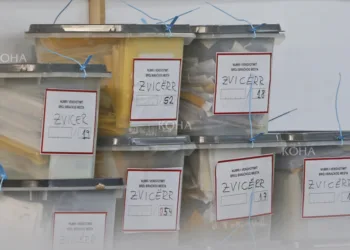
Citizens again gave an exemplary election process. Now that the election valve calmed the political emotions, it is the turn of the political parties to end this prolonged political winter
When Vjosa Osmani realized that she will not be elected president, she dissolved the Assembly unfairly and said that this situation was created by “irresponsible people with dangerous goals”. It was an inflated and inelegant statement coming from a person we were used to seeing as more measured. This rude statement hinted that Vjosa had mixed personal goals with institutional responsibilities. We also realized how much it was personal when Vjosa moved from the Office of the President to the election campaign. What was cryptic and occult became public and official – Vjosa turned the campaign into her personal referendum on the position of president. And although there are still doubts about many aspects of the election result, one thing is now clearer – Vjosa lost the referendum for the position of president. With the dissolution of the Assembly and the beginning of the public war with Kurti, she played a dangerous political gamble – from the historical record of over 300,000 votes, Vjosa will receive as much as Përparim Gruda of the PDK or Xhelal Sveçla of the VV. In other words, Vjosa now finds himself in a new political reality where he must find peace with the fact that the Vjosa of today is no longer the Vjosa of yesterday. This is not the end of her political career, but it is undoubtedly the end of a chapter.
Moving from Vjosa to the second loser of these elections – the second loser is definitely the opposition. If he had fallen into a coma ten years ago, it would have been unimaginable that the day will come in Kosovo when a single party will win more or less 50% of the vote with “hands in pockets” in every pair of elections that are organized. Today, the VV is turning this political fantasy into a common electoral fact.
The inability of the opposition to convince the citizens that they are a serious political alternative is now entering a new phase where the opposition is celebrating the prevention of VV’s 60% victory as a success. On the one hand, the opposition must be understood. I am convinced that the PDK knows what to do, but it is caught in suspense between the past and the future. Between The Hague and Pristina. Between liberators and change. I believe that only time will provide PDK with the answers it seeks. The LDK, on the other hand, continues on auto-pilot to believe that the mediocrity of its leadership is the best shield against further sliding into political irrelevance. Between the political courage to change course and the security offered by the predictability of mediocrity, the LDK for now chooses the latter. AAK has survived to fight another day – but survival built on a single name is always survival with an expiration date.
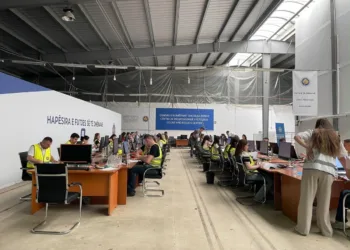
The first winner, on the other hand, is the CEC. CEC is now cementing its status as one of the most credible institutions in the country. Election after election, the CEC is proving to everyone that it is capable of executing complex election processes with precision, efficiency and integrity. The speed and quality with which the entire colossal architecture of the CEC – from the chairman, members, departments and divisions of the CEC to the polling station councils – is able to administer the electoral process in extraordinary time frames, is something that is now becoming an institutional standard for all countries in the region. And for me, the most beautiful part of all the success of the CEC is that it is a story of a joint institutional success, and not a personal story of an individual. Very often in Kosovo, but also in other countries, we fall into a trap where we connect the success of an institution with the name of a person. This is the most wrong thing in the life of public institutions. Public institutions are built on the premise of denying the individual and protecting the common good. This is the reason why the most sublime virtue of a public servant – like a priest or a hodge – is modesty and sacrifice for the common good. Therefore, the model public servant will never seek credit and recognition for himself, but for others. Thus, ironically the aim of every public servant should be that he personally is not remembered, but that his deeds are enjoyed by others. Thus, years later, Kreshnik Radoniqi will have reason to rejoice that he presided over something that will be remembered, although his name will be forgotten. This is a price any noble public servant should be at peace with.
The second winner is the citizens. Although traumatized by everything that had happened in the last few months, the citizens of Kosovo once again gave us an exemplary election process. Again, Kosovo proved that, at least in this field, we fully fulfill what we call “European standards”.
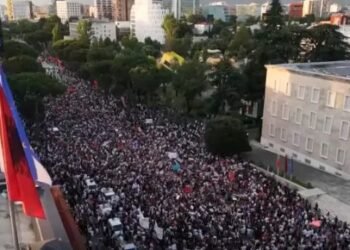
In other words, at least in this field, today we look like Luxembourg and Finland. This democratic success of ours is even more radiant in the background of the protests that are happening in the countries of the region. In Serbia and Albania, citizens are losing faith in their political system and in the absence of institutional instruments to channel their dissatisfaction, they are turning to the only thing left to them – streets and squares. In other words, what we are seeing in Belgrade and Tirana is an expression of massive citizen frustration over a bankrupt political system. They are trying to regain on the streets what was stolen from them through the distortion of democratic and institutional processes. This is in stark contrast to the political reality in Kosovo where citizens of Kosovo feel that their political institutions and related democratic processes are legitimate expressions of their civic interests.
And the third winner definitely remains Kurti. With “hands in pockets” he again approached 50%. The elections reconfirmed the confidence of the vast majority of citizens in his political vision. He achieved this without capturing public institutions, without alliances with oligarchs, without the support of criminal clans and without monopolizing the media – all of these regional governing standards. Yes, definitely, he made an unfair political game when he used the instruments of the governing power to distribute the state’s financial resources during the campaign, but against the background of regional governance practices, this is a faux after which the politicians have turned it into a governing habit.
One of the earliest and most influential works on the new American democracy came from a Frenchman. In the east of the USA, Alexis de Tocqueville visited the American soil to understand more about this democratic experiment that was happening in this new land. One of the things that impressed Tocqueville was elections. His description of an American election 200 years ago seems written for us today. Tocquevilli wrote “In the election campaign, a furious weather of anxiety, intrigue and conflict arises. Citizens are put in the trenches and the whole nation is in a fever. However, as soon as the elections are over, this gloomy cloud gives way to the radiant sun and the most beautiful seasons of the year arrive. Thus the river of destiny of the American state returns to its natural bed after nearly destroying all its banks.” Thus, I hope that even now, with the end of the elections, we are slowly coming out of a long political winter, and in front of us is a beautiful summer season.