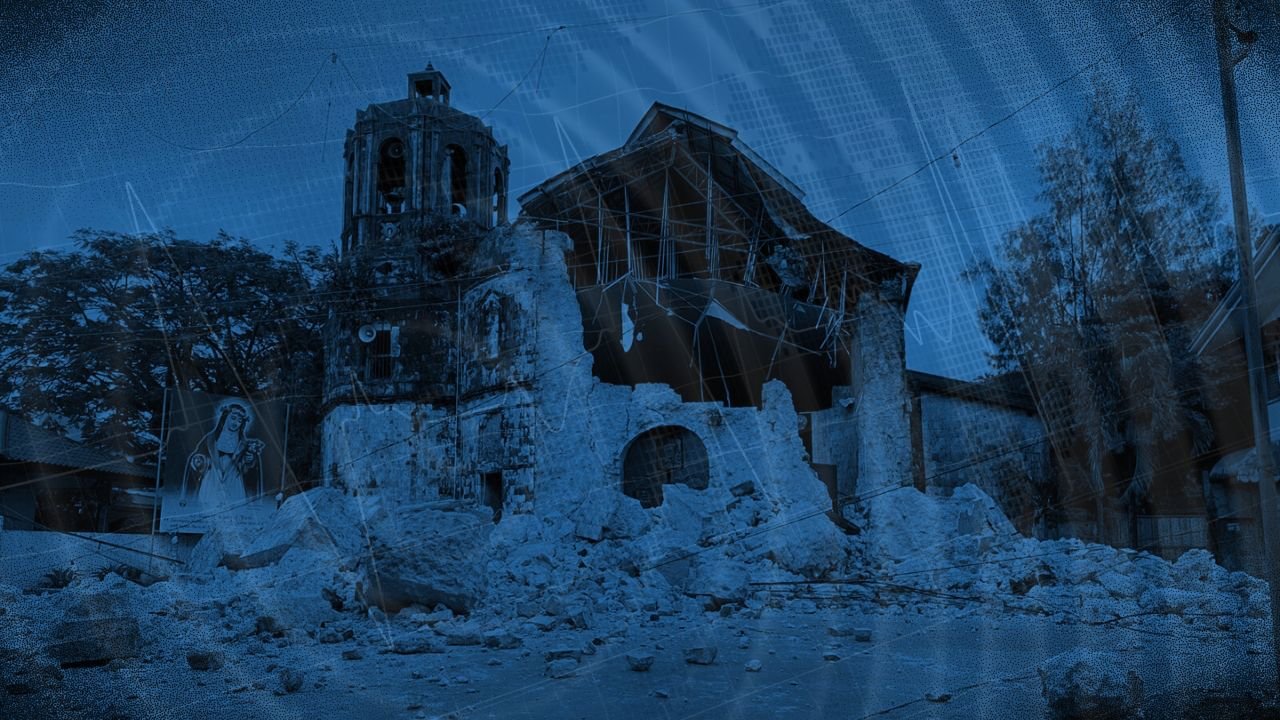

A composite image of the damage to the centuries-old Santa Rosa de Lima Church, which was hit by a 6.9 magnitude earthquake in Cebu on Sept. 30, 2025. (Photo courtesy of the Archdiocesan Shrine of Santa Rosa de Lima)
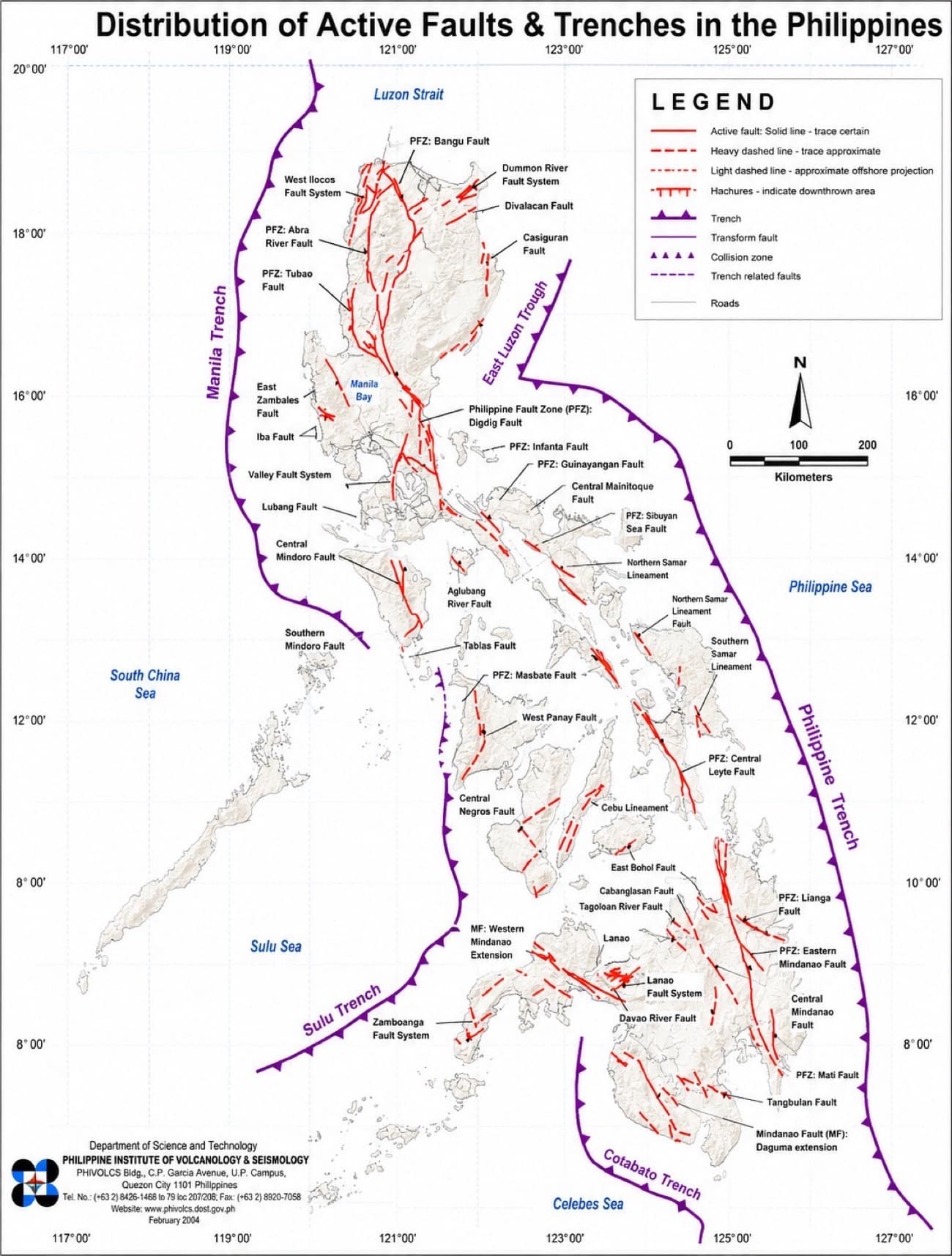
MANILA, Philippines — Areas located along the country’s six active trenches could experience earthquakes of up to magnitude 8.2, Philippine Institute of Volcanology and Seismology (Phivolcs) Director Teresito Bacolcol said Tuesday.
In an interview with the Philippine News Agency, Bacolcol identified the six active trenches as the Philippine Trench (located from East Luzon to Southeast Mindanao), East Luzon Trough, Manila Trench, Negros Trench, Sulu Trench, and Cotabato Trench.
His warning came a day after a magnitude 7.8 offshore earthquake generated by the Cotabato Trench jolted parts of Mindanao. Bacolcol said the quake was the strongest recorded in the Philippines so far this year.
However, he noted that the country’s strongest recorded earthquake remains the magnitude 8.1 tremor that struck Mindanao on Aug. 17, 1976.
Addressing questions about why the epicenter of Monday’s earthquake was not located in Cotabato, Bacolcol said the Cotabato Trench extends for more than 300 kilometers.
“Cotabato Trench is the name, but it is actually long, more than 300 kilometers long,” he said.
Bacolcol said any area situated along an active trench could experience a very strong earthquake.
READ: LIST: Killer earthquakes in the Philippines
Because earthquakes occur without warning, he urged residents of coastal communities to immediately move to higher ground after feeling a strong tremor.
“People living in coastal communities should know the natural signs of impending local tsunamis,” Bacolcol said.
He identified three warning signs of a possible tsunami: strong ground shaking, a sudden rise or drop in sea level, and a roaring sound coming from the sea.
“If any of these signs are observed, then they should evacuate immediately to a higher place,” he said. /dm