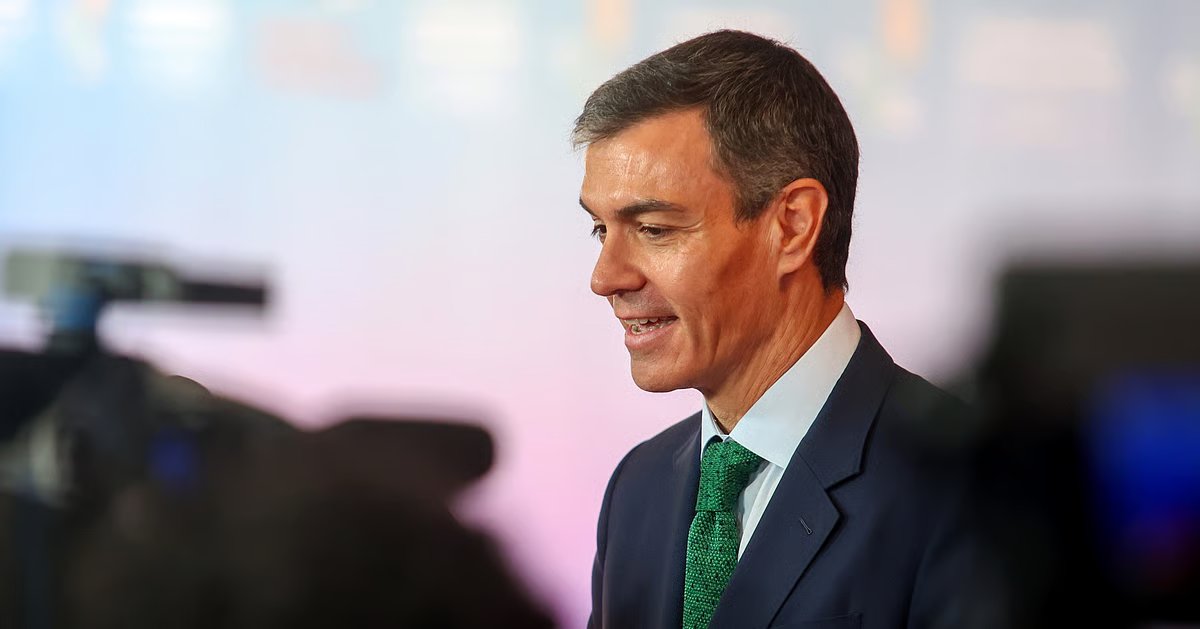
The President of the Spanish Government considered this Friday, April 24, that the war in the Middle East showed the “failure of brute force” and the need to respect international law, highlighting that the “law of the strongest has made the world weaker”.
“The crisis caused in the Middle East by this illegal war only demonstrated the failure of brute force, the requirement to respect international law, the multilateral order and the need to be safeguarded and reinforced”, said Pedro Sánchez in statements to journalists upon arrival at the informal summit of heads of state and government of the European Union (EU), in Nicosia.
For Pedro Sánchez, what is being seen in the Middle East is that “the law of the strongest has made the world weaker”.
“It is a situation where we do not know exactly what the objective of the war is and where there is also no trust between the parties to be able to reach an agreement in the short term. And what does this lead to? Suffering, the loss of thousands of lives, hundreds of thousands of displaced people, for example in Lebanon, and the weakening of the international order”, he stated.
The head of the Spanish executive also highlighted that the situation in the Middle East is having serious economic consequences for Europehighlighting that, since the start of the war, on February 28, the European Union (EU) has already spent “24 billion euros more” than usual on fossil fuel imports.
“In other words, 500 million euros per day”, he summarized, highlighting that “the least expensive measure that saves the most lives” to resolve this situation is that “the war ends as soon as possible”.
“And that’s why We appeal to the parties to sit down, discuss and reach an agreement as soon as possible”he stated.
In these statements to journalists, Pedro Sánchez also regretted that, at Monday’s meeting of EU foreign ministers, the bloc did not approve the suspension of the association agreement with Israel that had been proposed by Spain.
The president of the Spanish executive said he does not understand that the EU is “united, as it should be, in supporting a people who are being subjected to an attempted invasion and questioning of their territorial sovereignty”, referring to Ukraine, but does not do the same in the Middle East.
“This leads to a weakening of the EU’s positions, of our legitimacy, at least at a political level, and of our credibility when defending causes as fair as that of Ukraine”, he said.
EU leaders are meeting in Nicosia this Friday for the second day of an informal summit in Cyprus, which will begin with a discussion on financing the EU budget for the period between 2028 and 2034.
At lunchtime, one of the most symbolic moments of this summit is planned: a meeting with the leaders of Lebanon, Egypt and Syria, the crown prince of Jordan and the secretary general of the Gulf Cooperation Council.