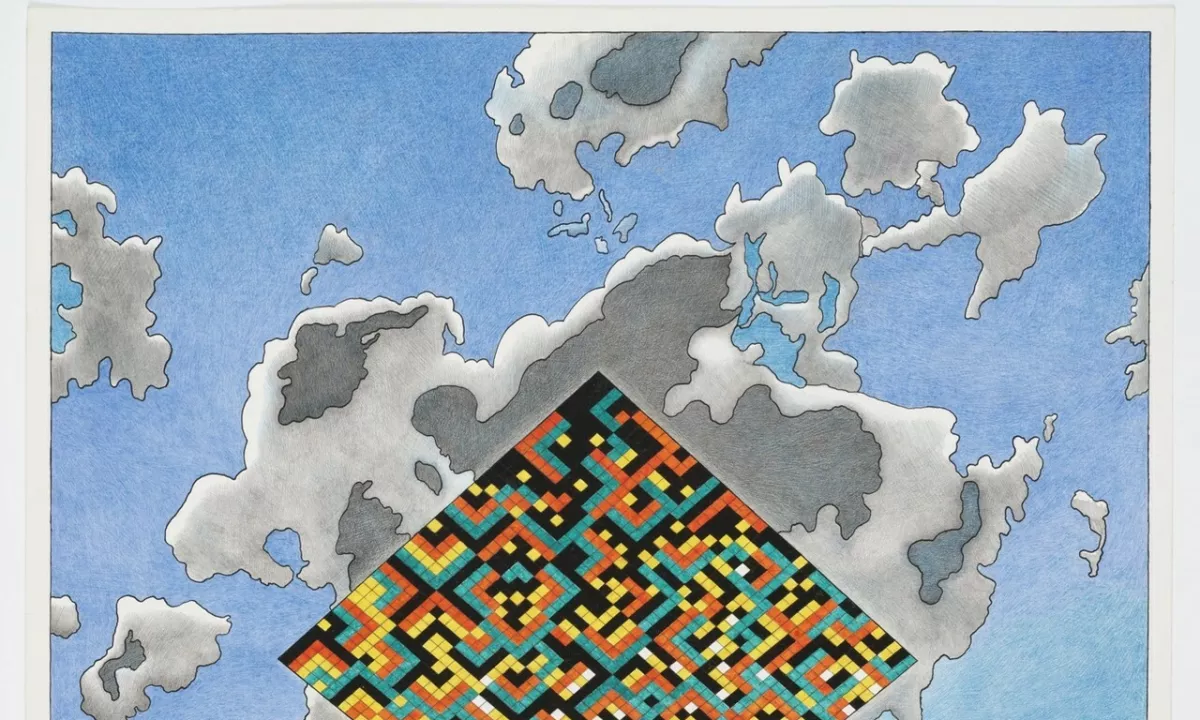
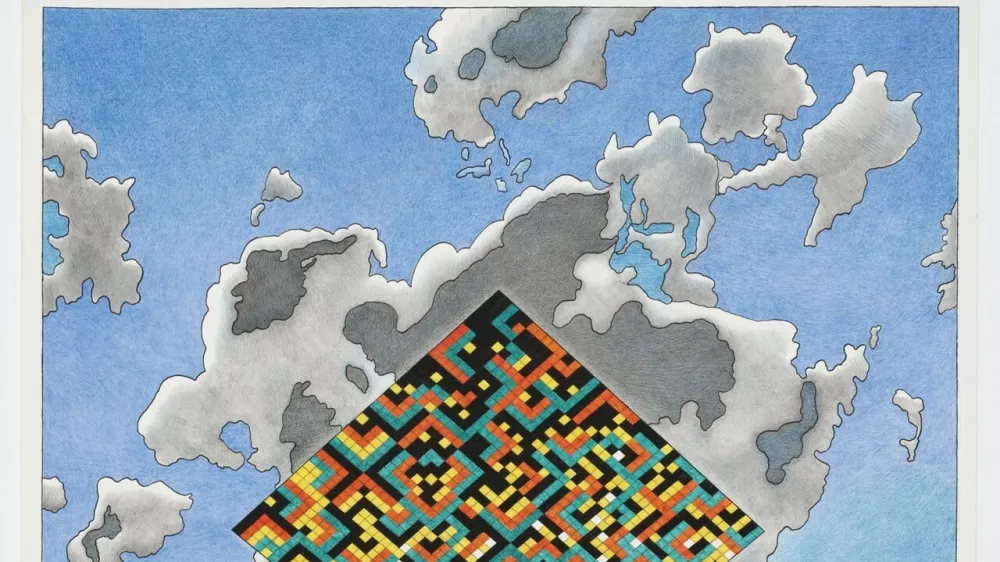
Drago Hrvacki: R-61, 1982 Photo: Jaka Babnik / MGLC archive
Order, play and the democratization of the gaze
Exhibition A place of order and quiet retreats in MGLC reveals one of the key paradoxes of the Yugoslav neo-avant-garde: how strictly rational, geometric art could also function as a project of democratization of art. Drago Hrvacke’s retrospective, prepared by curator Božidar Zrinski, combines paintings, reliefs, objects, graphics, drawings and numerous sketches, through which it becomes clear that Hrvacke was not interested in art as a space of subjective expression, but as a system, plan and program.
Its geometric structures are based on order, variation and precise calculation. The sketches reveal an almost obsessively disciplined work process: individual compositions are repeatedly calculated and varied until they reach perfect balance. The artistic process is rationalized to the extreme, but it is precisely in this objectification that the emancipatory potential of neo-constructivism as neo-avant-garde art lies. Hrvacki destroys the idea of an artist-genius. His paintings work almost programmed; they could be performed by anyone with enough technical knowledge. At the time of Zagreb’s New Tendencies and programmed art, this meant an important shift from autonomous artwork to the democratic idea of art as a universal visual language.
Neoconstructivism was particularly strong in Yugoslavia precisely because it corresponded to the contradictions of socialist modernization. On the one hand, the state developed modernist aestheticism and technocratic development, while on the other hand, the ideology of self-management demanded the democratization of culture and the elimination of the distinction between elite art and everyday life. Hrvacki found his position in this space. His objects eliminate the boundary between painting, design and architecture, and involve the viewer as an active co-creator of the view.
His art was not countercultural like that of the OHO group, so it was also acceptable to the official establishment. But criticism is written into the process itself. Through order, grid and geometry, Hrvacki dismantles the traditional notion of autonomous art and individual authorship. At the same time, his works combine pragmatism and Luddism: strictly rational structures remain playful, visually appealing and open to experimentation.
Particularly interesting are the figural works from the 1970s, in which Hrvacki still explores the relationship between man, space and landscape. The motifs of roads, paths and distant horizons today act almost as an image of a world that has definitively moved towards technocratic development and the neoliberal logic of the global economy. It is precisely in these works that the tension between the emancipatory potentials of Yugoslav self-governance and the processes of modernization, which gradually led to the loss of the idea of social transformation, can be seen. Roads that disappear into the void therefore act as a metaphor for a world without a clear alternative.
The last works after 2000 show a significant shift. Strict systems soften, color fields become more open, relationships and optical tensions come to the fore. Geometry no longer functions as a model of a new society, but above all as a subtle aesthetic game of perception. This is why the exhibition also has a melancholic effect: as a memory of a time when it seemed that art could participate in the organization of a different world.