
Disclaimer: All views and claims expressed in this article belong solely to the author and do not necessarily reflect the views of Dominica News Online.
Prologue
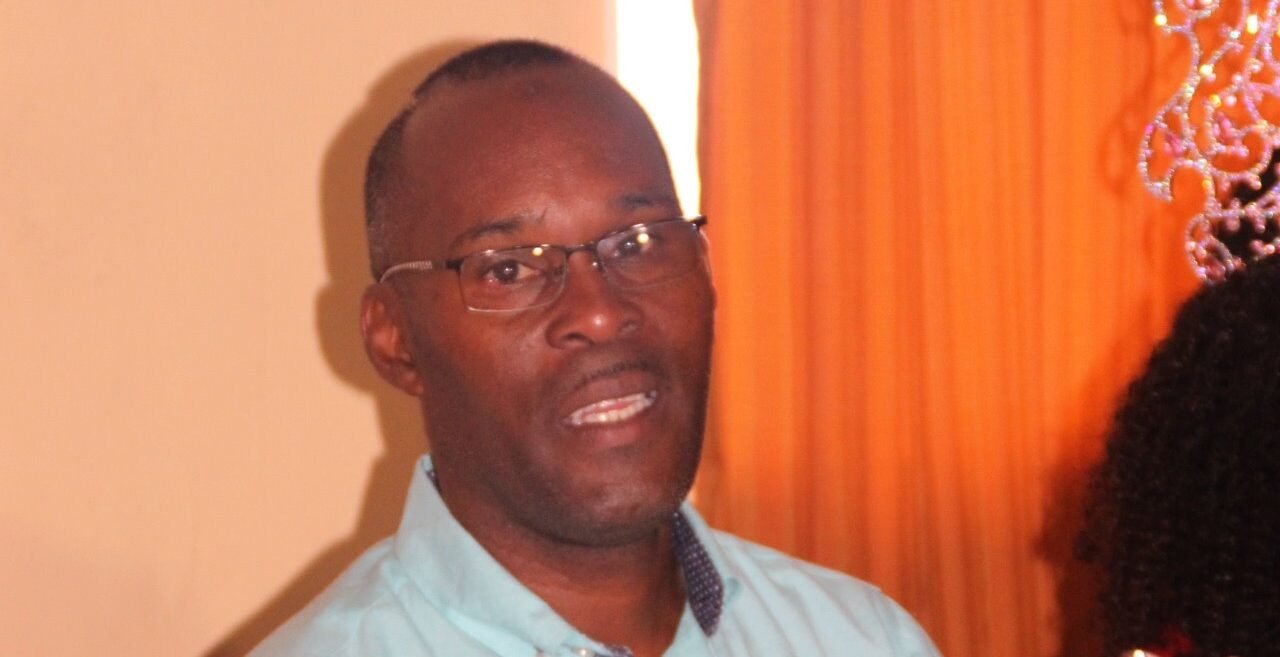
The crowd gathered under the red banners of the Dominica Labour Party, their voices rising in unison. Among the speakers that day was Joseph Isaac, the Speaker of the House — a figure expected to stand above partisan fray. His presence sparked immediate controversy, but Isaac was ready with his defence: the Constitution itself, specifically Sections 10(1) and 11(1), guaranteed his right to be there.
What the nerve! Why is this critical analysis of Speaker Joseph Isaac’s invocation of his own fundamental rights and freedoms to speak on the Dominica Labour Party (DLP) platform, and the glaring abuse of privilege, power and position to conveniently cover behind their rights in the constitution? There are numerous alleged violations by the DLP government of the rights of Dominican citizens.
Since this is a politically sensitive and fact-based topic, it needs an analytical response to the dangers and inconsistencies contained therein. There is a need and an obligation to do just that while the very speaker who sits as the balance and arbitrator in parliament over elected officials is claiming the invocation of his rights.
The very DLP Government has been known to violate several of the Rights of Dominicans as enshrined in sections 1 to 9 of the constitution.
Thus, there is a need to explain the context (who Joseph Isaac is, what the “invocation of rights” means)
• Analyze the legal and constitutional dimensions (fundamental rights, freedoms, and the Speaker’s role)
• Critically examine the potential conflict between personal rights and institutional impartiality
• Evaluate the alleged violations of citizens’ rights by the DLP government
• Present multiple perspectives to avoid bias and strengthen the analysis
Introduction
In democratic societies, the right to freedom of expression is a cornerstone of governance and civic life. Yet, when the individual exercising that right holds a position requiring strict impartiality—such as the Speaker of the House of Assembly—the boundaries between personal liberty and institutional responsibility become blurred.
This tension came into sharp focus when Joseph Isaac, Speaker of the House of Assembly of Dominica, invoked his fundamental rights to speak on the Dominica Labour Party (DLP) platform. His actions sparked debate over whether such political participation undermines the neutrality of the Speaker’s office and whether the DLP government itself has respected or violated the rights of Dominican citizens.
Philosophical Argument
Philosophically speaking, in every democracy, the tension between the rights of the individual and the responsibilities of public office is inevitable. In Dominica, this tension came sharply into focus when Speaker Joseph Isaac invoked Sections 10(1) and 11(1) of the Constitution to defend his decision to speak on the Dominica Labour Party platform. His claim raises profound questions about the scope of constitutional freedoms and the boundaries of political neutrality.
Context and Background
Joseph Isaac, a former member of both the United Workers Party and later the DLP, became Speaker in 2020. The Speaker’s constitutional role in Dominica is to preside over parliamentary proceedings with fairness, ensuring that all members—regardless of party affiliation—are treated equally. The Speaker is expected to act “without fear or favour, affection or ill will,” as outlined in parliamentary conventions. The Constitution of the Commonwealth of Dominica enshrines fundamental rights and freedoms in Chapter I.
• Section 10(1) protects freedom of expression, including the right to hold opinions without interference, to receive and impart information and ideas.
• Section 11(1) protects freedom of assembly and association, including the right to associate with political parties and other groups.
These rights are not absolute — they can be subject to restrictions that are reasonably justifiable in a democratic society for purposes such as public order, morality, or national security.
Isaac’s public appearance and speech on a DLP political platform raised questions about whether he was acting as a private citizen exercising his rights, or as a public official compromising the impartiality of his office.
Legal and Constitutional Dimensions
Dominica’s Constitution guarantees freedom of expression and association to all citizens, including public officials. However, constitutional rights are not absolute; they may be subject to reasonable limitations in the interest of maintaining public order, protecting the rights of others, and preserving the integrity of public institutions.
Critical Analysis of Joseph Isaac’s Invocation
When Speaker Joseph Isaac invoked Sections 10(1) and 11(1) to justify speaking on the DLP platform, he was asserting that:
2. As a citizen, he retains the personal right to express political opinions and to associate with a political party of his choice. He remains a citizen with the same constitutional protections as others.
3. His role as Speaker of the House does not strip him of constitutional rights, unless explicitly limited by law or by the constitutional conventions governing impartiality in parliamentary office. No explicit legal prohibition may exist preventing a Speaker from speaking at a political rally outside parliamentary sessions.
Critical considerations:
• Merit of the claim: Legally, Isaac’s invocation aligns with the text of the Constitution — he is entitled to freedom of expression and association.
1. Conflict with parliamentary norms: The Speaker’s office traditionally demands political neutrality to maintain public trust in the fairness of parliamentary proceedings. Speaking on a ruling party’s platform could undermine that perception, even if it is constitutionally permissible. The Speaker’s role is inherently political-neutral, and public alignment with a party erodes public trust.
2. Balancing rights and responsibilities: The Constitution protects rights, but public office holders may be expected to self-limit certain expressions to preserve institutional integrity. The appearance of bias can be as damaging as actual bias, especially in a small democracy where political divisions are sharp.
Violations of Citizens’ Rights by the DLP Government Opposition groups and civil society actors have been subject to the DLP government of restricting freedoms—such as the right to peaceful assembly, freedom of the press, and fair electoral processes.
These include:
• Selective policing of protests against the government. Restricted public demonstrations through police action or permit denials.
• Media bias due to state influence over broadcasting. Used state media to marginalize dissenting voices.
• Applied legal or administrative pressure on critics.
• Electoral irregularities that undermine citizens’ political rights.
• These actions would represent a breach of the same constitutional guarantees that Isaac invoked for himself.
This creates a perceived double standard: the government defends the Speaker’s rights when politically convenient but allegedly curtails those of dissenting citizens. There is no doubt that several Domincans can attest to their own fear of intimidation and denial of many rights as enshrined in the very section of the same constitution the Issac invoked.
Additionally, when one considers Chapter One- Protection of Fundamental rights and freedoms including Sections 1 to 13, it can be concluded that this DLP Government has been in blatant violation of every single one of these rights. Who feels it knows it. Just as the Opposition supporters and politicians or anyone seemingly associated with any opposition force or party. An examination of these sections below as amended will speak volumes. Sections 1–13 of the Dominica Constitution (as amended) Chapter I: Protection of Fundamental Rights and Freedoms. These provisions set out the core human rights and freedoms guaranteed in the Constitution, along with protections in times of emergency.
Section 1 – Fundamental rights and freedoms
Confirms that the Constitution protects fundamental rights and freedoms, and that these rights are enforceable in law.
Section 2 – Protection of right to life
No one shall be deprived of life except in accordance with the law, and the law must provide for the right to life.
Section 3 – Protection of right to personal liberty
No one shall be deprived of personal liberty except in accordance with the law, and the law must provide for the right to personal liberty.
Section 4 – Protection from slavery and forced labour
Slavery and forced labour are prohibited.
Section 5 – Protection from inhuman treatment
No one shall be subjected to inhuman or degrading treatment or punishment.
Section 6 – Protection from deprivation of property
No one shall be deprived of property except in accordance with the law, and the law must provide for the right to property.
Section 7 – Protection from arbitrary search or entry
No one shall be subjected to arbitrary search or entry.
Section 8 – Provisions to secure protection of law
The law must provide for the protection of rights and freedoms.
Section 9 – Protection of freedom of conscience
Everyone has the right to freedom of conscience.
Section 10 – Protection of freedom of expression
Everyone has the right to freedom of expression.
Section 11 – Protection of freedom of assembly and association
Everyone has the right to freedom of assembly and association.
Section 12 – Protection of freedom of movement
Everyone has the right to freedom of movement.
Section 13 – Protection from discrimination on the grounds of race, etc.
No one shall be discriminated against on grounds such as race, colour, sex, or other similar grounds.
Currently Dominicans live in absolute and continuous fear of even speaking, standing on the street corner to openly speak about national concerns, be seen with opposition politicians, attend political meetings, write in the newspapers, in fear of either being picked upon and intimidated, fear of their children obtaining scholarships, or receiving legitimate governmental assistance, or even proper health care education and job opportunities or the few government scholarships let alone financial assistance.
The saying – “he/she is not one of us” speaks volumes. It is widely known for perpetual interference by governmental parliamentary representatives and ministers in determining who even breathes a breath of fresh air far more to be included in the healthy process of civil engagement and enjoyment of life without being intimidated on social media by notable DLP surrogates. Generally, it can be said that Dominicans are living in abject fear and reprisal.
Constitutional implications
Such actions amount to violations of Sections 10(1) and 11(1), as they have interfered with citizens’ ability to express opinions and assemble freely.
• The Constitution allows restrictions only if they are necessary and proportionate to legitimate aims. Blanket bans, selective enforcement, or politically motivated suppression would likely fail this test.
Critical Evaluation
The controversy surrounding Isaac’s speech is not simply about one man’s rights, it is about the principle of equal application of rights.
A democracy cannot function if rights are selectively upheld. While Isaac may legally be entitled to speak on a political platform, the ethical question remains: should he, given his role as Speaker? Conversely, if the government defends his rights, it must also defend the rights of ordinary citizens, even when they oppose the ruling party. The critical point to be made is that government’s obligation is not only to refrain from violating rights but also to actively protect the exercise of those rights for all citizens, regardless of political affiliation.
Lastly there is the question that whether the speaker who is elected under section 36.2 is a public officer. The Constitution provides for the Speaker of the House of Assembly in the procedural and functional sense, as the presiding officer of the legislative chamber. Under the Constitution, the House of Assembly is the law-making body, and its members are elected representatives. In practice, the Speaker is a public figure and a representative of the House of Assembly, performing ceremonial and procedural functions that are part of the state’s governance. This role is recognized in constitutional law as part of the public service and is exercised in the context of the Commonwealth’s democratic institutions
While not labeled as a “public official” in the same category as the President, the Speaker is part of the state’s public service and operates under constitutional authority.
• The Speaker’s functions are consistent with those of other presiding officers in parliamentary systems, who are considered part of the public service.
While The Constitution of the Commonwealth of Dominica does not explicitly define the Speaker as a “public official” in the formal sense, but the role is constitutionally recognized and performed within the public service framework, making the Speaker effectively a public official in practice.
Conclusion
The “speaker” Joseph Isaac saga illustrates the delicate balance between personal freedoms and institutional responsibilities. It also exposes the broader challenge facing Dominica: ensuring that constitutional rights are applied consistently, regardless of political affiliation. Upholding this principle is essential not only for the credibility of the Speaker’s office but for the health of Dominican democracy itself. Joseph Isaac’s invocation of Sections 10(1) and 11(1) is legally grounded but politically contentious. While he may be within his constitutional rights, the optics of a speaker aligning publicly with the ruling party raise legitimate concerns about impartiality. Conversely, if the DLP government has indeed curtailed opposition and civic freedoms without lawful justification, such actions would represent a serious breach of the constitutional order. The tension between individual rights and institutional integrity lies at the heart of this debate.