Saturday, June 27, 2026
    The GeoStrategic Consensus
    No Result
    View All Result
    • Login
    • HOME
    • AMERICAS
      • Argentina
      • Brazil
      • Canada
      • Chile
      • Colombia
      • Costa Rica
      • Cuba
      • Dominican Republic
      • Ecuador
      • El Salvador
      • Greenland
      • Guatemala
      • Honduras
      • Mexico
      • Nicaragua
      • Panama
      • Paraguay
      • Peru
      • United States
      • Uruguay
      • Venezuela
    • ASIA-PACIFIC
      • Australia
      • Brunei Darussalam
      • Cambodia
      • China
      • Federated States of Micronesia
      • Fiji
      • Indonesia
      • Japan
      • Kiribati
      • Laos
      • Malaysia
      • Marshall Islands
      • Mongolia
      • Myanmar
      • Nauru
      • New Zealand
      • North Korea
      • Palau
      • Papua New Guinea
      • Philippines
      • Samoa
      • Singapore
      • Solomon Islands
      • South Korea
      • Taiwan
      • Thailand
      • Timor-Leste
      • Tonga
      • Tuvalu
      • Vanuatu
      • Vietnam
    • CARICOM
      • CARICOM – Non-English
        • Haiti
        • Suriname
      • CARICOM Associates
        • Anguilla
        • Bermuda
        • British-Virgin-Islands
        • Cayman-Islands
        • Curacao
        • Turks-and-Caicos
      • CARICOM English
        • Antigua and Barbuda
        • Barbados
        • Belize
        • Dominica
        • Grenada
        • Guyana
        • Jamaica
        • Montserrat
        • Saint Kitts and Nevis
        • Saint Lucia
        • Saint Vincent and the Grenadines
        • The Bahamas
        • Trinidad and Tobago
    • EURASIA
      • Armenia
      • Azerbaijan
      • Balarus
      • Georgia
      • Kazakhstan
      • Kyrgyzstan
      • Moldova
      • Russia
      • Tajikistan
      • Turkmenistan
      • Ukraine
      • Uzbekistan
    • EUROPE
      • Albania
      • Andorra
      • Austria
      • Bosnia and Herzegovina
      • Bulgaria
      • Croatia
      • Cyprus
      • Czech Republic
      • Denmark
      • Estonia
      • Finland
      • France
      • Germany
      • Greece
      • Holy See
      • Hungary
      • Iceland
      • Ireland
      • Italy
      • Kosovo
      • Latvia
      • Liechtenstein
      • Lithuania
      • Luxembourg
      • Malta
      • Monaco
      • Montenegro
      • Netherlands
      • North Macedonia
      • Norway
      • Poland
      • Portugal
      • Romania
      • San Marino
      • Serbia
      • Slovakia
      • Slovenia
      • Spain
      • Sweden
      • Switzerland
      • United Kingdom
    • MIDDLE EAST AND NORTH AFRICA
      • Algeria
      • Bahrain
      • Egypt
      • Iran
      • Iraq
      • Israel
      • Jordan
      • Kuwait
      • Lebanon
      • Lybia
      • Morocco
      • Oman
      • Palestinian Territories
      • Qatar
      • Saudi Arabia
      • Syria
      • Tunisia
      • Turkey
      • United Arab Emirates
      • Western Sahara
      • Yemen
    • SOUTH ASIA
      • Afghanistan
      • Bangladesh
      • Bhutan
      • India
      • Maldives
      • Nepal
      • Pakistan
      • Sri Lanka
    • SUB-SAHARAN AFRICA
      • Angola
      • Benin
      • Botswana
      • Burkina Faso
      • Burundi
      • Cabo Verde
      • Cameroon
      • Central African Republic
      • Chad
      • Comoros
      • Cote d’Ivoire
      • Democratic Republic of the Congo
      • Djibouti
      • Equatorial Guinea
      • Eritrea
      • Eswatini
      • Ethiopia
      • Gabon
      • Gambia
      • Ghana
      • Guinea
      • Guinea Bissau
      • Kenya
      • Lesotho
      • Liberia
      • Madagascar
      • Malawi
      • Mali
      • Mauritania
      • Mauritius
      • Mozambique
      • Namibia
      • Niger
      • Nigeria
      • Republic of the Congo
      • Rwanda
      • Sao Tome and Principe
      • Senegal
      • Seychelles
      • Sierra Leone
      • Somalia
      • South Africa
      • South Sudan
      • Sudan
      • Tanzania
      • Togo
      • Uganda
      • Zambia
      • Zimbabwe
    • HOME
    • AMERICAS
      • Argentina
      • Brazil
      • Canada
      • Chile
      • Colombia
      • Costa Rica
      • Cuba
      • Dominican Republic
      • Ecuador
      • El Salvador
      • Greenland
      • Guatemala
      • Honduras
      • Mexico
      • Nicaragua
      • Panama
      • Paraguay
      • Peru
      • United States
      • Uruguay
      • Venezuela
    • ASIA-PACIFIC
      • Australia
      • Brunei Darussalam
      • Cambodia
      • China
      • Federated States of Micronesia
      • Fiji
      • Indonesia
      • Japan
      • Kiribati
      • Laos
      • Malaysia
      • Marshall Islands
      • Mongolia
      • Myanmar
      • Nauru
      • New Zealand
      • North Korea
      • Palau
      • Papua New Guinea
      • Philippines
      • Samoa
      • Singapore
      • Solomon Islands
      • South Korea
      • Taiwan
      • Thailand
      • Timor-Leste
      • Tonga
      • Tuvalu
      • Vanuatu
      • Vietnam
    • CARICOM
      • CARICOM – Non-English
        • Haiti
        • Suriname
      • CARICOM Associates
        • Anguilla
        • Bermuda
        • British-Virgin-Islands
        • Cayman-Islands
        • Curacao
        • Turks-and-Caicos
      • CARICOM English
        • Antigua and Barbuda
        • Barbados
        • Belize
        • Dominica
        • Grenada
        • Guyana
        • Jamaica
        • Montserrat
        • Saint Kitts and Nevis
        • Saint Lucia
        • Saint Vincent and the Grenadines
        • The Bahamas
        • Trinidad and Tobago
    • EURASIA
      • Armenia
      • Azerbaijan
      • Balarus
      • Georgia
      • Kazakhstan
      • Kyrgyzstan
      • Moldova
      • Russia
      • Tajikistan
      • Turkmenistan
      • Ukraine
      • Uzbekistan
    • EUROPE
      • Albania
      • Andorra
      • Austria
      • Bosnia and Herzegovina
      • Bulgaria
      • Croatia
      • Cyprus
      • Czech Republic
      • Denmark
      • Estonia
      • Finland
      • France
      • Germany
      • Greece
      • Holy See
      • Hungary
      • Iceland
      • Ireland
      • Italy
      • Kosovo
      • Latvia
      • Liechtenstein
      • Lithuania
      • Luxembourg
      • Malta
      • Monaco
      • Montenegro
      • Netherlands
      • North Macedonia
      • Norway
      • Poland
      • Portugal
      • Romania
      • San Marino
      • Serbia
      • Slovakia
      • Slovenia
      • Spain
      • Sweden
      • Switzerland
      • United Kingdom
    • MIDDLE EAST AND NORTH AFRICA
      • Algeria
      • Bahrain
      • Egypt
      • Iran
      • Iraq
      • Israel
      • Jordan
      • Kuwait
      • Lebanon
      • Lybia
      • Morocco
      • Oman
      • Palestinian Territories
      • Qatar
      • Saudi Arabia
      • Syria
      • Tunisia
      • Turkey
      • United Arab Emirates
      • Western Sahara
      • Yemen
    • SOUTH ASIA
      • Afghanistan
      • Bangladesh
      • Bhutan
      • India
      • Maldives
      • Nepal
      • Pakistan
      • Sri Lanka
    • SUB-SAHARAN AFRICA
      • Angola
      • Benin
      • Botswana
      • Burkina Faso
      • Burundi
      • Cabo Verde
      • Cameroon
      • Central African Republic
      • Chad
      • Comoros
      • Cote d’Ivoire
      • Democratic Republic of the Congo
      • Djibouti
      • Equatorial Guinea
      • Eritrea
      • Eswatini
      • Ethiopia
      • Gabon
      • Gambia
      • Ghana
      • Guinea
      • Guinea Bissau
      • Kenya
      • Lesotho
      • Liberia
      • Madagascar
      • Malawi
      • Mali
      • Mauritania
      • Mauritius
      • Mozambique
      • Namibia
      • Niger
      • Nigeria
      • Republic of the Congo
      • Rwanda
      • Sao Tome and Principe
      • Senegal
      • Seychelles
      • Sierra Leone
      • Somalia
      • South Africa
      • South Sudan
      • Sudan
      • Tanzania
      • Togo
      • Uganda
      • Zambia
      • Zimbabwe
    No Result
    View All Result
    Agentially
    No Result
    View All Result
    Home SOUTH ASIA India

    NEET: Beyond paper leaks, the real vulnerabilities lie elsewhere | Explained

    The Analyst by The Analyst
    June 27, 2026
    in India
    NEET: Beyond paper leaks, the real vulnerabilities lie elsewhere | Explained


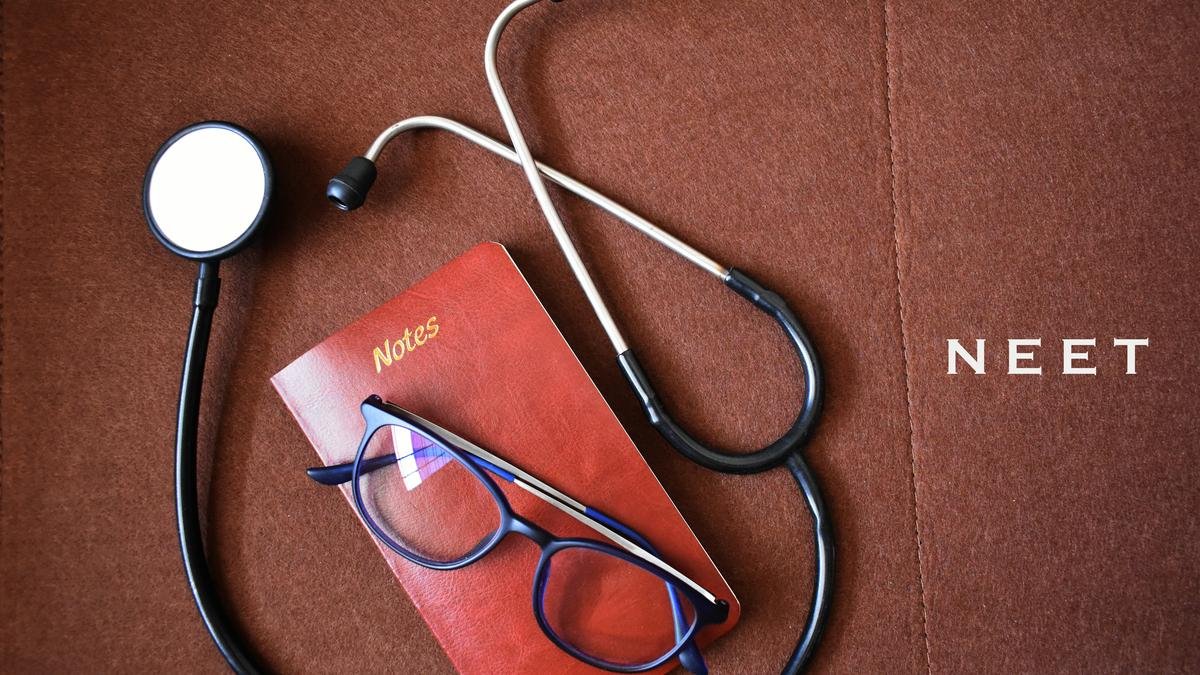
    National Eligibility-cum-Entrance Test (NEET) has evolved into one of India’s most high-stakes examinations, where a student’s medical career often depends on performance in a single three-hour test conducted once a year. Intense competition for medical seats, immense social prestige, and the high economic value of a medical degree create enormous academic, financial, and psychological pressure.

    READ ALSO

    Mild Liquor: Bacadi sought approval during LDF, then Minister M.V. Govindan | Bacardi’s Plea for Low-Alcohol Liquor in Kerala Revealed – Manorama Online News

    Jawans storm Kashmir police station, Rashtriya Rifles Commanding Officer booked | India News

    Scrap NEET, return medical admissions to States: PDSO protest in Visakhapatnam

    The stakes are further amplified by management quota admissions, for which several crores of rupees may be offered, particularly in family-owned hospitals. In such an environment, paper leaks, impersonation, unfair means, coaching-centre collusion, insider access, and other forms of malpractice are not merely security failures but manifestations of the powerful incentives surrounding medical admissions.

    Following the NEET-2026 controversy, the Union government made unprecedented security arrangements for Indian public examinations. Coordinated by the Cabinet Secretary and involving the Air Force, paramilitary and police forces, AI-enabled surveillance, biometric authentication, GPS-tracked logistics, and nearly seven lakh personnel, the exercise was comparable in scale to China’s Gaokao. It demonstrated that the logistics of a high-stakes examination can be secured through an extraordinary national security and administrative effort.

    Yet the central question remains: do these unprecedented measures address the real vulnerabilities of NEET, or merely its most visible component — the physical movement of question papers and personnel?

    Recurring anomalies, missing answers

    Since its inception in 2013, NEET has repeatedly faced controversies involving allegations of paper leaks, score inflation, and unusually high-performing candidates emerging from particular centres, rooms, families, and coaching hubs. Concerns have also been raised about the weak correlation between NEET performance, Class XII marks, and subsequent performance in medical education. Their repeated occurrence warrants closer scrutiny.

    The credibility crisis was serious enough to trigger a complete re-examination in 2015 (then AIPMT) and extraordinary interventions following the NEET-2024 controversy. The 2024 episode exposed systemic weaknesses, including an incorrect question paper, grace marks, inflated scores, and an unprecedented clustering of candidates’ near-perfect scores.

    More significantly, weeks before NEET-2026, highly targeted question compilations reportedly circulated across several parts of the country. Following the examination, many candidates claimed that an unusually large number of questions closely matched the circulated material. Yet no intelligence, cybersecurity, law-enforcement, or the National Testing Agency (NTA) appears to have acted on these signals before the controversy surfaced through a whistleblower’s FIR, ultimately leading to cancellation of the examination.

    Official submissions before the Supreme Court emphasised compliance with the Radhakrishnan Committee recommendations and the establishment of SOPs, while treating the leak allegations as arising from specific inputs. If the NTA detected no credible abnormality, what justified cancelling NEET-2026 and imposing enormous social, psychological, and economic costs on over two million students?

    Where do leaks really originate? The insider vulnerability

    Most past investigations failed to establish any printed-paper leak, yet the NEET-2026 re-test security architecture was overwhelmingly focussed on protecting printed question papers. It raises an obvious question: does the primary vulnerability lie elsewhere?

    Before printing, question papers pass through question setting, moderation, translation, and digitisation, during which a small group of individuals has privileged access. The recurring appearance of highly targeted, accurate question compilations, and coaching material closely resembling examination content points towards possible information flows at these source stages.

    The risk increases when the same experts reportedly participate repeatedly across years and examinations while maintaining direct or indirect links to the coaching ecosystem. Such leakages need not involve complete papers; fragments, themes and high-probability questions may be sufficient to create substantial advantage. If information is selectively transmitted through insider networks, recurring leakages can occur without a single printed question paper ever being leaked or recovered.

    Will isolation of experts prevent leaks?

    Keeping question setters, moderators, and translators in isolation assumes that leaks occur only after they are confined. But if their identities and information are already circulating through informal networks, isolation does not address the real source of risk.

    The larger concern is the repeated engagement of some experts across years and examinations, often amid allegations of links with coaching ecosystems and other commercial interests. In such circumstances, information advantages need not take the form of a leaked paper; they may appear as targeted question banks, recurring themes, or unusually accurate predictions.

    The real issue, therefore, is not confinement for a few days, but the integrity, independence, and conflict-free selection of experts. Without safeguards against conflicts of interest, repeated engagements, and entrenched networks, isolation may leave the underlying vulnerability untouched.

    Unaddressed vulnerabilities

    Despite unprecedented security arrangements, several critical vulnerabilities remain outside the current security framework.

    Conflicts of Interest and Antecedent Verification: One of the most significant vulnerabilities is the absence of rigorous conflict-of-interest avoidance and antecedent verification for question setters, moderators, and translators. Alleged links between some experts and coaching or commercial ecosystems raise concerns about the integrity of the question-setting process itself. No amount of surveillance or expert isolation can compensate for a compromised source. Stringent background checks, conflict-of-interest scrutiny, and intelligence-based monitoring are therefore essential safeguards.

    Unlimited Attempts and Age: A Structural Vulnerability: The National Medical Commission Act, 2019, mandates a single uniform entrance examination, not unlimited participation over decades. Yet NEET imposes neither an upper age limit nor any restriction on attempts, with nearly half of the candidate population reportedly being repeaters. This creates a large pool of long-term aspirants increasingly dependent on coaching ecosystems and susceptible to information asymmetries. While repeated attempts may improve familiarity with the examination, academic ability and professional suitability cannot be expected to improve indefinitely through repeated attempts alone.

    The problem is compounded by the fact that the qualifying threshold is fixed at the 50th percentile; the larger the pool of long-term repeat candidates, the lower the effective qualifying score tends to become. Unlimited attempts and a low eligibility threshold encourage repeat participation and create conditions in which unfair practices can thrive.

    Cybersecurity and Operational Blind Spots: NEET-2026 exposed vulnerabilities beyond question papers. A teenager reportedly accessed candidate accounts and attempted to divert refund payments. At the same time, an ethical hacker reported access to super-administrative functions, including observer management, appointment letters, and backend data exports. At the same time, AI-enabled surveillance and monitoring systems reportedly failed to detect warning signals associated with the widely circulated “guided papers” controversy, even as portal glitches persisted. These incidents point to weaknesses in cybersecurity and examination preparedness.

    These are only some of the visible vulnerabilities. The bigger challenge is to understand where information advantages come from, who benefits from them, and how they spread through networks of coaching centres, intermediaries, insiders, and commercial ecosystems. Unless these root causes are addressed, additional security measures may shift the problem elsewhere rather than solve it.

    The way forward

    NEET-2026 demonstrated that a high-stakes examination can be conducted under an unprecedented security apparatus. However, securing the physical movement of question papers is only one part of the challenge.

    Future reforms must focus on the examination ecosystem itself: rigorous conflict-of-interest and antecedent verification of experts, stronger cybersecurity safeguards, intelligence-based monitoring of organised examination networks, and a review of structural vulnerabilities such as unlimited attempts, the absence of age limits, and the low qualifying threshold for private admissions.

    Unless these vulnerabilities are addressed, additional layers of security may relocate the risk rather than eliminate it. Ultimately, the credibility of NEET will depend not on how securely question papers are transported, but on whether the entire admission ecosystem is transparent, conflict-free, and genuinely merit-driven.

    (Rajeev Kumar is a former Computer Science Professor at IIT Kharagpur, IIT Kanpur, BITS Pilani, and JNU, and a former scientist at DRDO and DST.)

    Source link

    Related Posts

    Mild Liquor: Bacadi sought approval during LDF, then Minister M.V. Govindan | Bacardi’s Plea for Low-Alcohol Liquor in Kerala Revealed – Manorama Online News
    India

    Mild Liquor: Bacadi sought approval during LDF, then Minister M.V. Govindan | Bacardi’s Plea for Low-Alcohol Liquor in Kerala Revealed – Manorama Online News

    June 27, 2026
    Jawans storm Kashmir police station, Rashtriya Rifles Commanding Officer booked | India News
    India

    Jawans storm Kashmir police station, Rashtriya Rifles Commanding Officer booked | India News

    June 27, 2026
    Young man found dead in Kannada actress Krishi Tapanda’s flat – Kannada Cinema | krishi thapandas | Manorama Online | Malayalam News | Manorama News
    India

    Young man found dead in Kannada actress Krishi Tapanda’s flat – Kannada Cinema | krishi thapandas | Manorama Online | Malayalam News | Manorama News

    June 26, 2026
    SIT an eyewash, formed to protect the powerful: Arvind Kejriwal on Ram Mandir donation probe
    India

    SIT an eyewash, formed to protect the powerful: Arvind Kejriwal on Ram Mandir donation probe

    June 26, 2026
    In tense meeting, Revanth Reddy warns Congress leaders to take SIR seriously | India News
    India

    In tense meeting, Revanth Reddy warns Congress leaders to take SIR seriously | India News

    June 26, 2026
    Fall of 2040 rupees in gold today, will ‘deep buying’ be enough to recover
    India

    Fall of 2040 rupees in gold today, will ‘deep buying’ be enough to recover

    June 26, 2026
    Next Post
    Mild Liquor: Bacadi sought approval during LDF, then Minister M.V. Govindan | Bacardi’s Plea for Low-Alcohol Liquor in Kerala Revealed – Manorama Online News

    Mild Liquor: Bacadi sought approval during LDF, then Minister M.V. Govindan | Bacardi's Plea for Low-Alcohol Liquor in Kerala Revealed - Manorama Online News

    POPULAR NEWS

    The date of the match between Egypt and Iran in the 2026 World Cup and the broadcast channels

    The date of the match between Egypt and Iran in the 2026 World Cup and the broadcast channels

    June 26, 2026
    In tense meeting, Revanth Reddy warns Congress leaders to take SIR seriously | India News

    In tense meeting, Revanth Reddy warns Congress leaders to take SIR seriously | India News

    June 26, 2026
    “Dubai Dates” returns with the sweetness of the Emirati “Tamrat Al Bait”.

    “Dubai Dates” returns with the sweetness of the Emirati “Tamrat Al Bait”.

    June 26, 2026
    Füred Art Week to Return with More Treasures Than Ever

    Füred Art Week to Return with More Treasures Than Ever

    June 26, 2026
    A stronger Union for the Mediterranean for a stronger Mediterranean

    A stronger Union for the Mediterranean for a stronger Mediterranean

    June 26, 2026

    EDITOR'S PICK

    Viksit and Surakshit: On the Lucknow fire

    Viksit and Surakshit: On the Lucknow fire

    June 26, 2026
    PM Dbeibah, Egypt’s intelligence chief review developments in Libya

    PM Dbeibah, Egypt’s intelligence chief review developments in Libya

    June 26, 2026
    Dh10 bus shuttle, rental car desk: Etihad Rail sets up onward travel for passengers

    Dh10 bus shuttle, rental car desk: Etihad Rail sets up onward travel for passengers

    June 26, 2026
    Migration Crisis: The US Coast Guard deports 27 Cuban rafters

    Migration Crisis: The US Coast Guard deports 27 Cuban rafters

    June 26, 2026

    Recent Posts

    • Sports news – One of the greatest spoke emotionally about Croatia: ‘It’s crazy what they achieved, I hope they pass’
    • Slobodna Dalmacija – IVICA ŠOLA: When Houellebecq predicted in the novel that Europe would whisper under Islamization, it sounded strange…
    • My late grandmother for president
    • Rama attacks Dritan Goxhaj and calls him a KLA deserter! – Shqip.com

      © 2026 Agentially - Navigating shifting sovereignties and global risk .

      Welcome Back!

      Login to your account below

      Forgotten Password?

      Retrieve your password

      Please enter your username or email address to reset your password.

      Log In
      No Result
      View All Result

        © 2026 Agentially - Navigating shifting sovereignties and global risk .

        This website uses cookies. By continuing to use this website you are giving consent to cookies being used. Visit our Privacy and Cookie Policy.