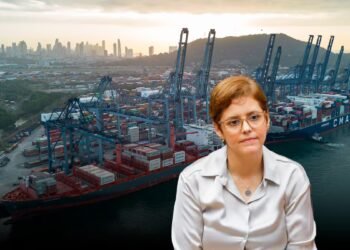
The conflict in the Middle East has entered a critical phase in which diplomacy is weakening and military tensions are escalating rapidly. In this context, Panama established its position through the Foreign Minister, Javier Martínez-Acha, who categorically rejected the use of the Strait of Hormuz as a geopolitical tool.
During an interview with EFE in Asunción, the diplomat described as unacceptable the closure of the strait applied by Iran in response to the military offensive launched by the United States and Israel at the end of February.
“That cannot be allowed,” said Martínez-Acha, while expressing his hope that the temporary truce reached between Washington and Tehran will evolve into a permanent solution that guarantees regional stability and free maritime transit.
The chancellor stressed that this avenue must be kept open under conditions of security for all parties, avoiding its use as a mechanism of political pressure in a conflict that already has global repercussions. In that sense, he insisted that respect for international law and free navigation is key to avoiding a major crisis.
A key artery for the global economy
The Strait of Hormuz is one of the nerve centers of international trade and one of the most strategic energy corridors on the planet. According to the International Maritime Organization, approximately 20% of the world’s oil circulates along this route, in addition to 13% of chemicals and fertilizers and about 9% of new automobiles.
Its interruption has caused an immediate increase in the prices of crude oil and its derivatives, impacting energy markets around the world. “The effects of this conflict are already seen globally in the price of energy,” warned the Panamanian foreign minister, who warned that volatility in the markets could continue if the situation is not stabilized.
Currently, Panama is experiencing the impact of rising prices. This situation has forced the Government to take measures to cushion the economic blow.
In response, the administration of President José Raúl Mulino implemented a partial fuel subsidy scheme with the aim of mitigating the effects on consumers and key sectors of the economy, especially transportation and production.
Failed negotiations and return to tension
The crisis intensified after the failure of negotiations between the United States and Iran, held in Islamabad for more than 20 hours. The dialogue, considered historic due to its level and scope, concluded without agreements, leaving in suspense a fragile two-week ceasefire reached after more than 40 days of clashes.
Shortly after, US President Donald Trump announced a drastic shift in his country’s strategy by ordering a naval blockade of the Strait of Hormuz, a move that significantly raises the risk of direct confrontation.
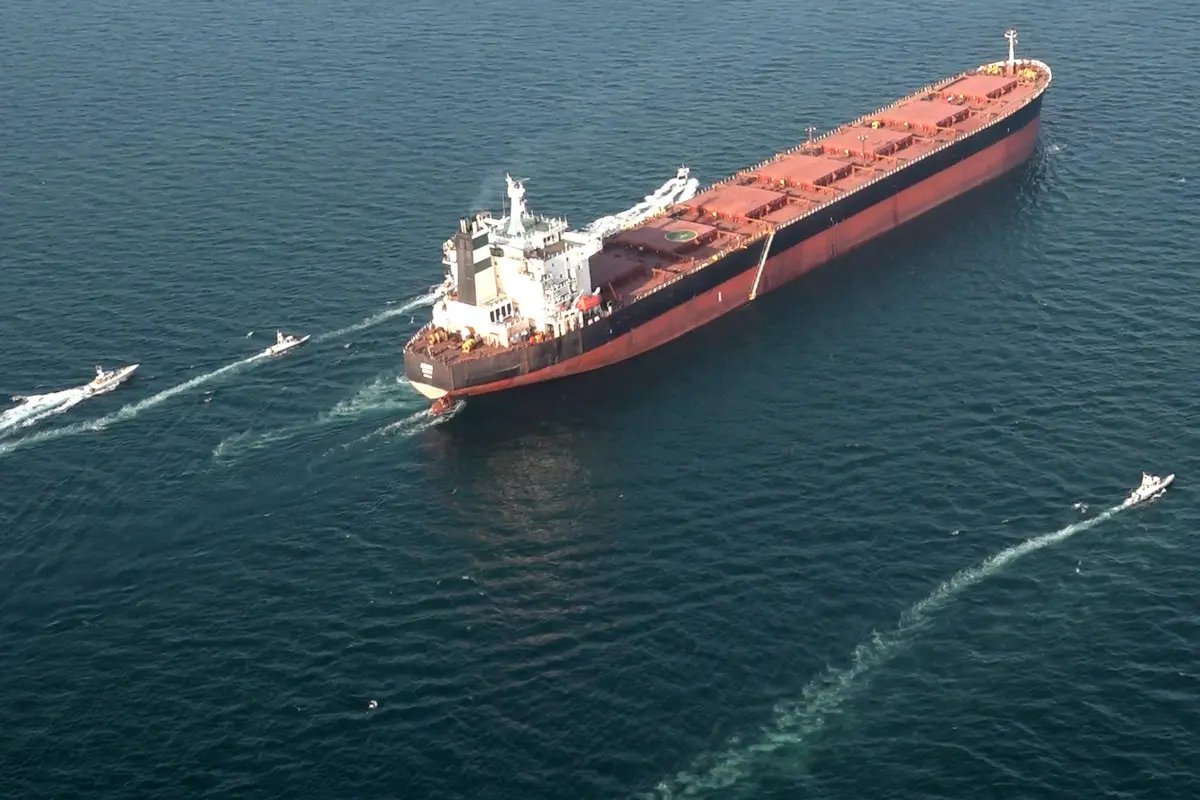
The decision contemplates preventing the transit of any vessel, intercepting ships in international waters and even responding militarily to actions considered hostile by Iran.
Likewise, warnings have been given about the destruction of underwater mines and sanctions on vessels that pay tolls to Tehran to cross the route.
This announcement adds to the blockade already imposed by Iran, generating an unprecedented situation in one of the most sensitive sea lanes in the world.
Iranian response and risk of confrontation
In reaction, the Iranian Revolutionary Guard warned that the presence of military ships in the strait will be considered a violation of the ceasefire, which could trigger a forceful response.
The deployment of US naval forces in the region, with demining operations and protection of maritime traffic, adds a military component to a crisis that has already gone beyond the diplomatic sphere.
At the same time, Israeli military operations continue in Lebanon against the Hezbollah group, which further complicates the regional panorama and calls into question the sustainability of any attempt at a truce.
Negotiations between Washington and Tehran stalled over three major disagreements: the Iranian nuclear program, control of the Strait of Hormuz and access to billions of dollars in oil revenues frozen by international sanctions.
The United States insists that Iran must renounce its nuclear development, while Tehran considers these demands unacceptable and maintains its control over the strait as one of its main negotiating cards.
Both sides accuse each other of intransigence, which has brought the dialogue process to a stalemate, increasing uncertainty about the future of the conflict.
Russia enters the geopolitical chessboard
After the failure of the negotiations, the Iranian president established contact with his Russian counterpart to inform him of the outcome of the talks, in a move that reinforces Moscow’s presence as a key actor in the conflict.
Russia has expressed interest in playing a mediating role, which could reconfigure the geopolitical balance in the region and add new variables to an already complex crisis.
This rapprochement also evidences a strengthening of relations between Moscow and Tehran in the midst of an increasingly polarized international scenario.
Panama and its position on the global stage
Beyond the conflict, the Panamanian foreign minister highlighted the country’s strategic role in international trade, highlighting its integration as an associate partner of Mercosur and its logistical advantages.
The Panama Canal, its port network and its air hub consolidate the country as a key point in global supply chains, which reinforces its interest in the stability of maritime routes such as the Strait of Hormuz.
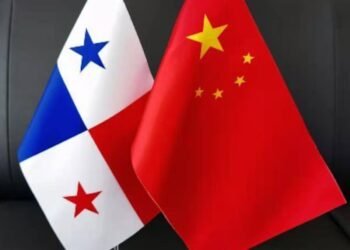
Likewise, Martínez-Acha reiterated the need to respect Panamanian legal sovereignty in the face of the increase in inspections of national flag vessels in Chinese ports, a situation that raises concern over the possibility that it responds to political pressure.
The current scenario reflects a combination of failed diplomacy, economic pressure and increasing militarization. Control of the Strait of Hormuz has become the central axis of a dispute that transcends the region and directly affects the global economy.
As tensions continue to escalate and negotiations remain stalled, the world watches with uncertainty the development of a conflict that threatens to deepen energy and geopolitical instability in the coming months.
In this context, Panama’s call to preserve free navigation and avoid the political use of strategic routes joins the voices that seek to contain a crisis with global implications.
Javier Martínez-Acha
Chancellor of Panama
The effects of this conflict are already seen globally in the price of energy, regardless of where you import (the fuel)”