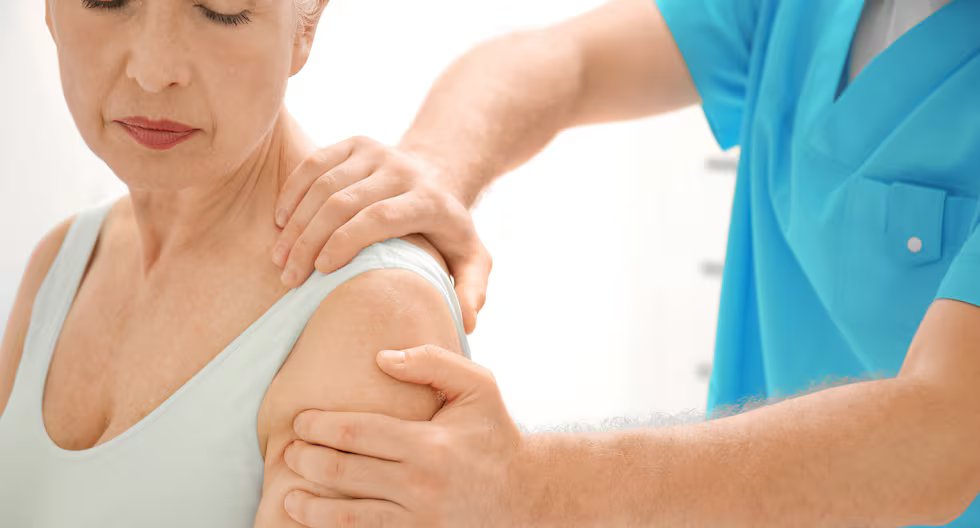
This impasse dates back to 2021 and so far around 7 legislative initiatives have appeared whose main objective is the creation of a college for physiotherapists which, according to what was reported in local media, has among its purposes the strengthening of said medical profession, recognition of Physiotherapy as an independent profession in university education and providing better care to patients with disabilities or who need rehabilitation.

EsSalud’s Padomi Program provided more than 106 thousand home care in physical therapy and rehabilitation to older adults
The position of the College of Medical Technologists
Faced with this problem, the College of Medical Technologists of Peru has shown its concern, since the proposal to create a college for the area of Physical Therapy and Rehabilitation does not have a technical evaluation of the consequences it could entail. The entity assures that this will have an impact on the weakening of “control mechanisms, as well as generate uncertainty in professional practice and affect the continuity of essential health services.”
In that sense, the newspaper El Comercio spoke with Waynner Sánchez García, dean of the College of Medical Technologists of Peru (CTMP), who explained his union’s position regarding this problem:
“We have analyzed that it would not only affect the institution, but all Peruvians, that it would be a public health problem. Currently, we are more than 9 thousand technologists nationwide who have their legal framework, who work in the Ministry of Health, in Essalud and not all of them want to leave. This would imply that legal uncertainty is generated as to who will be the ones who care for the patients, those who have the correct title, the correct skill. This may have an impact on approximately 45 million annual visits, with no certainty as to who will attend to them. It’s worrying. It goes beyond a union issue that can affect the community“explained the professional.

Is a school for physiotherapists viable in Peru?
Likewise, Sánchez García referred to the objectives behind the creation of a school for physiotherapists: “In Peru, there is no university that trains physiotherapists, all in the country train medical technology, physical therapy and rehabilitation, no one has the title of physiotherapist”, he noted.
At the same time, he added that to create a professional college it is necessary that there be a profession, that the graduates form a college: “In Peru, from 2010 onwards, just like the medical career that graduates as surgeons and then study the specialty, in our profession there are universities where they offer these postgraduate specialization studies. Currently, there are around 17 specialty programs for technologists in physical therapy and rehabilitation.”

But, not only that, because the dean of the CTMP assured that technologists with specialization currently receive various benefits: “In our professional association we have about 600 specialists with postgraduate degrees who in Social Security receive an extra bonus for this specialty. It is false that it cannot be strengthened.”
He also denied that the creation of a college for physiotherapists could have a direct impact on improving the care of patients with disabilities and/or who require rehabilitation: “The professional colleges are consulting or support entities for the Minsa in terms of public health policies. A professional college that is born overnight has no influence on the technical decisions made by the State, what it can do is propose, suggest improvements. You have to sit down and talk with the State technicians, with the Medical College, with the Ministry of Education. It is not that because you create a college you are going to change the quality of care.”
Dialogue with Congress
When delving into the motivations for the 7 bills that have been presented since 2021 for the creation of a college of physiotherapists from 2021, one of them inspired by Waldemar Cerrón, congressman from the Peru Libre bench, the dean of the CTMP expressed:
“We had a meeting with Congressman Cerrón last week. We explained the problems and the impact it would have on the population. In said meeting in Huancayo, the parliamentarian had first-hand information on how it would affect public health. He committed to creating a technical working group to evaluate the scope, impacts and consequences of these legislative initiatives to listen to all parties and make a decision. In fact, he committed to creating this working group before it reaches the Plenary Session of Congress.”

Sánchez García assured that the people behind the presentation of these projects to parliamentarians like Cerrón and others correspond to a small group with whom, until now, they have not had communication: “We do not close the doors to talk, find points of consensus, this is an issue that affects the population. It is a law that has not been well analyzed.”
However, taking into account the little time left for the current Congress to finish its functions and move to the Chamber of Deputies for the period 2026-2031, the dean of the CTMP explained the line of action that his union would have in case the impasse is not resolved before the change of command.
READ ALSO: Robot capable of giving twenty types of massages tests physiotherapists
“The strategy is to sit down and talk, to analyze it better. We sent a document to Minsa, Servir, the Ministry of Labor, the Ministry of Education, the Medical College and other professional medical colleges, warning of the impact that this would have on public health, because without a technical table we would have many problems in rehabilitation care for thousands of Peruvians.”
“We want to alert the population that this law should be analyzed and not reach the Plenary Session of Congress and if it does, it should not be approved, as it will be a problem for public health, because if for a neurological or oncological patient, for whom the waiting lines are very long, this would lengthen even more. That worries us as an institution, we do not play with public health,” he emphasized.
What physiotherapists say
For its part, the newspaper El Comercio was also able to speak with Susan Carbajal Pumacayo, spokesperson for the bill for the creation of the College of Physiotherapists of Peru, who has a diametrically different point of view than that expressed by the dean of the College of Medical Technologists of Peru (CTMP).
Carbajal highlights that Medical Technology brings together 6 careers, “each one different,” highlighting that physiotherapy is the only one of these that meets the patient every day. However, he assures that the fact that their profession is not independent puts them at a disadvantage compared to the rest of their colleagues in the region.
“We have very old processes, international standards have changed, our colleagues from other countries have better processes than us, but the Minsa still does not recognize these new procedures,” in addition to highlighting that physiotherapy has many specialties worldwide, but that they are not recognized in Peru: “That is why we cannot understand whether the dean is a laboratory or radiology dean, because they are different functions, some do not have contact with patients, or their psychological state, we take psychology courses during our years of study.”
The fight in Congress for the college of physiotherapists
Likewise, Carbajal recalled that at the time Nutrition was also part of the Medical Technology career from 1968 to 1986 when the College of Nutritionists of Peru was created, an example that they want to follow with the College of Physiotherapists: “I cannot call someone who does not know my day-to-day life a colleague because we are completely different careers. Therefore, we have spoken with Congress to explain how the population can benefit from this. We have been in this process since 2014, but the “The College of Technologists itself opposed this management.”
The lawyer revealed that the reason for this refusal on the part of the CTMP is that they have 9,000 thousand physiotherapists, revealing that said population would be almost half of the total members of this medical association. Likewise, he explained that there were universities that taught a degree in physiotherapy.
“The UPN and the UPC have produced graduates with the title of physical therapists and not as technologists. Unfortunately, the College of Technologists has gone to these universities to tell them that they will not enroll these professionals because the college is Medical Technology. For this reason, Sunedu had to reconsider it, but colleagues have emerged with that title.”
Regarding her conversations with Congress, the physiotherapist confirmed the existence of various bills to promote the creation of the College of Physiotherapists, but it was Congressman Waldemar Cerrón (Perú Libre) who created the ruling: “It was approved by the education commission, which is in charge of the creation of professional colleges. The health commission assured that we have the right to create our own college. The inhibition of the project was recently approved, that is, the health commission studied the issue and recommended “to go to the Plenary, which was approved in a second vote so that it can be debated soon,” he stated.
Is there a solution in sight?
However, there is a glimmer of light to solve this problem, the same one that came from the Congress of the Republic in 2024: “We have Law 32004, in article 7, numeral 6, where Congress gives us the opportunity to reorganize ourselves, strengthen the institution and the health system according to our competencies.”
According to Waynner García Sánchez, this is the solution given by the Legislative Branch, the same one that he hopes will be heard by his colleagues: “for each of their specialties within their professional association they have the opportunity to create their chapter director, a chapter direction in physical therapy and rehabilitation that would allow, as my colleagues request, greater representation, their own budget, logistics and all the conditions to seek an improvement in the health system.”
“Public health needs responsibility, legality and duly qualified professionals. Before legislating, it must be guaranteed that no patient is left at risk and that no essential service is affected by a regulatory vacuum,” he stated.
This newspaper tried to contact Congressman Waldemar Cerrón, but until the closing of this article it was not able to speak with him.