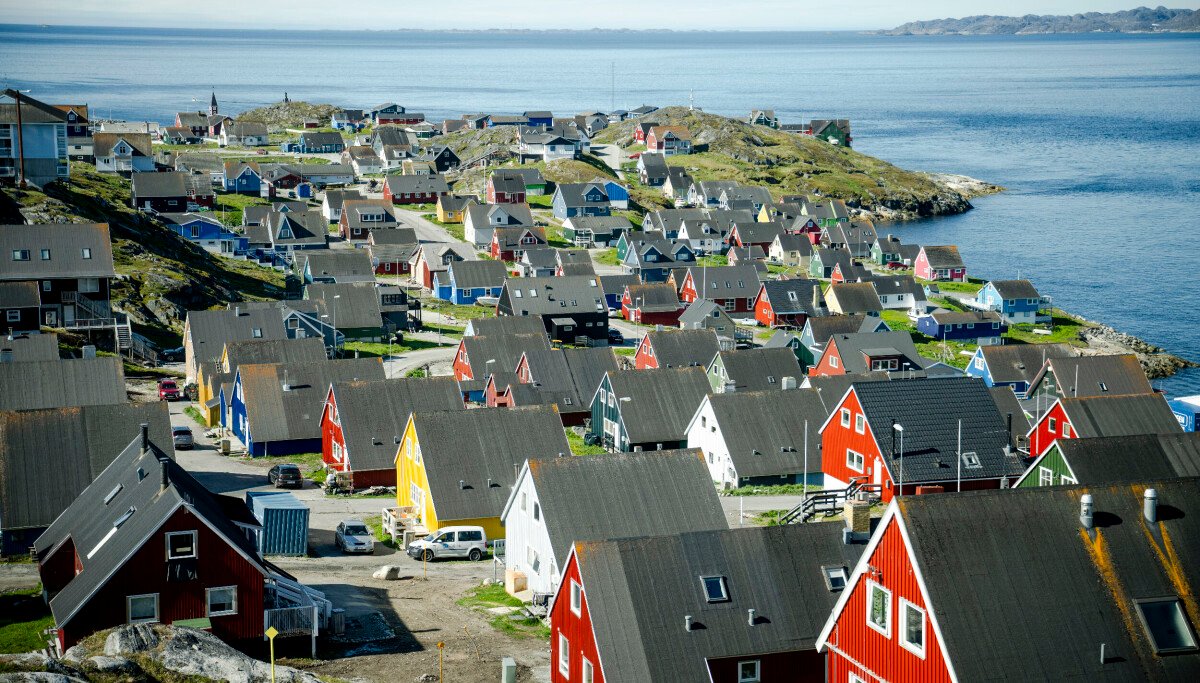
The geographical inequality in educational opportunities and results is significant, according to a new report from Greenland’s Education Council.
Naalakkersuisuts has an ambition that all young people, regardless of where they live in the country, should have equal access to education.
The ambition is enshrined in the education strategy, but it is strongly challenged, according to the Greenland Education Council’s status report.
The Education Council points out that the scattered settlement pattern and the great geographical distances create significant challenges for young people’s educational opportunities:
“Many smaller settlements have small schools with limited access to trained teachers, and a large proportion of students have to move away from home already at the age of 13–14 to continue schooling. This causes both social and practical barriers, which can affect motivation and the completion of education,” the council writes in its status report.
The probability drops significantly in smaller residences
To illustrate the problem, the Education Council has created a graph that shows the probability of completing a degree by type of residence:
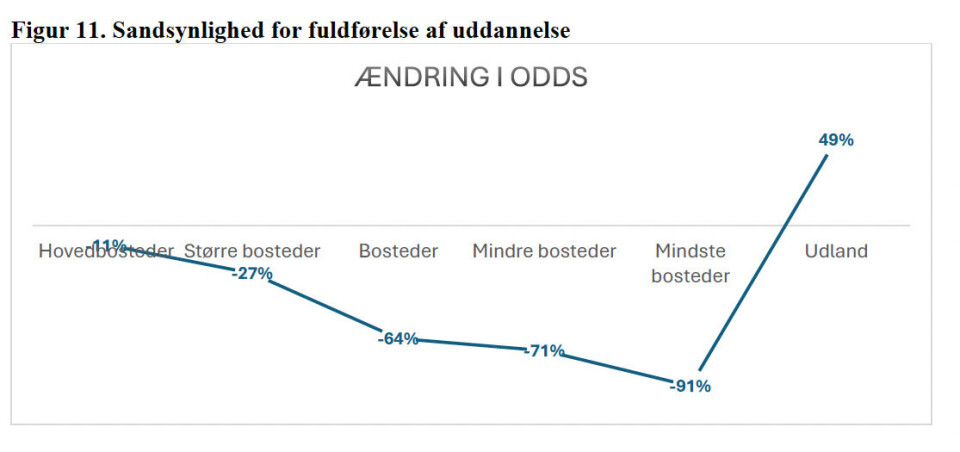
As can be seen from the graph, the probability drops significantly the smaller the place of residence.
“The lowest level is seen in the smallest residences, where the probability is reduced by as much as -91%,” the council points out, among other things and concludes:
“Overall, the figure points to a marked geographical inequality in educational opportunities and results. The chance of success is highest in the larger urban areas and markedly lowest in the smallest settlements. This indicates that geographical location is still a decisive factor for educational results.“
There are also well-functioning village schools
The Education Council emphasizes that there are also settlements with well-functioning schools and good results, and that these are often characterized by strong local zeal and committed teachers.
In its report, the council reviews a number of decentralized educational opportunities and their drop-outs and results. It is concluded that access to education has become wider – but equality in results has not yet been realized.
The council recommends that if the ambition of equal access to education is to be realised, it requires both “expansion of digital learning platforms and parallel investment in quality, guidance and sustainable local study environments.“
The entire status report on education can be read at Naalakkersuisuts website.