FAITH
FOR more than five decades, Marimari Lutheran Church has stood as a beacon of faith, fellowship and community in Port Moresby.
Built in 1973, just two years before Papua New Guinea attained Independence, the church has been a spiritual home for generations of worshippers, witnessing baptisms, confirmations, weddings, funerals, youth fellowships and countless Sunday services.
On Sunday, June 7, 2026, that historic chapter came to an end.
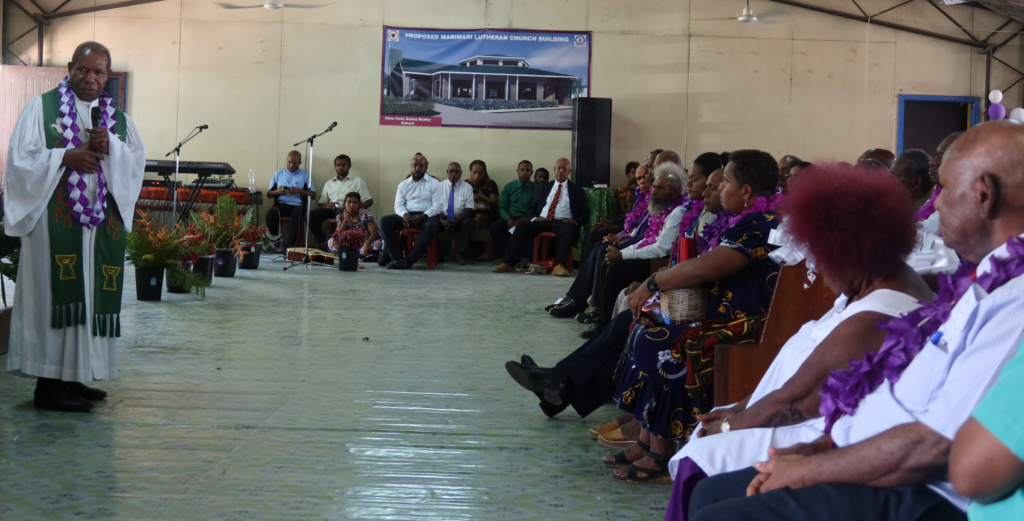
In an emotional and deeply symbolic ceremony, the Marimari Lutheran congregation marked the end of one era and the beginning of another with the consecration of a temporary worship shelter and the deconsecration of its old church building.
The ceremonies, presided over by Rt Rev Dr Jack Urame, Head Bishop of the Evangelical Lutheran Church of Papua New Guinea, brought together congregation members, church leaders, guests and dignitaries for a day of worship, reflection, thanksgiving and hope.
There were tears. There were smiles. There were memories stretching back more than 50 years. And there was hope for the future.
A powerful highlight of the day was the consecration of the Temporary Worship Shelter.

In silence, congregation members carefully moved the altar, podium and Bible from the old church building to the newly-constructed Temporary Worship Shelter.
The simple procession carried profound meaning. It symbolised that while buildings may come and go, the church itself endures through the faith of its people.
As members watched the sacred items being transferred, many reflected on the generations who had worshipped in the old sanctuary and the generations who would one day worship in the new church now planned for the site.
Following the procession, Bishop Urame formally dedicated the Temporary Worship Shelter and led prayers committing the congregation’s future into God’s hands.
In his address, he expressed gratitude for the many people who had supported the congregation over the years, including government representatives, church partners and members whose contributions had helped make the new project possible.
“This is the God we pray to,” Bishop Urame told the congregation. “He hears us, He knows us and He answers our prayers.”
He reflected on the unexpected ways in which support had come to the congregation during its long journey towards building a new church.
“God has His own way,” he said.
The congregation’s journey to this moment has been a long one.
According to congregation chairman Bamake Rumbam, the dream of building a new church has taken almost two decades to achieve.
Fundraising began in 2007 and continued year after year through corporate dinners, community support and contributions from businesses, government agencies, congregations and ordinary church members.
“When we first started and gave estimates of over K3 million, some of us wondered how we were going to achieve this,” Rumbam recalled.
“But this is God’s business. All we have to do is start. You start and God finishes.”
The new church project, valued at K3.65 million, will provide seating for approximately 1,000 worshippers and significantly expand the congregation’s ministry opportunities.
Plans include landscaped grounds, solar-powered water systems, accommodation for clergy, youth facilities and expanded outreach programmes.
Rumbam believes the project represents something historic not only for Marimari but for the wider Lutheran Church.
“All these churches we worship in today were built by missionaries and expatriates,” he said.
“This one is ours.”
The decision to replace the old church was not made lightly. After more than five decades of service, the building had reached the stage where major repairs and ongoing maintenance would become increasingly costly. At the same time, the congregation had grown significantly over the years, creating the need for a larger and more-modern facility capable of supporting expanding ministries, youth programmes, community outreach and church activities. Church leaders said the new development would not only address the challenges of an ageing building but would also position Marimari Lutheran Church to serve future generations of worshippers in Port Moresby.
The deconsecration service itself was both solemn and emotional.
Standing before the congregation, Bishop Urame offered prayers of thanksgiving for the countless lives touched within the church over the past 53 years.
The building had become far more than timber, concrete and roofing iron.
It had become part of people’s lives. It was where children were baptised. It was where young couples exchanged marriage vows. It was where families gathered to farewell loved ones. It was where generations learned about faith.
During the deconsecration prayer, church leaders acknowledged the sacrifices of the pioneers who built the church and the many pastors, evangelists, elders and members who faithfully served within its walls.
“We thank you for the many people who gathered here in faith,” the congregation prayed.
“As this building comes down to make way for a new one, may it remain not only in our memories but as a testimony to the faith of our fathers and a history for those who come after us.”
The official declaration marked the end of the building’s role as a place of worship.
For many members, however, the memories remain vivid.
Pastor Peter Jessy captured the emotions felt by many in attendance.
“It is heartbreaking to let go of the old church,” he said.
“It has been part of our family, our legacy and our lives. But we have to make a decision one day and make a stand to prepare for our future generations.
“We are making a change and securing the future of our children and the Christian faith.”
Long-serving church elder Erigere Singin reflected on her decades of involvement with the congregation and the many friendships and relationships formed through church life.
“This is my second congregation,” she said. “I left Koki and came to Marimari.”
Singin paid tribute to pastors and church leaders who had guided the congregation over the years, expressing gratitude for their service and commitment.
For Singin, the deconsecration was not simply the farewell to a building but a reminder of the many relationships, memories and acts of faith that had shaped Marimari Lutheran Church over more than five decades.
Another elder, Sumasi Singin, who joined Marimari in 1976, reflected on the congregation’s growth and influence over the years.
“Koki was the only Lutheran church then, but Marimari grew and became a congregation for the whole Port Moresby district,” he said.
He noted that Marimari had played an important role in nurturing pastors and church workers, including current pastor Peter Jessy, who had begun his ministry there as a vicar.
“For all of us, this marks the beginning of a new generation,” he said.
“The church continues its journey.”
For congregation chairman Bamake Rumbam, the day carried deeply personal meaning.
“I was married here,” he said.
“All my children were baptised and confirmed here. My family members who passed away had their funeral services here. This congregation is part of my life.”
Yet even as he spoke of the past, his thoughts were focused on the future.
“I’m happy that we have come this far,” Rumbam said.
“I know that tomorrow my children and my grandchildren will worship in the new church building.”
As the ceremonies concluded, singing groups and cultural performances added colour and celebration to the occasion.
Tributes were paid to the early builders, pastors, elders and church members whose sacrifices laid the foundation for the congregation’s success.
Many members lingered long after the formal proceedings ended. Some took photographs. Others sat quietly inside the old sanctuary. Many reflected on loved ones who were no longer there to witness the occasion.
The old church building may soon disappear from the Port Moresby skyline.
But its legacy will endure. It lives on in the generations of worshippers whose lives were shaped within its walls. It lives on in the faith passed from parents to children.
And it lives on in the congregation that now moves forward into a new chapter.
As the sun set on a historic day, Marimari Lutheran Church closed one chapter of its story.
But another chapter — built on the same faith, sacrifice and hope that inspired its founders in 1973 — had already begun.