For months, anti-immigration rhetoric has escalated to South Africa. In early June, however, he arrived at Kaunga Nyirenda’s door.
The 38-year-old gardener from Malawi, who lives in his suburb Johannesburgdescribes, according to a CNN report, how two men approached him and gave him a chilling ultimatum: he had to leave the country or he would lose his life.

“They asked me: ‘When will you leave the country? We want to rebuild our country. If you don’t leave now, you will leave in a coffin, because after June 30 we don’t need anyone,'” he says.
His experience reflects that wave of xenophobia spreading across the country. In recent weeks, protest groups and self-styled vigilante groups, which say their demonstrations are peaceful, have staged demonstrations that appear to have sparked attacks on both legal and irregular migrants.
Foreigners are accused of taking jobs away from South Africansincrease the criminality and burden the public services.
The government rejects the ultimatum

The South African government has rejected a so-called “ultimatum” put forward by anti-immigration groups, calling on foreigners to leave the country by June 30while fears of an escalation of violence are intensifying.
One of the organizations, March & March, has announced mass mobilizations if its demands are not met, including “immediate and mass deportation of all illegal immigrants”.
The president of the country Cyril Ramaphosa warned that the government “will not tolerate any attempt to destabilize the country,” whether it comes from protesters or anyone else.
He has repeatedly condemned attacks on foreigners, stressing that they do not reflect either society or official South African politics. At the same time, he attributed the incidents to “opportunists who take advantage of the real problems of the poorer strata, behind the mask of social activism.”
The security forces, according to him, are on high alert.
Migrant fear and flight

As the tension rises, the police investigate alien killing spree.
Two men from Mozambique were killed at the end of May in Mossel Bay, where more than 50 shacks were set on fire. The Mozambican government later announced that a total of five of its citizens lost their livesspeaking of “xenophobic attacks”.
At the same time, the authorities are investigating the death of a citizen Malawiwho allegedly lynched by an enraged mob in a slum near Pietermaritzburg. The attack forced hundreds of migrants to seek shelter in churches and mosques.
With the June 30 deadline approaching, more and more migrants are fleeing their homes, fearing new attacks.
A video circulating on social media showing a young man wielding a machete and counting down to the deadline has further fueled the insecurity.
Who are behind the campaign?

Today’s tension is linked to organizations such as March & March and Operation Dudula, whose name in the Zulu language means roughly “push them away” or “drive them out”.
Operation Dudula has in the past targeted foreigners’ businesses, carried out identity checks on the street and attempted to block migrants from accessing public hospitals.
The central figure of the movement is Nkosikona Dabandabaknown as ‘Phakel’umthakathi’, who has more than 1.7 million followers on Facebook and claims to have been the originator of the June 30 ultimatum.
In a video released online, she is seen exhorting a man from the Democratic Republic of the Congo to leave the country, without even asking him if he is legally in South Africa.
“June 30 is the deadline, but you don’t have to wait until then. leave now”he says, adding that after that date “I will not be able to control the people of South Africa”.
He denied to CNN that his supporters have engaged in violence, blaming other groups.
Thousands are leaving the country

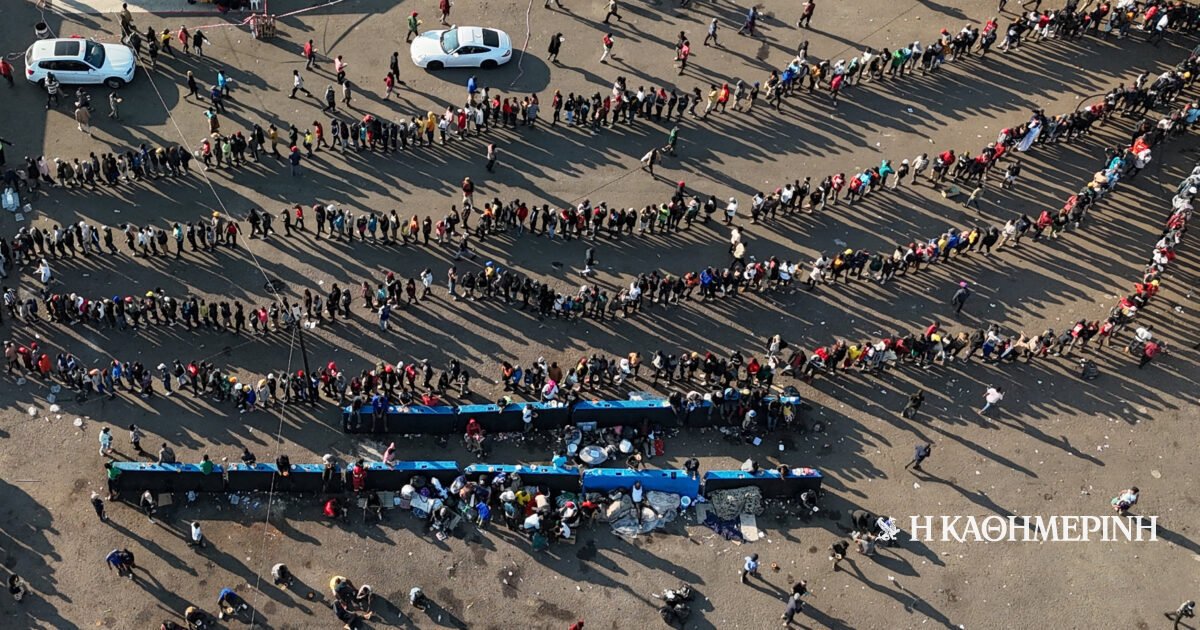
OR South African Border Management Agency announced that over the past two weeks more than 13,000 foreigners have either voluntarily repatriated or been deported. Among them are about 9,000 citizens of Malawi, 3,000 from Zimbabwe, 900 from Ghana and 300 from Nigeria.
Ramaphosa has acknowledged that irregular immigration is a problem, noting that it puts pressure on public services and distorts the labor market as some employers take advantage of cheaper labour. He emphasized, however, that immigrants should not be made scapegoats for the country’s deeper economic problems.
The root causes

More than thirty years after its end apartheid, South Africa still faces very high unemploymentdeep social inequalities and one of the highest homicide rates in the world.
Unemployment stood at 32% in the first quarter of 2026, with young people being hit hardest.
Despite the difficulties, the country remains a destination for workers from neighboring states, who take up low-wage jobs in domestic work, security and agriculture.
North-West University researcher Andre Dievenhäche notes that many employers prefer immigrants because they receive lower wages and, as non-citizens, enjoy fewer labor protections.
Familiar cycle of xenophobic violence

Attacks on migrants are not a new phenomenon in South Africa. One of the worst waves of xenophobic violence broke out in 2008, with at least 62 dead and thousands displaced, while new episodes occurred in 2015 and 2019.
Today, more than three million immigrantsabout 5% of the population, mainly from Zimbabwe, Mozambique and Malawi.
Businessman Tony Irims says the violence is mostly directed at poor black African immigrants, while economically more powerful foreigners and white residents are rarely targeted.
In his view, economic power is still concentrated in an affluent white Afrikaner minority, which leaves many black South Africans without meaningful prospects. But instead of directing their anger towards the political and economic elites, they often take it out on vulnerable migrants.
“Why are you fighting someone who is as hungry as you?”
For Kaunga Nyirenda, the mobilizations are deeply hypocritical as they exclusively target poor black Africans.
After 16 years of living in South Africa, he decided to return to Malawi.
“They have mobilized against poor black Africans,” he says, adding: “Why fight someone who is starving like you, leaving unarmed those who have amassed all the wealth?”
Source: CNN