Parliamentary committees constitute the real kitchen for parliamentary work
Parliamentary blocs provided qualitative performance in following up on citizens’ issues
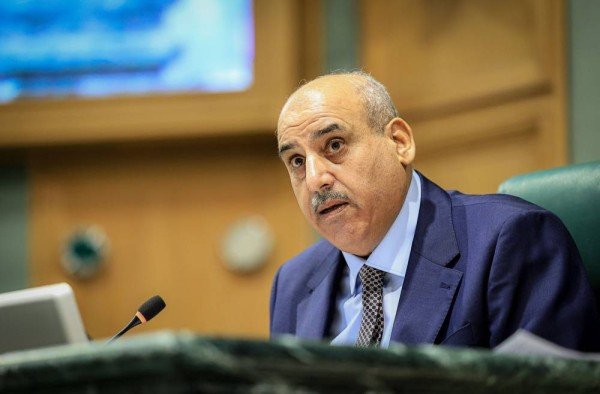
Speaker of the House of Representatives, Mazen Al-Qadi, said that the Council held (42) sessions in its second regular session, (31) of which were legislative and (11) supervisory. He added that the Council approved (19) laws out of (23) laws that the government referred to the Council, which reflects a clear momentum in performance, while (4) laws are still under consideration, which means that the percentage of completion of the proposed percentage is close to (83%).
The judge said in a press conference to talk about the achievements of the House of Representatives in the second regular session, that the representatives demonstrated a high commitment, an active presence, and worked in the spirit of one team, putting the interest of the nation above all else. Work was carried out with all care to adhere to the royal directives in a cooperative relationship with the government aimed at integration and coordination on national priorities in accordance with constitutional frameworks.
Regarding the oversight process, the judge said that the representatives asked (770) questions, of which (577) were answered, which means that the government committed to answering (75 percent) of the questions, while the remaining (193) were not answered by the government and are still within the legal period of (14) days. (41) questions were included and discussed under the dome, which reflects the presence of oversight in a practical and systematic manner.
Regarding the interrogations, the judge stated that the Council submitted (8) interrogations, and the government responded to (2) of them, compared to (6) without an answer. The session also witnessed the submission of (62) willing proposals, and (8) law proposals that were referred to the relevant committees.
As for parliamentary memorandums, the judge indicated that their number reached (74) memorandums, of which (52) were answered, while there are (22) memorandums that are still under study by the relevant committees.
The judge said: We were keen to activate the “Any new business” clause in accordance with the bylaws, which allowed a wide number of MPs to raise issues and developments, in order to establish an open and effective oversight approach. Through the clause, the MPs asked the government approximately (243) direct questions and interventions. These oral questions and interventions put forward by the MPs come in the Any new business clause to address matters that cannot be postponed and are answered by the government directly during the session or the MPs are provided with official written answers.
The judge pointed out that the parliamentary committees formed the cornerstone, as they were the real kitchen for parliamentary work, and they held (353) meetings to study draft laws and discuss national issues.
He said that the permanent office held (10) meetings, which contributed to organizing work and enhancing institutional discipline, while the executive office held (7) regular meetings, which reflects the development of teamwork and contributes to coordinating positions and raising the efficiency of performance.
Al-Qadi continued: “Within the framework of parliamentary diplomacy, the Council carried out (65) various diplomatic activities, which included meetings with heads of state and parliaments, delegations and ambassadors, in addition to official visits that strengthened Jordan’s position regionally and internationally.”
On the political level, the Presidency of the Council issued (20) statements and declarations that expressed Jordan’s firm positions and contributed to making its voice heard and defending its interests in various forums. The Palestinian issue was present on the agenda of the representatives, always carrying the banner of defending the Palestinian right and emphasizing the importance and role of the Hashemite custodianship in preserving the Islamic and Christian sanctities in Jerusalem.
Al-Qadi said: “We cannot fail to value the qualitative role played by the Forum of Jordanian Women Parliamentarians, which has formed an effective platform for empowering women and enhancing their legislative and oversight role, through programs and partnerships that have contributed to expanding their presence in public life.”
The Speaker of the House of Representatives said: Despite what has been achieved, we realize that we have more work and effort to achieve the aspirations of citizens, who always deserve the best from us. The responsibility continues, the challenges remain, and the ambition is greater.
He stressed that the parliamentary blocs have the responsibility to redouble their efforts in the next stage, to be at the level of the lofty royal aspirations, towards building programmatic blocs capable of making a qualitative shift in parliamentary work.
He continued: “At the same time, we say with all honesty that the parliamentary blocs have provided a qualitative performance in following up on citizens’ issues through meetings in the Council, visits, and activities in various governorates.”
The judge expressed his appreciation to the members of the permanent office, saying that they formed a fundamental pillar in organizing the Council’s work, as the team embodied a model of harmonious institutional work, which is based on cooperation and mutual respect, and puts the interest of the nation above all else. He also expressed appreciation “for the great effort made by the General Secretariat in the Council by harnessing all energies and effort for successful parliamentary work.”
The judge extended his thanks and appreciation to the media, saying: “I reiterate to my fellow media representatives that they are partners in oversight, partners in enhancing transparency, and partners in conveying the truth, and we value your professional role in following up on public performance and shedding light on national issues.”