40 years after the Chernobyl disaster, humanity is still learning new lessons. Most of the survivors of that nuclear accident, which occurred on April 26, 1986, are still alive, and the effects on their health are still evident. The event was so unusual that it became the subject of research for generations of scientists from various fields, from medicine to ecology and disaster preparedness.
● 2 billion years ago, a unique nuclear reactor of its kind operated in Africa. Researchers are still learning its secrets
● A finger in the Saudi eye and bypassing the blockade: the reasons behind the Emirati boom in the oil market
Each lesson learned also serves as a card in the discussion on the establishment of additional reactors for nuclear energy. What is the price we will pay if we build and if we don’t build these reactors, and who do we need to be, as a society, to make sure that another disaster doesn’t make that price unbearable?
1the damages to health
The Israeli research and the findings that are still being discovered
After the explosion at the Chernobyl nuclear power plant, in northwestern Ukraine, a radioactive cloud was created that spread over almost the entire territory of Europe. Hundreds of thousands of residents from the areas near the reactor were evacuated, but this was done in stages. Only 36 hours after the explosion, the nearby city of Pripyat was evacuated, and later an area of 30 square kilometers around the site was abandoned. It remains closed to this day. After the extent of the disaster was understood, hundreds of thousands more residents were evacuated in ever-increasing circles.
In Pripyat, the residents immediately began to feel metallic tastes in their mouths, and they suffered from headaches, vomiting and dizziness. The number of direct deaths as a result of the disaster was estimated at several dozen, but the long-term damages were much higher. The Ministry of Health of Ukraine estimates today that the lives of approximately 41,000 people have been shortened due to the effects of radiation. The Greenpeace organization, which opposes the establishment of nuclear energy reactors, talks about close to a million casualties. According to estimates, Ukraine still pays about 5-7% of its GDP to deal with the damage of the disaster, including the maintenance of the reactor dome and the closed area, disposal processes of radioactive materials, but also dealing with the health problems of hundreds of thousands of victims.
About 200,000 people who were exposed to radiation from the reactor at a high or medium level, including children, arrived in Israel as part of the Aliyat Aliya from the USSR. Many of them arrived at the radiation treatment unit at the Soroka Hospital, and were recruited for a longitudinal study, on the basis of which studies continue to be published even in the current decade.
Julie Zwickel, professor emerita in the social work department at Ben-Gurion University of the Negev, was one of the researchers who welcomed the patients. “They came with the expectation that it would be possible to repair the damage,” she says. Unfortunately, this was usually not true, but they received advanced medical care in the country.

Prof. Julie Zwickel / Photo: Private photo
Her studies, which are considered to be among the most comprehensive conducted on the victims of the disaster, found that those exposed to radiation suffered more from various types of cancer. The most common, which mainly affected children, was thyroid cancer, because radioactive iodine accumulated in this gland. The iodine came not only from the air but also from the consumption of agricultural crops and contaminated milk, sometimes for many months and at a great physical distance from the event, without knowing that it was a problem.
In the first responders, those who entered the reactor environment without sufficient protection, high levels of leukemia were also discovered.
Among those who were exposed, even at a moderate level, to radiation, effects on the heart, endocrinological problems, eye diseases and arthritis were discovered. These were unexpected effects of the radiation.
Fertility was probably also affected. “After the Chernobyl disaster, there was a dramatic decrease in the birth rate in the areas exposed to the disaster, but most of it is attributed to a behavioral response to the event: women had abortions or avoided getting pregnant at that time, because of the fear of what the disaster might do to their fetuses,” says Zwickel. “In the three months after the event, there was a 275% increase in the number of abortions in Europe.”
But Zwickel’s research found that’s not the whole story. “Among the exposed women, more needed fertility treatments and had more anemia after childbirth. The babies were born with a lower weight, there were more quiet births.”
While other studies did not find this effect in women who were already adults at the time of the disaster, a 2025 study found it in women who were then children or fetuses in an exposed Iman womb.
One of the burning questions was whether the radiation could cause genetic mutations that would be passed on to the descendants of the victims. The Israeli study did not examine this, but the issue was examined in other studies. First, no unique mutations were found in children born to Chernobyl victims, in pregnancies that began after the event. But studies from recent years, which used more in-depth tiling methods, did find changes, although they did not find a clear impact on health.
2The lessons from the evacuation
“We learned a lot about the connection between body and mind”
Zwickel’s main conclusion is surprising: “The health of the survivors of the disaster was damaged not only by the encounter with the radiation, but by the trauma.” This refers not only to the trauma that resulted from the fear and uncertainty but also from the evacuation. These effects were independent of the radiation dose absorbed.
This finding appears in other studies, which claim that the evacuation did not justify its prices, and was also managed in a failed manner. The evacuees thought they would be gone for a few days, left behind belongings and sometimes even pets, and were placed in public housing without realizing that this was their new home. They didn’t look for a job, didn’t build a community, and the research shows that they had high (and very non-Soviet) levels of acquired helplessness and dependence on the state.
From this experience, recommendations were derived for future evacuations, which may occur in any country and in different types of disasters: prepare a plan in advance for the long-term evacuation of a population, transparently communicate to them that the evacuation may continue, hold communities together and proactively preserve the connections within, give people as much control over their destiny as possible, for example in choosing between several residential options, and also offer mental health care from experts.
“We learned a lot from this disaster about body and soul connections, and how a traumatic event can be a very big weight on public health. And that is what is happening in Israel today.”
3Return of the animals
The wolf population has multiplied sevenfold
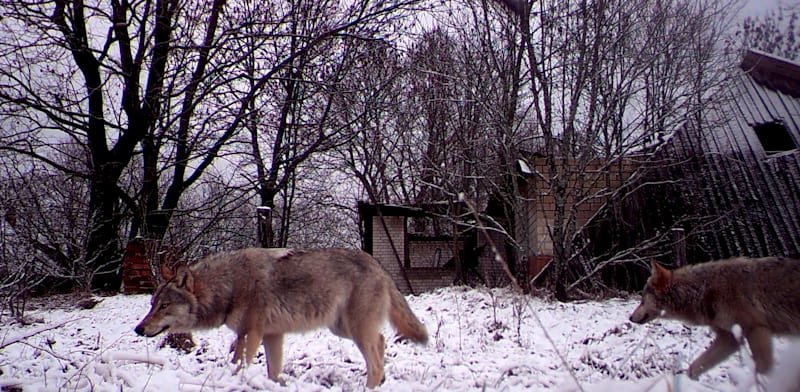
One of the biggest surprises was the survival of the animals in the Chernobyl area. The expectation was to find an area devoid of any life, or full of two-headed and three-legged mutants. In reality, the place looks like any nature reserve – full of living species, in greater quantities and variety than before the disaster. It seems that the departure of the humans was more beneficial than the harmful radiation.
The area is still full of dangerous radioactive materials, yet the wolf populations there have grown 7-fold, and along with them, species that could be their prey, such as elk and rabbits, have also flourished. Among other things, you can find there stray dogs, horses, beavers, mice and rats – all happily living in the remains of cesium 137, a substance that can kill humans within days to weeks. This finding was also reproduced after the nuclear accident in Fukushima, Japan, in 2011. where raccoons and wild boars enjoy life.
Nevertheless, it is not impossible that the diversity and abundance of animals hide suffering caused by the radiation. An article from 2025 reports a decrease in the fertility of barn swallows, and cataracts in other animals. It is difficult to study these animals because they are radioactive. If you join one of the organized trips to the disaster area, you will be asked not to pet them.
The insects actually did not thrive, although it is not yet known why. And specifically the cockroaches, which are sometimes said to be the only species that will survive the nuclear apocalypse. They are probably more resistant to radiation than humans, but not particularly resistant compared to the other animals.
And what about the mutations? The animals in the Chernobyl area do show genetic changes that seem to be passed on to future generations, but far from the biceps scares. One species of frog became darker. The melanin in the skin probably allows this species to absorb more radiation without the internal organs being damaged. The wolves seem to have developed an increased ability to repair DNA damage.
It is not entirely clear today whether the changes are due to mutations created directly by the radiation, or to natural selection of animal species that already contained beneficial mutations to begin with.
In recent years, initial studies are examining whether it is possible to learn from the mechanisms that allow animals to survive in a radioactive environment regarding cancer treatment, which is also characterized by DNA damage such as that created by radiation.
4Preparing for disasters
The reason why it is worthwhile to teach citizens how to rescue casualties
The famous photos of the May 1, 1986 procession in Kiev, only about 150 km from the reactor that was hit about a week earlier, tell the story of the concealment of the dimensions of the disaster. It was revealed to the citizens only when they started to feel unwell, and to the world outside the USSR only when their radiation levels started going wild.
According to Prof. Baruria Edini, head of the emergency and disaster management department at the School of Public Health, Faculty of Medicine, at Tel Aviv University, “the field of preparedness for disasters and crises learned a lot from Chernobyl.” One of the principles learned is transparency. “If the government wants the cooperation of the citizens, it should communicate to them as much information as possible. Studies show that the public does not panic in the face of real information, even terrible, but when it feels that information is being hidden from it. Then comes the disbelief and the conspiracy theories.” And in the end the truth will also come out.

May 1, 1986 parade in Kiev, a few days after the Chernobyl explosion. The government hid the disaster from the public / photo: ap
Another lesson was that we never know how the disaster will develop, and therefore we cannot rely on coping protocols – although these are also important – but we must write flexible coping principles, such as transparency and communication at the level of the organization, the state and international relations. That is, it is necessary to bring parties together, to accustom them to trust and direct communication, but also to build information systems that can communicate with each other, and speak the same language. This is critical to the dissemination of real-time information.
Another principle is to see the public as a resource and not a problem. “The mobilization of the public for the initial response to a disaster gives us a tremendous power multiplier,” says Adini. “Studies show that if there are people trapped inside a building after a collapse, between 55% and 95% of them will be rescued by the public, and not by professional rescuers who cannot reach everywhere.” This idea was even implemented in the past in Israel, as part of the “Easy Rescue” program, which trained 10th grade students throughout the country to perform rescues following earthquakes and similar injuries.
Q: Doesn’t it scratch the youth, to make them a simulation of earthquake rescue, and more so when they are responsible for human lives?
“Not at all, studies we conducted showed that it actually empowers them.”
5The debate about the miners
The data is used by all parties
The Chernobyl disaster taught us most of what we know about the spread of radiation on a global scale. At first, it was a nasty surprise. The radiation reached far places than expected, in complex patterns to track and predict. “Just recently I heard an amazing figure, according to which even on rooftops in Israel residual radiation was measured,” says Yitzhak Orion, professor of nuclear engineering at Ben-Gurion University. He immediately reassures that the exposure was in an amount that did not endanger anyone.
Not so in Greece. There, dangerous levels of radiation were measured in the food, to the point of having to throw milk into the bin and get rid of the cows. “The radiation spread in a pattern that looked like ping-pong,” says Orion. “It touched one place, then skipped, and fell on a place further away. The stormy weather in the Chernobyl area was responsible for this. A cloud of radioactive material was formed that traveled over Europe according to the direction of the wind.” In Britain, for example, you could watch a cloud sail over the country to the west, then return to the east and pass over the country again when the wind changed direction. “We also saw similar patterns in the Fukushima disaster in Japan, when radiation reached Alaska, probably through the ocean that burst into the reactor,” says Orion.
One of the conclusions is that the reactors should be built in arid and less dramatic places in terms of the weather, in the hope that if a disaster occurs it will be more contained. Over the years, thanks to data from Chernobyl, among other things, an index called Transfer Factor was developed, which measures the way in which radioactive substances migrate from the air, to the soil, to agricultural crops and from there to humans. This is how a complete protocol was built that defines, for example, on which lands in the vicinity of the miners it is not advisable to plant certain crops.
Orion teaches his students all the causes of the Chernobyl and Fukushima disasters in detail. The Chernobyl event should not have happened at all, he says, while in Fukushima natural forces were at work, and there was almost no way to prepare for it. No one predicted such high tsunami waves in this area. In general, he believes that nuclear power plants are quite safe.
This is a significant debate in the current era. Various parties, mainly in Europe, see nuclear power reactors as a tool for independence from the oil industry. Scientists who support this use the Chernobyl data to show that the disaster was not as great as imagined, and is not significantly different from the risk in coal-based power plants. Prof. James Hansen of Columbia University estimates that nuclear power plants have saved 1.8 million deaths from air pollution. Other researchers show that renewable energies, from sources such as water, wind and sun, will not meet the demands in the coming decades.

Prof. Yitzhak Orion / Photo: Danny Machlis, Ben Gurion University
Another group of researchers claims that precisely in this period of political unrest, the risk that the miners will be damaged is higher, making the statistics on the number of disasters to date irrelevant. Researchers such as M. V. Ramana from the University of British Columbia in Canada and Mark Z. Stanford’s Jacobson argues that building reactors is expensive and time-consuming, and that this investment is only delaying the real, truly clean, non-risky dual-use solution for the weapons industry.
“In Israel they are also talking about building energy reactors. I don’t know if it’s still in this decade,” says Orion. As Idan Eretz published in Globes in 2025, Discussions are held behind the scenesbut Israel is not a signatory to the Treaty on the Non-Proliferation of Nuclear Weapons (NPT), and without it it will be difficult to obtain international approval for the establishment of such a station.
6Is the event over?
The Russian UAV that flooded the dangers from the closed reactor
Before we turn Chernobyl into just a lesson, it is important to remember that some of the radioactive materials are still there. The reactor itself has already cooled down, but in the closed area around which the forests have not been cultivated in a way to prevent fires, and if a large fire does occur there, the smoke can carry the radioactive materials into the air.
The damaged reactor itself was surrounded by a protective dome that was hastily built about six months after the incident. In 2019, another dome was erected, this time one that was intended to last for at least a century, but a Russian drone hit it. This is damage that will cost approximately 600 million euros to repair, in addition to the approximately 1.5 billion already invested in the dome. The European Union admitted that following the damage, the dome lost part of its protective capabilities. If water penetrates into the protected area, it can increase nuclear activity there, even if not to the dimensions of the original disaster or close to it.
In recent years, farmers have been interested in returning to contaminated lands, some of which are already considered relatively safe. But for this the Ukrainians in particular and the whole world in general will have to completely trust the measurement methods, the quality of the cleaning processes and the ability of science to deeply understand the risks of radiation pollution.