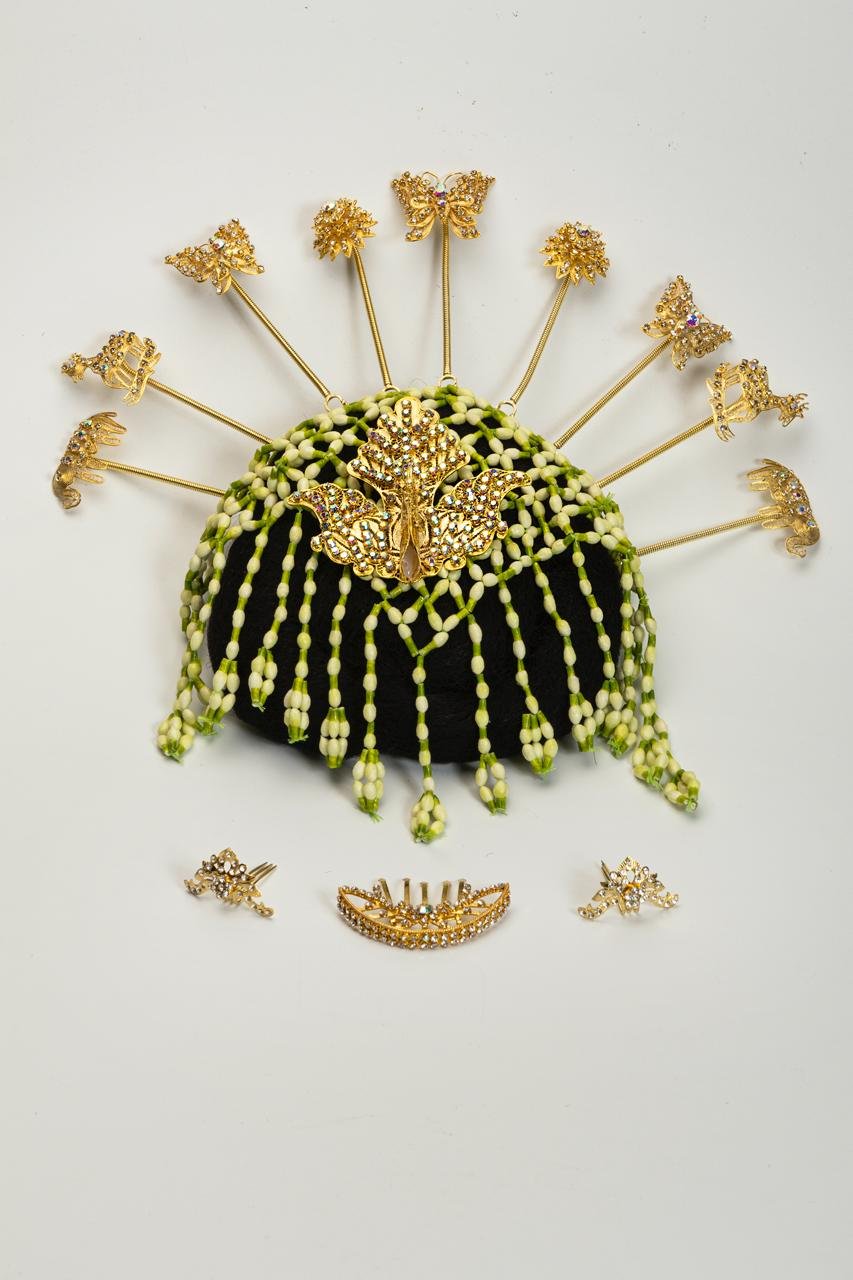
Text Audry Wajwakana
Image Private collection
PARAMARIBO —Two years after her first book ‘Life steps in Javanese life’, writer, lawyer, coach and intervision supervisor Judith Sandriman comes with the second part of a series that will include several parts. From the Netherlands, she has been studying Javanese traditions and rituals for years, with special attention to the culinary side. In her new book she focuses on three phases of life: coming of age, marriage and the commemoration of the birthday, the so-called weton.
“Rituals are not the past; they are our compass for the present,” she says. She wants to show that traditions still guide how people live, make choices and relate to each other. The second part was launched in the Netherlands on Saturday and will also be available in Suriname.
Circumcision and marriage
The book focuses on the transition from child to adult. The author describes how within the Javanese community this phase is not only experienced individually, but is supported collectively. Rituals such as male circumcision, known in Javanese as sunat, mark that transition and symbolize purification, responsibility and connection to a new life role. “The community celebrates the transition with you: from boy to man, from girl to woman,” says Sandriman.
To experience the experience up close, she attended ceremonies. This creates a book that is not only informative, but also personal and recognizable
At the same time, this celebration is accompanied by clear expectations. “You are also made aware of: ‘pay attention, don’t do crazy things anymore’.” This social control and protection is reflected in the stories she collected. For example, she tells about a woman who, after a relationship of several months, unexpectedly ended up in a fully organized wedding party. Her parents had decided it was time to get married. According to Sandriman, this shows how traditions can sometimes be compelling, but also arise from a protective idea. Parents want to prevent their children from “moving from one relationship to another” and choose to guide them towards a stable marriage.
She describes the wedding itself as a deeply symbolic moment in which not only two people, but also two families are connected. She pays a lot of attention to the meaning of ritual elements, such as richly decorated bouquets. According to her, these are “actually a kind of letter with wishes” for the bridal couple, focusing on themes such as care, fertility and steadfastness. Sandriman emphasizes that she deliberately did not opt for a practical manual. “I didn’t want to make a handbook. I wanted to make a book that – if it excites you – you can look for further information.” She provides interpretation and background so that readers can understand the deeper meaning of rituals.
Avoid repetition
Another important subject is the weton, which in her view functions as a kind of personal compass. On this basis, important moments in life are determined, such as when it is best for someone to get married, move or take a new step. This calculation even plays a role in the event of death. In addition to rituals, the author pays a lot of attention to food, an aspect for which she has a special passion. She included recipes in her first book, but she consciously chose to avoid repetition. For example, she does not discuss again the berkat that occurs in every gendur (joint prayer).
To experience the experience up close, she attended ceremonies. This creates a book that is not only informative, but also personal and recognizable
In book two she added new dishes, including vegetarian options. In doing so, she shows that food is inextricably linked to rituals and community. In both books the emphasis is on the role of women. According to Sandriman, many existing descriptions of Javanese traditions are written by men, leaving women’s perspectives underexposed. She tries to correct this by paying attention to their role within rituals, the household and the culinary domain. In doing so, she also makes topics for discussion that are often less explicitly discussed, such as the transition to adulthood for girls and expectations within marriage.
Activities
During her research, Sandriman spoke with cultural experts, including Pak Sapto Sopawiro, and people who have experienced or organized traditional rituals themselves. She weaves those stories into one whole. To experience the experience up close, she visited ceremonies. This creates a book that is not only informative, but also personal and recognizable.
Sandriman gives presentations, often in combination with workshops or meetings that tie in with the themes from her book. For her it is important that it does not stop at reading, but that people also come together to experience the meaning of these traditions. She especially wants to create awareness by sharing her stories and providing context. “Because traditions only really live on when people understand what they mean,” she emphasizes.-.