In the middle of May, the first Montenegrin theater showcase was held, a festival presentation of the country’s theater production intended for selectors of international festivals, foreign producers and critics.
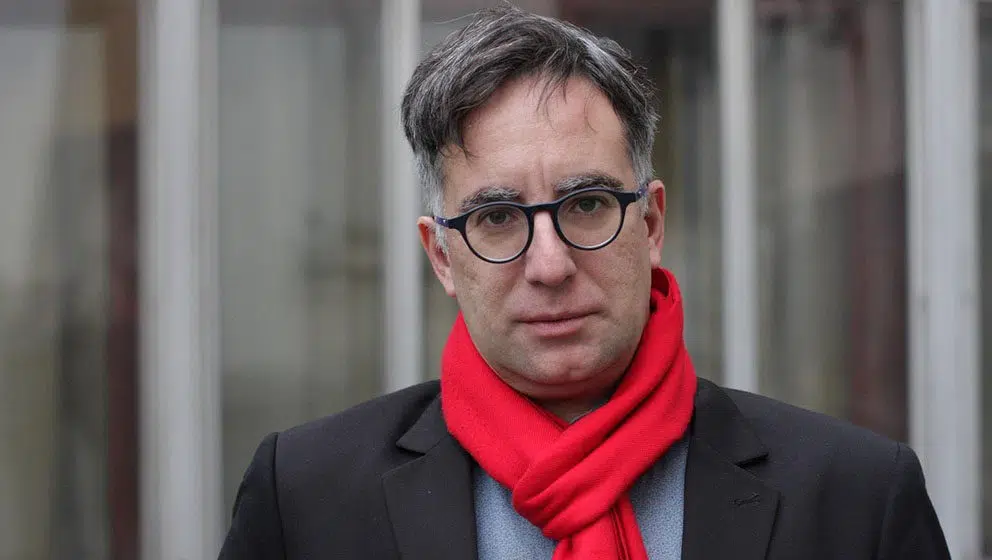
The purpose of this event is a better placement of Montenegrin theater on the international stage, through participation in foreign festivals and reporting in world theater magazines and other media, and the initiator of this showcase is Ivan Medenica, professor at the Faculty of Dramatic Arts in Belgrade, theater expert and vice-president of the International Association of Theater Critics.
Ivan Medenica talks about how this festival presentation went, what is the situation in Montenegrin theater and culture, how artistically and socially significant is the reconstruction of the Yugoslav cultural space, Ivan Medenica talks about this for Danas, but also about the opportunities in Montenegro, which is rapidly moving towards the European Union.
According to the reactions of the cultural public, it could be said that the first Montenegrin Theater Showcase was a great success. How did the idea to organize it come about?
– I am of the opinion that the Montenegrin theater achieves high artistic ranges, but that, unfortunately, it does not have the international visibility it deserves based on those ranges. It is present on the regional scene, it is a regular guest at festivals in the former Yugoslavia and receives awards, but not outside this cultural circle. Admittedly, the situation is similar with other national theater cultures from the region, none of them have a more notable performance on the wider international theater scene, except, of course, when it comes to individuals.
The renewal of the Yugoslav cultural space is, of course, very significant both artistically and socially, but it also has its flip side, which is the re-closing in known, safe prohibitions. I believe that Montenegrin theater has the potential to step out of that circle, and that’s how the idea came to organize the first Showcase of Montenegrin theater intended for selectors of international festivals, producers of foreign theaters, critics of world media.
The initiative received the support of the relevant minister, Tamara Vujović, and the Ministry of Culture and Media of Montenegro took over the financing, as well as a good part of the organization of the project (the external production team consisted of Danilo Milatović and Marko Saranović, in addition to me), and set it as one of the priorities as part of the celebration of the twenty-year anniversary of the restoration of independence.
One of the first indicators that the project was indeed a success is the fact that we had over thirty guests from Argentina, Thailand, China, Portugal, Belgium, Sweden, Germany, Poland, Slovakia, the Czech Republic, Austria, Hungary, Romania, Turkey and all the countries of the region.
What made up that program, and do the plays you chose indicate any general tendencies in Montenegrin theatre?
– The program opened with Boris Liješević’s original project “Naličje”, a production of the Montenegrin National Theater that received two Sterija awards at last year’s Pozorje, and it consisted of ten performances and was extremely intense. The first three days we were stationed in Podgorica, with the fact that we spent one whole day in Cetinje and saw a play there at the Royal Theater “Zetski dom”, and the other two in Budva, with one evening going to Tivat for a play at the Cultural Center there.
The intensity of the program reached its peak when the guests watched matinee performances in Podgorica and Budva on the same day and then the evening performance again in Cetinje – three performances in three cities in one day.
The program featured performances by national institutions, city theaters or cultural centers, as well as those from the independent scene. Decentralization was also an important criterion, so that behind the performances are houses/groups from Podgorica, Cetinje, Budva, Tivat and Kolašin. In the selection, I was guided not only by the artistic scope of the plays, but also by their thematic focus.
Based on my choice, it can be concluded that the Montenegrin theater is extremely politically aware, that it establishes a critical attitude towards the problems of contemporary society (the connection between government and crime, the investor mafia, corruption, widespread drug trafficking…), and above all towards the position of women in it, although this topic is also treated in a historical perspective.
Which show attracted the most attention of foreign guests?
– “Death in Dubrovnik”, a play directed by Petar Pejaković and produced by the independent troupe Prazan Prostor, which deals with the responsibility of a part of Montenegrin society for the shelling of Dubrovnik in 1991, was followed with the greatest interest, which resulted in her being invited to open the 8th Sarajevo Fest, thereby fulfilling one of the goals of this showcase, placement at international festivals. This play represents in the showcase program a group of plays from contemporary productions that critically reflect the responsibility of individuals or parts of Montenegrin society for violence and/or crimes from the beginning of the so-called Yugoslav wars (Morinj camp, kidnapping and crime in Štrpci).
Such theatrical confrontations are completely in line with the efforts of the Montenegrin society to clear up the traumas of recent history and go on the right path in the process of comprehensive acceptance of civilizational values which, although in crisis, are still embodied by the European Union, and which Montenegro will, by all accounts, enter as early as 2028.
In terms of dealing with the past and part of Montenegro’s responsibility for the wars of the 90s, is the Montenegrin theater perhaps ahead of the Serbian one? Do we even have an engaged theater in Serbia today?
– We should not forget that plays that deal critically with the recent and traumatic past were also in Serbian theater fifteen years ago, let’s remember “Hypermnesia” produced by Hartefakt and directed by Selma Spahić or “Cuckoo” directed by Oliver Frljić and produced by the National Theater from Subotica. The important difference is that in Montenegro we currently have a concentration of such performances and that they are not, as was the case in Serbia, primarily independent troupes and theaters from smaller communities, but also the umbrella national theater institution, the Montenegrin National Theater.
This can testify to a certain tendency not only in repertoire, but also in cultural politics… As for the second question, it seems quite disturbing that, as far as I know, only one play on the subject of student and civil protests has happened in the last year and a half, and that is “Dora or Who Will Sew Vests” by the young author Andreja Kargačin, which will have its premiere in a few days at the prestigious Vienna Festival. I don’t know how it can be interpreted, probably as a form of self-censorship.
When we started this conversation, you said that Montenegro is currently on the right track. Could this also refer to the decision of her government to return 87 SNS “activists” from Tivat airport, mostly with incriminating files, who allegedly intended to be “personal security” for our president at the summit of the EU and the Western Balkans?
– Yes, of course. It is a correct and responsible political decision, although the regime in Serbia and its media henchmen are unsuccessfully trying to portray it as an act of hostility towards our country. There was a well-founded suspicion that about ninety guys who are certainly not tourists, many of whom have already been prosecuted, represent a certain risk in a situation that requires the highest security measures, due to the presence of a large number of top regional and European officials.
If they were not a real danger to the safety of the meeting participants, it is enough that they could make political provocations and thus cast a shadow on an extremely important and well-prepared event. The explanation of our officials confirms the assumption that they were sent to provoke, because how else to understand the plan to spread banners, shout slogans and in other ways “chant” that regime, and above all its leader, on the territory of the country with which the Serbian regime has strained relations as much as possible.
Therefore, Montenegro acted correctly and scored an important point, while Serbia did the opposite: our government humiliated the country in front of the regional and international community. It is simply unbelievable that someone came up with such an arrogant and infantile idea, which from the beginning could be assumed to be an own goal.
Nobel Prize for Theater
You recently received a significant recognition – the Norwegian Ministry of Culture chose you as a member of the committee for the awarding of the International Ibsen Prize, perhaps the world’s greatest theater award, often referred to as the Nobel Prize for theatre. Can you introduce us to this award?
– It is really one of the world’s biggest theater awards, behind it, as you said, is the Ministry of Culture of Norway, its financial side is very “respectable”, it is about millions of crowns, and the laureates are some of the world’s leading theater artists and troupes. So far, Peter Brook, Ariana Mnushkin, Heiner Goebbels, Christoph Marthaler, Forced Entertainment…
I am especially inspired and happy that the course of the award has been slightly changed since a few years ago, because now the emphasis is more on recognizing globally lesser-known creators and collectives, than on confirming indisputable greats. This is evidenced by the last laureate, the subversive and politically very engaged Korean theater creator, composer and video artist Jaha Koo.
Follow us on our Facebook and Instagram page, but also on X account. Subscribe to PDF edition of Danas newspaper.