Why the meat is sent for aging
We head to the Molodechno Meat Processing Plant, known as the Veles-Meat enterprise, in search of answers. Its history, by the way, began in the landmark year for Belarus, 1939, when Molodechno and the surrounding territories became part of the BSSR. That was when the decision was made to establish such a production facility in the city.
But back to our patties. Raw materials arrive at the plant from its own cattle‑raising farms. There are also other suppliers in Minsk Oblast. The origin of the ingredients determines both the taste of the burger and the health of consumers. That is why inspection and control are carried out at every stage.
“First, the half-carcasses are sent to cold storage chambers. There, at a set temperature, they are cooled. The temperature is around plus two degrees on average. They are aged for 2-5 days, and then they are taken for processing in the deboning section. Maturation is necessary for all biological processes in the muscles to finish,” Director of the Primary Processing Facility, Veles-Meat, Yevgeny Rud said.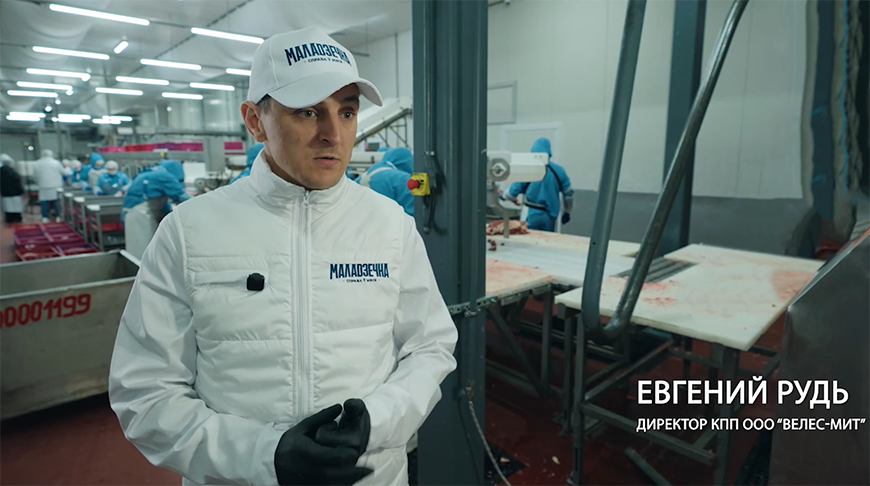
Who and how selects the meat for burger patties
A half-carcass weighs roughly 120-140 kilograms. They are quartered, and only then do the deboners begin their work. Simply put, they separate the meat from the bone. It is a delicate process: every piece matters.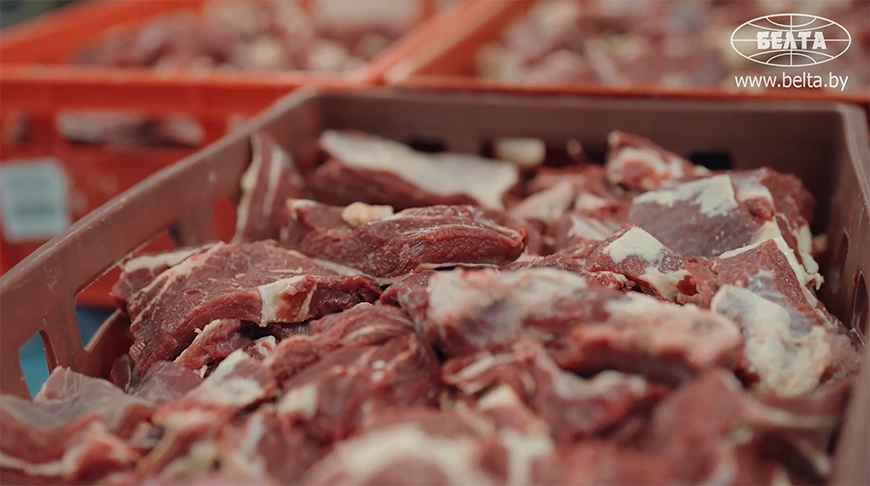
“It is precision work. The main task of a deboner is not to damage valuable cuts and not to let any bone fragments, periosteum, or cartilage get into further processing. Then the trimmers take over. Trimmers ‘refine’ the meat: they remove less valuable parts, keep the more valuable ones, and begin sorting. After that, the meat is sorted into specific cuts or grades used for burger patties,” Yevgeny Rud stressed. “Fifteen deboners and 22 trimmers work in this section. It is a specialized profession. Not everyone can handle the pace, workload, and the work with meat. It is a hard job.”
Trimming is also a creative job. Experienced specialists can identify suitable meat at a glance. But they must also follow strict criteria. All these measures ensure a high standard of the final product and its complete safety.
“The technology, as well as veterinary and sanitary regulations, is strictly followed. All meat intended for patty production undergoes laboratory testing,” Yevgeny Rud emphasized.
You can learn the profession of trimmer in vocational schools. But the company has developed its own training system for trimmers so that specialists fully meet the internal needs of production and understand its specifics. The result is a cohesive team of professionals.
By the way, the capacity of this section is more than 40 tonnes of meat per shift, but suitable raw material specifically for burger patties is not that much, about 20 tonnes.
Technicians check whether the meat has been properly selected, after which specialists carry out laboratory testing. The raw material for burger patties is then frozen, which preserves all the properties of the meat and fat.
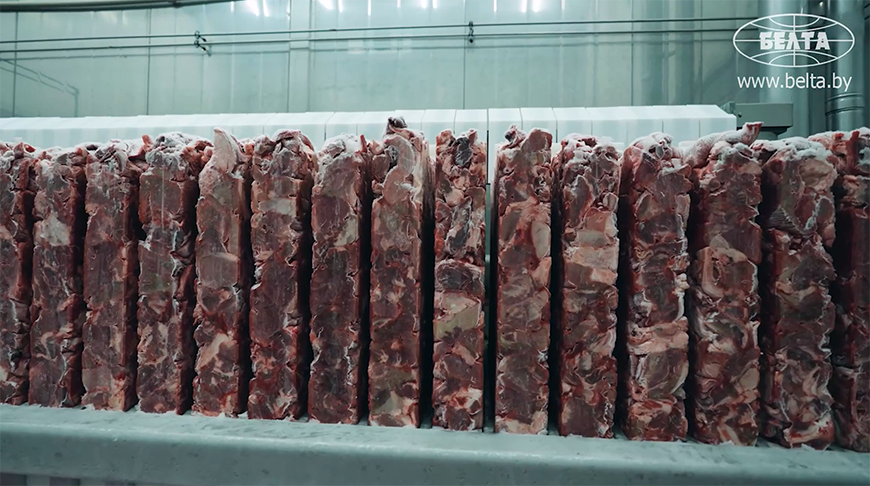
“Our facility has excellent freezing units for this type of raw material. These are vertical plate freezers that freeze blocks to minus eight degrees at the core within three hours,” Yevgeny Rud said.
What makes a burger patty juicy?
The frozen meat then goes for processing. Before being fed into large meat grinders, the raw material undergoes X-ray analysis. This is necessary to determine the fat content in the control batch and to prevent the presence of foreign objects such as glass or tough connective tissue. Automated lines allow for fast, high-volume production while maintaining high standards.
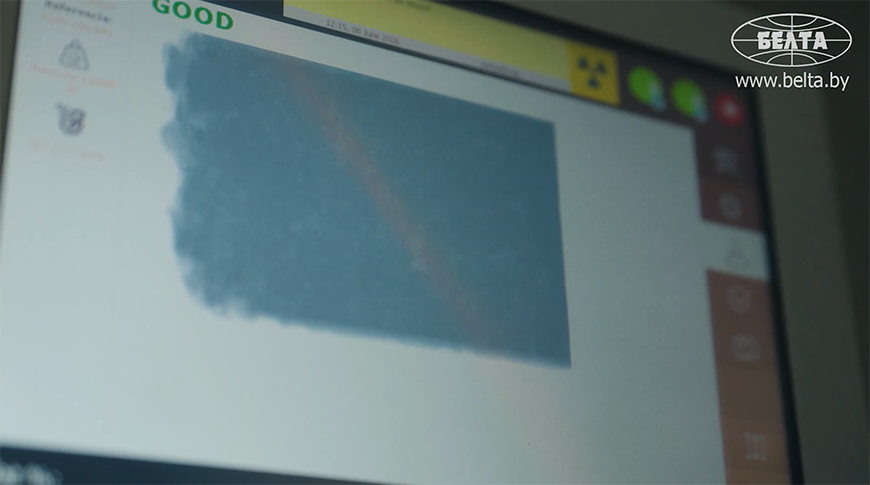
“The subsequent processes are fully automated. After X-ray analysis, the meat is conveyed to large grinders – large meat mincers – where primary grinding takes place. The meat is then conveyed to a mixer, where it is blended until the fat tissue is evenly distributed throughout the batch,” Andrei Spiridonov, Director of the Meat Processing Complex at Veles-Meat.
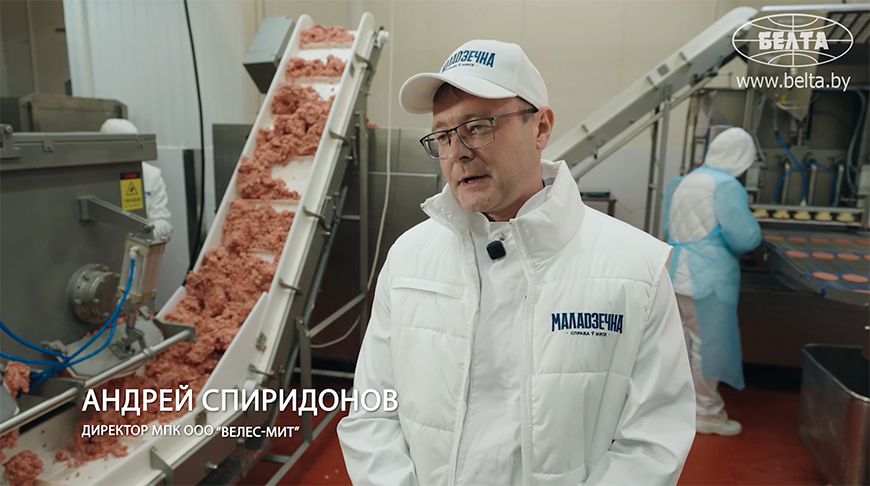
This is essential for the juiciness of the finished patty and its uniform structure.
In the production of beef patties for burgers, only domestically produced beef is used. There are no other ingredients or additional additives. “There are specifications approved by Mak.by, which regulate the size and weight of the raw semi-finished product, as well as the weight of the patty after cooking and its compliance. And many other criteria that must be met in the finished patty,” Andrei Spiridonov added.
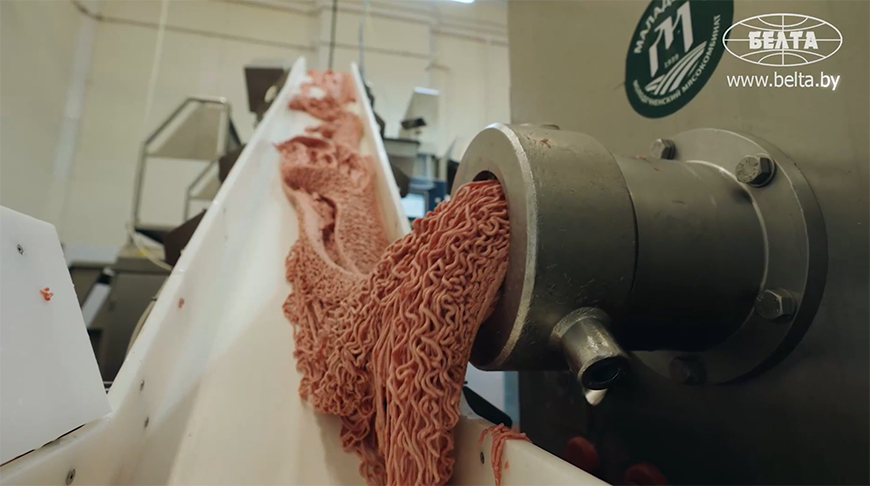
After final grinding, the minced meat moves along a conveyor to the forming machines. From there, the patties are sent to the flash freezing line. On the flash freezing line, the patties remain for 40 minutes at an ambient temperature of -45 degrees. By the time they exit, the internal temperature of the patty is -18 degrees Celsius.
After freezing, the patties pass through an X-ray unit with a metal detector and an automatic rejector.
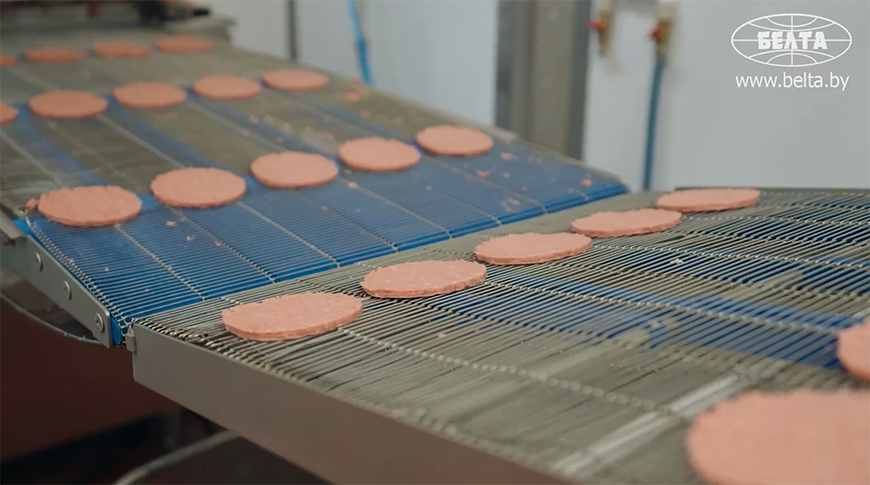
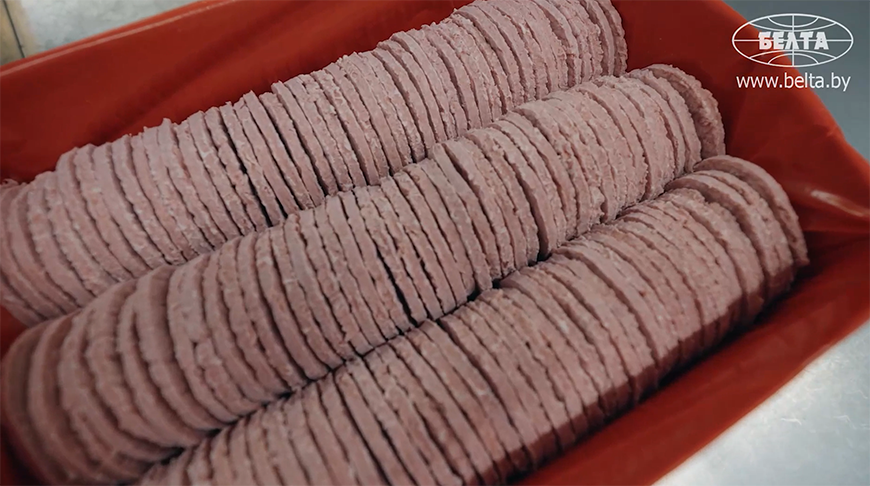
Production of burger patties in Molodechno began two years ago. At that time, nearly five tonnes of beef patties and 600 kilograms of pork patties were shipped to the Mak.by restaurant chain. According to Andrei Spiridonov, this was preceded by long, painstaking work by all those involved in the process, as well as countless tastings. The result is a juicy patty that meets all the requirements of the restaurant chain. Now, the company’s burger line produces over 120 tonnes of beef patties every month. It all comes down to the meat. And no additives.