If you’re planning a vacation to Italy this summer, be forewarned: The popular southern European country has the highest local fine dust readings in the EU. This is the conclusion reached by the European Environment Agency (EEA) in its report on air quality, which examined twelve other countries in addition to the EU-27, such as the Western Balkans, Norway, Liechtenstein, Switzerland, Iceland and Turkey.
The key message is twofold: on the one hand, air quality has continuously improved over the past two decades, but on the other hand, measured pollution is still above the applicable EU air quality guidelines at around one in five measuring stations in Europe.
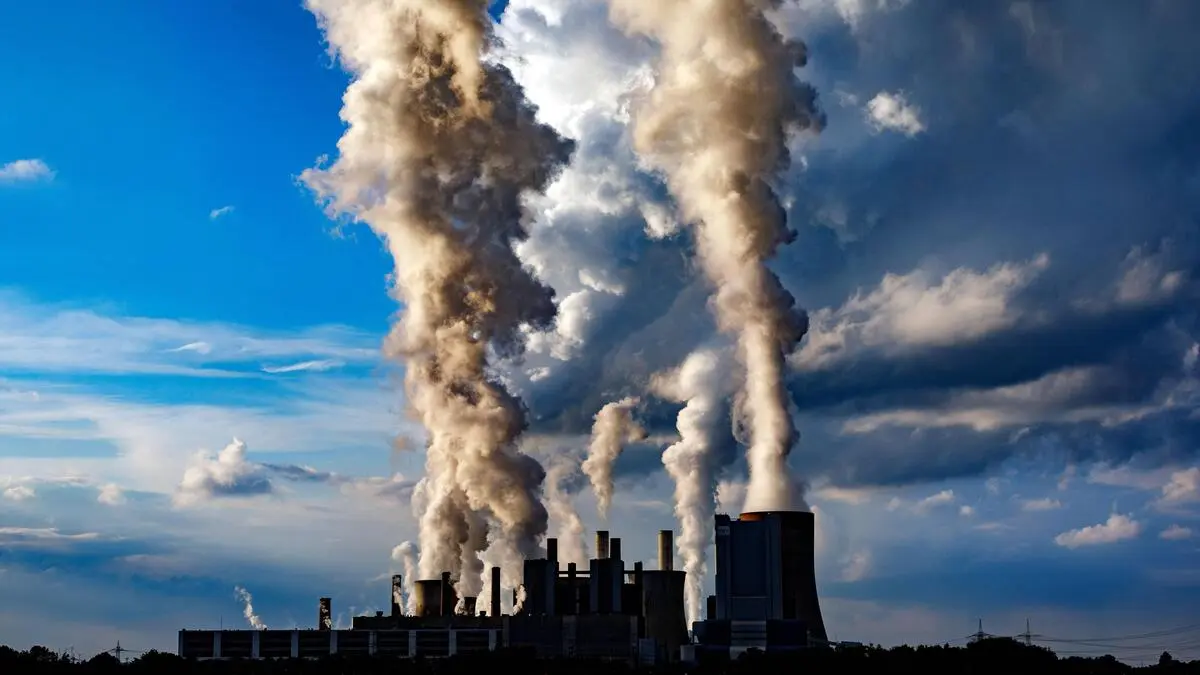
The report says that pollution with ground-level ozone (this has more than doubled in the past 100 years) and fine dust in the categories PM10 (which has a particle size of less than ten micrometers) and PM2.5 is particularly problematic, according to the report.
While PM10, caused by tire wear, agriculture and construction sites, “only” penetrates the nose and throat, the even smaller particles in the PM2.5 category, which arise from combustion processes in industry and traffic, but also from forest fires, are even more dangerous: They penetrate deep into the alveoli and the bloodstream and can have serious health consequences such as cardiovascular diseases and severe impairment of the respiratory tract. The worst values in the years 2024/25 examined by the EEA with regard to PM2.5 were recorded in the municipality of Ceglie Messapica in the popular holiday region of Apulia (Italy).
Gianluigi De Gennaro, Professor of Chemistry and Environment at the University of Bari, explains this in an interview with “Euronews” refers to the burning of biomass in the winter months. “Pollution is increasing because the lowest part of the earth’s atmosphere (the peplosphere, note) is becoming increasingly dense and harmful particles find it even more difficult to penetrate this layer in the cold season.”
In Poland, Croatia, North Macedonia, Bosnia-Herzegovina, Serbia, Romania and Turkey, the PM2.5 concentration was also above the EU limit values in the period examined.
This is not without consequences. The death rate directly related to fine dust pollution is particularly high in these countries (see graphic). With almost 42 deaths per 100,000, Austria is in the lower range, but worse than Germany and France.
By the way, if you take the even stricter limit values World Health Organization (WHO) as a reference, more than nine out of ten Europeans are exposed to increased levels of pollution. So what should you do to protect yourself as best as possible? Professor de Gennaro recommends that residents of large cities not open their windows during rush hour and, above all, not plan strenuous sporting activities during this time.
But there is also good news: for some pollutants, such as the metal cadmium, all European countries are already complying with the limit values set in the EU directives on air quality, the authors of the report explained. Improvements have also been observed in other air pollutants such as carbon monoxide and lead.