Tegucigalpa, Honduras.
Honduras and the Republic of South Korea move forward in strengthening their bilateral relationship through a strategic cooperation alliance focused on key sectors such as energy, health, agriculture and education.
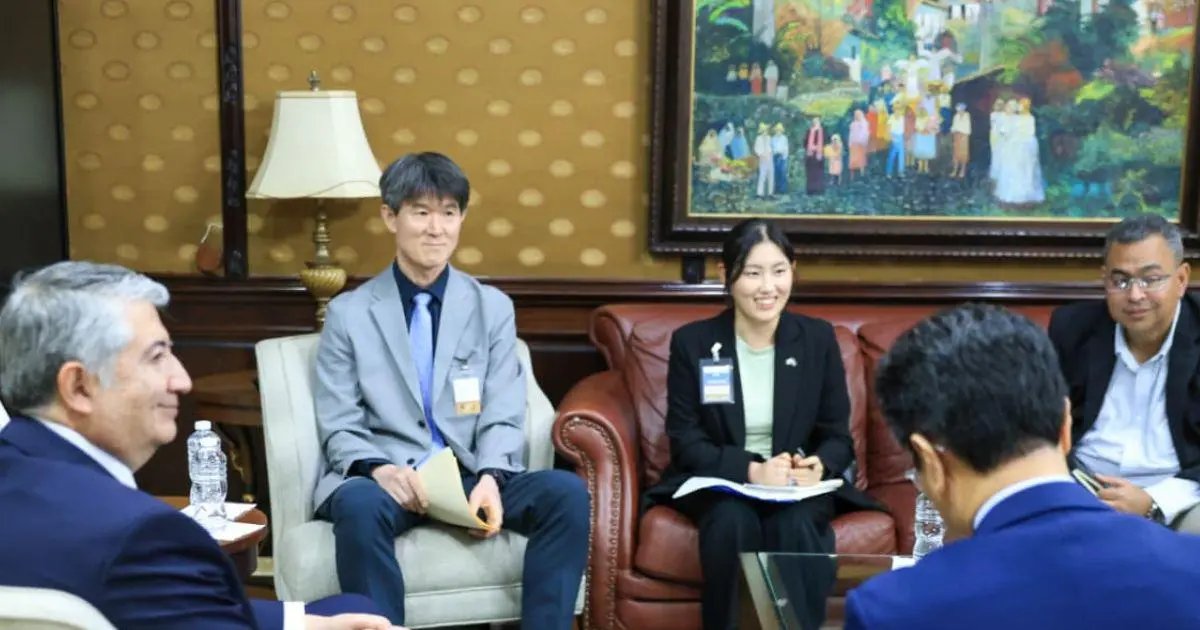
The approach was addressed on Wednesday, April 15 during a diplomatic agenda headed by Juan Carlos Garcíasecretary of the Presidency of Honduras, at the Presidential House, where joint initiatives aimed at sustainable development and institutional modernization were discussed.
As part of this cooperation, the Forest Conservation Institute (ICF) reaffirmed its commitment to the protection of natural heritage, in coordination with the Korea Forest Service (KFS) and the Korea Forest Promotion Institute (KOFPI), in an alliance that seeks to position Honduras as a regional reference in the fight against climate change.
José Armando Ramírez Mejía, head of the ICF, participated in the meeting; Jaehong Jun, director of the Korea Forestry Industry (KOFPI); Sungnam Choi, director of KOFPI in Honduras; Myung Joon Kim, chargé d’affaires of the South Korean embassy; and Minyi Park, advisor on Politics and Economics. César Narváez, presidential advisor on Agriculture, also attended.
One of the main advances in this bilateral relationship is the implementation of the project “Promotion of Productive Restoration and Forest Conservation”, valid until 2027 in the department of Santa Bárbara. This initiative is derived from the memorandum of understanding signed in 2021 and is aimed at the recovery of ecosystems affected by storms Eta and Iota.
The project combines technical assistance and a social approach to promote environmental restoration in vulnerable areas, incorporating community care schemes that strengthen the resilience of local producers. Likewise, it promotes agroforestry and silvopastoral systems as sustainable alternatives to improve productivity and living conditions in rural areas.
In perspective, the ICF is working on the proposal for the creation of the National Forest Restoration Center (2027–2032), an initiative that seeks to consolidate technology transfer and optimize sustainable production processes, as part of a joint roadmap between both countries.
The authorities highlighted that this bilateral cooperation reinforces the role of international assistance as a tool to confront the effects of climate change, while promoting economic development and sustainability in forest communities in Honduras.