April 13, 2026 – 17:52
The president of the National Chamber of Commerce and Services of Paraguay (CNCSP), Ricardo Dos Santos, warned that in the current international context the biggest concern for companies is the “unpredictability of the price of fuel, rather than the increase” itself. He pointed out that this factor already impacts logistics costs and anticipates an inevitable transfer to final prices.
The last ones fuel increases derived from oil, due to the war in the middle eastput pressure on the profitability of companies around the world – those in Paraguay are no exception – and warn that it will also affect consumers.
He president of the National Chamber of Commerce and Services of Paraguay (CNCSP)Ricardo Dos Santoscommented that the union is aware that we live in an “absolutely volatile” world and that companies and the economy must be prepared and strengthened to be able to face this instability of international markets.
In that sense, he maintained that, from the CNCSP, they consider that as a country we must continue strengthening national fuel reserves to be able to “mitigate the ups and downs of day-to-day life.” “The unpredictability is much more impactful for companies than the cost itself (rises),” he said.
Read more: Petropar confirms new increase in fuel prices
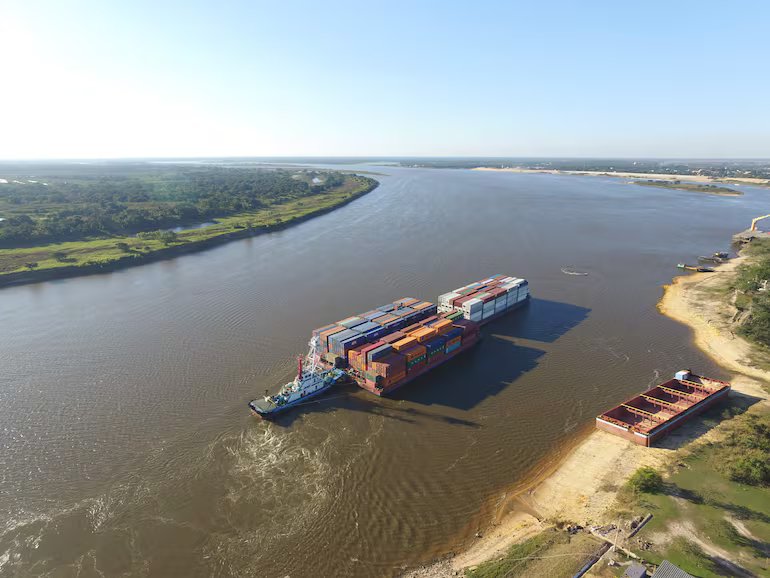
In that sense, he indicated that within the Chamber of Commerce there are companies that offer freight services, such as the Association of International Cargo Carriers, the Center for River and Maritime Shipowners, the Association of Maritime Agents and the Chamber of Terminals and Private Ports, among other unions. that have a direct impact in the costs of their services due to the increase in fuel.
Fuel has a 30 to 40% impact on freight costs.
The businessman added that many times the use of fuel represents between 30% and 50% of the cost of the service, so he assured that for these companies it is important “negotiate systems and adjustment formulas” that are fair to the situation, but at the same time can be absorbable by clients.
“The union has importers, exporters and merchants, users of transportation and logistics services, who feel the direct effect of the rise in fuel. One issue that we mention is the need for companies generate reservations not capitalized to have flexibility to face fluctuations as large as these, in addition to implementing other mitigation and risk reduction measures,” he indicated.
Dos Santos noted that in Paraguay it is still necessary develop the market and incorporate into the costs of risk mitigation tools services. He explained that in many advanced economies the customer and supplier they agree on mechanisms coverage, such as those related to fuel.
Read more: Several sectors contain consumer increases, but recognize the impact of fuel
The rise in fuel will impact the cost of the product
“Those are tools that in Paraguay are not yet implemented nor commercially accepted. It’s a challenge. Overall, we see how this upward pressure on costs will impact the productand it is a question that we must be aware of as a society: there will be an increase in costs and therefore of prices in everything we consume,” highlighted the union member.
Give up margins
Regarding the absorption capacity, he stated that it is a “quite difficult” discussionbecause no one has the capacity to completely absorb the costs. According to Dos Santos, what generally happens is that they give up margins both from the service provider and from the client, with the aim to mitigate the final impact in the consumer price.
Given this situation, the president stated that it is necessary be readywith strategies at both a family and business level, given that it is “the result of the reality that one lives,” and that one must be increasingly “organized, neat and a planner with resources.”