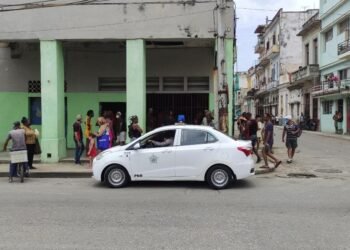
Havana/The ringing of cauldrons in broad daylight is now becoming common. It happened again this Wednesday in the Havana neighborhood of Luyanó, under the gaze of two police patrols who this time limited themselves to observing while the neighbors banged their pots shouting “water and light.”
Those who looked out from the balconies to see what was happening were invited to join. “It’s not up there, it’s down here, in the street,” a neighbor shouted to the curious onlookers who are still resisting the protest. Others played pots more sheltered, from their balconies. By that time they had been without electricity for about five hours, which also meant not having water.
The protest, which he was able to witness 14ymediowas not the only one that occurred this Wednesday in the capital. Not even in the rest of Cuba. The months that the population has been suffering, sometimes for more than 48 hours straight without electricity, are taking an even greater toll with the summer heat.
In Santos Suárez, the night was less peaceful. The protest began after 8 p.m. and the intensity increased until, according to a testimony on social networksthe crowd took over General Serrano Street from start to finish, setting fire to each of the many piles of garbage until everything got out of control.
“They didn’t turn on the electricity, they almost burned the Las Estrellitas de Serrano Children’s Circle. The firefighters had to arrive so that it didn’t spread further. Further along General Serrano Street, they couldn’t control the fire and it burned down the Etecsa server, which are those booths that are on certain corners, leaving more than half the neighborhood without communication,” said a witness to the events. To top it off, the state monopoly has said that it does not have spare parts to fix it and the lack of communication will not be short.
“In one of the corners, where the garbage cans were lit, since it was night, the wind moved the air inside the homes and a minor ended up in the Raul Gomez polyclinic since she is asthmatic, not to mention the rest of the homes breathing those chemicals,” laments the neighbor, who in her publication reproaches the United States for the energy blockade and the regime that, “without the intention of proposing a positive change, demands resistance. And in the middle of these two governments, the people of Cuba are hanging themselves with that rope.”
The night was long again. The deficit forecast was 2,040 megawatts, since at peak hour the electrical system only generates 990 and the demand was at least 3,000. The entry of the Antonio Guiteras thermoelectric plant, the main one in the country, was expected this Wednesday after three intense days of repairs.

/ Impacts from the Heart
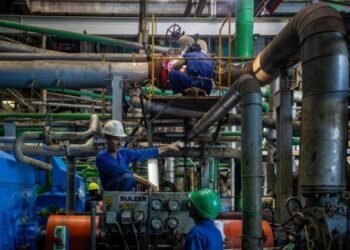
Finally, the situation has dragged on for a bit and the workers were waiting, on Wednesday afternoon, for the start of the hydraulic test, which will decide the start of the start-up, after verifying all the weld seams and threat areas in the boiler.
Engineer Román Pérez Castañeda, general director of the plant, told the official press that the check would take about six hours, “a decisive moment to rule on the work and correct any weak points.” If favorable results are obtained, the boiler is closed and switched on, after which it is necessary to wait six more hours to reach the parameters, produce useful steam and start the turbine, previous steps to join the national electro-energy system.
“We recognize that it is a challenge against time, but we trust in the work that has been carried out,” said Pérez Castañeda. The worst news is that at this point the 200 MW that Guiteras can provide almost matters little when the lack is ten times more.
/ Impactsfrom the Heart/Collage