Madrid/There is a liturgical memory that we Cubans carry in our suitcase, a kind of catechism learned under the shadow of fear. Those of us who survived the Island and had the opportunity to witness the visit of John Paul II in 1998, Benedict XVI in 2012 or Francis in 2015, maintain a shared certainty. The three popes who set foot in Cuba did so under a dictatorship.
His visits, balsamic and hopeful, opened certain cracks in the wall of totalitarianism but were always guided by the regime’s script. We saw full squares, yes, but monitored by the political police. We hear speeches of peace but under the suffocating weight of a Government that has used the presence of the Vicar of Christ on Cuban soil to wash its face before the world. And in Cuba there is freedom of worship but not religious freedom.
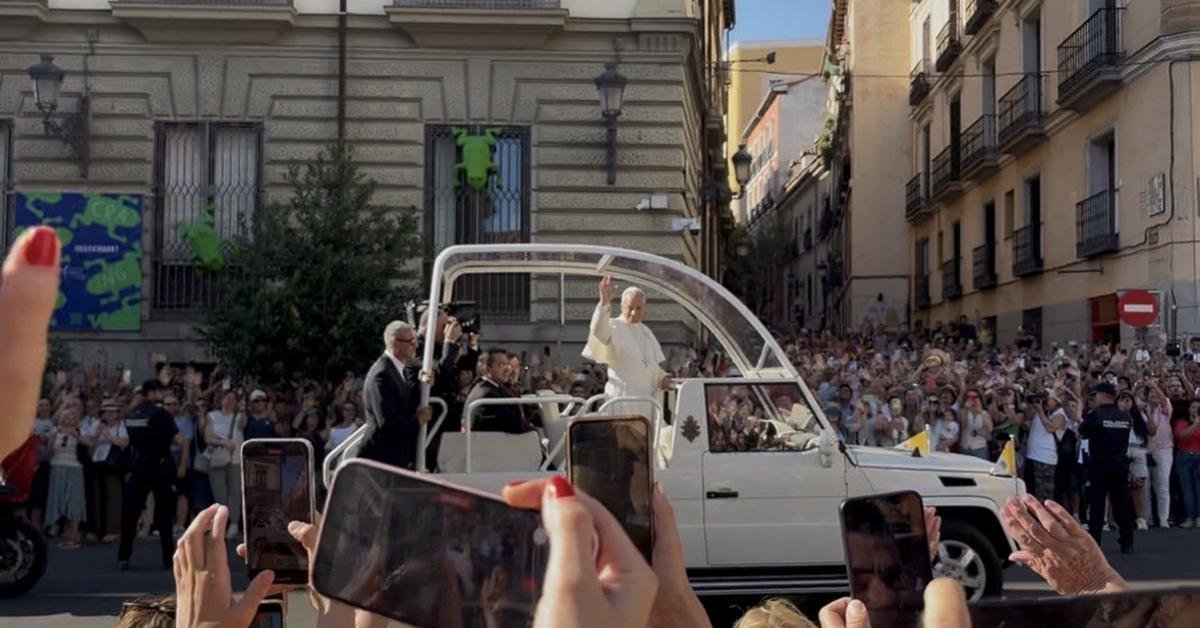
Therefore, walking through the streets of Madrid these days during the apostolic visit of Pope Leo XIV to Spain awakens in me a torrent of contrasts. Seeing the Church move in a full democracy is, for a Cuban, rediscovering a faith without gag. But the most impressive thing about this trip has not only been the freedom of the environment, but also seeing how, in an almost miraculous way, Cuba has been present and has slipped into the pontiff’s Madrid agenda. The Island was not absent, it was latent in the faces of its diaspora.
In each of them I saw fragments of a nation dispersed, but alive
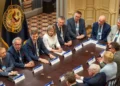
Cuba became flesh in the Information and Reception Center (Cedia) of Cáritas, through the heartbreaking and hopeful testimony of Niurka Paz with her two babies in her arms. She, a Cuban lawyer who arrived alone and pregnant in Spain, spoke to Leo XIV on behalf of the thousands of mothers who cross the ocean fleeing the material and spiritual misery of our country.
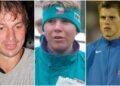
Cuba was also in the invisible gear of the organization, with young people like Joe, contributing to the organization from the youth delegation of the Archbishopric of Madrid. He was in the selfless service of Nelys and Ale, as part of the more than 18,000 volunteers. In the overflowing joy of Fernando’s movements, who was part of the dance corps that lit up the ecclesiastical meeting at the Santiago Bernabéu stadium and at the Pope’s meeting with the volunteers at Ifema (Madrid Fair Institution). In Amed’s accompaniment to the adolescents and young people of his Sevillian parish who wanted to live the experience. On the solemnity of Juan Miguel, Mario and many other Cuban priests, who concelebrated in the multitudinous Eucharist in the Plaza de Cibeles.
In each of them I saw fragments of a dispersed but living nation. Also in all those who were present in each of the activities. A Cuba that no longer asks for permission to exist and that prays in freedom.

/ 14ymedio
However, as I watched the Pope move among the people, pray and give speeches, an inevitable question pounded in my chest: What would a Pope’s visit to a democratic Cuba be like?
We Cubans only know of papal visits under the yoke of the besieged plaza. We do not know what it is like to receive Peter’s successor without the political police deciding who attends and who is left out of the mass.
I imagine Leo XIV, with that sensitivity towards the marginalized that he has demonstrated in his pontificate, landing in a new Cuba. What would you say to the people? I am sure that I would no longer have to use metaphors or veiled parables to talk about freedom. He would tell the Cuban, looking him in the eyes and without the fear that his listeners would end up in a dungeon in Villa Marista, that he is the master of his destiny. I would tell them that the reconstruction of a society destroyed by hatred is not done from revenge, but from justice and reconciliation. I would encourage young people to no longer go into exile, because the homeland would finally be a safe home again.
Seeing so many Cubans supporting in different ways and being part of this visit in Spain, I am filled with deep hope.
And what would you say to the civil authorities? In a new Cuba, the pope would not have to shake hands with elderly dictators or validate dynastic dynamics. He would speak before a plural Parliament, before a president elected by popular vote. His speech would not be confrontational, but one of ethical demand. I would remind rulers that power is a service and that the greatness of a nation is measured by how it treats its weakest citizens, not by the repression or rigidity of its ideological control.
In that free Cuba, the Pope would not have to intercede for the release of political prisoners. Nor would it act as a geopolitical mediator between a dying regime and the world. He would act like a shepherd in the middle of a party. He would walk through the streets of Havana, Holguín or Santa Clara without State Security cordons, blocking the access of “unruly” faithful. I would embrace the released political prisoners and demand that the bishops vigorously exercise the prophetic mission of announcing and denouncing without fear that the words will become reprimands and malevolent actions on the part of the regime to harm the Church for a pastor daring to speak some truths.
The passage of Leo XIV through Madrid shows us that the Church shines brighter when it gets its hands dirty with the reality of the migrant and the dispossessed. Seeing so many Cubans supporting in different ways and being part of this visit to Spain, I am filled with deep hope. I fully trust that the eyes of this Pope will see a new Cuba. I wish and trust that Leo XIV will be the first pontiff to embrace our people, not in the long night of dictatorship, but under the bright sun of freedom because the night will never be eternal.