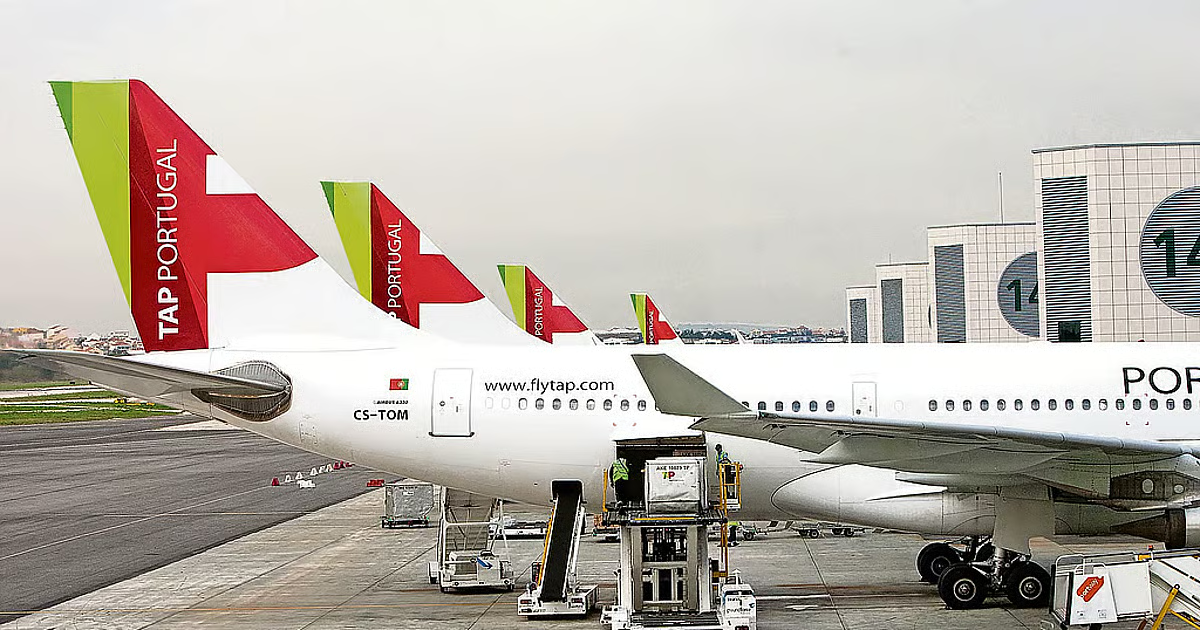
After further insistence from journalists, he added: “Anxiety does not lead to good results. I can guarantee the Portuguese, and those who are listening to us, that we will soon bring news about TAP.”
The Government is awaiting Parpública’s report with the technical assessment on the non-binding proposals of the two interested parties, which should be delivered at the beginning of May.
Last week, the director of the International Energy Agency said Europe has “perhaps six more weeks of jet fuel,” warning of possible flight cancellations soon if oil supplies remain blocked.
On the same day, the Association of Airlines in Portugal (RENA) said that, for now, there is no impact on the operation, but admits the possibility of flight cancellations and higher prices if the energy crisis persists.
The alerts are part of a context of energy crisis in the EU, marked by vulnerabilities in supply and successive external shocks, as the community bloc is dependent on imports of oil and derivatives and is, therefore, subject to geopolitical disturbances, particularly with regard to the supply of aviation kerosene.
The war in Iran, caused by attacks by the United States and Israel, could affect strategic oil transport routes, such as the Strait of Hormuz, further putting pressure on fuel prices and availability, with a direct impact on the European aviation sector.
Faced with this instability, the aviation sector and authorities have reinforced contingency measures, with some airlines even moving towards reducing flights due to rising fuel costs.