Tegucigalpa, Honduras.
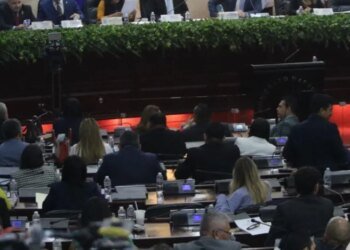
He plenary session of the National Congress approved this Thursday a package of infrastructure, consulting and technical supervision contracts aimed at the reconstruction and equipment of the first 109 centers public educational institutions at the national level.
The legislative decree directly empowers the Honduran Social Investment Fund (FHIS) and the Secretariat of Community Development, Water and Sanitation (SEDECOAS) to execute funds from the multilateral bankingly national emergency items.
The measure seeks to contain the physical collapse of schools and ensure financial resources so that projects are not stopped due to bureaucracy or political transitions in the coming years.
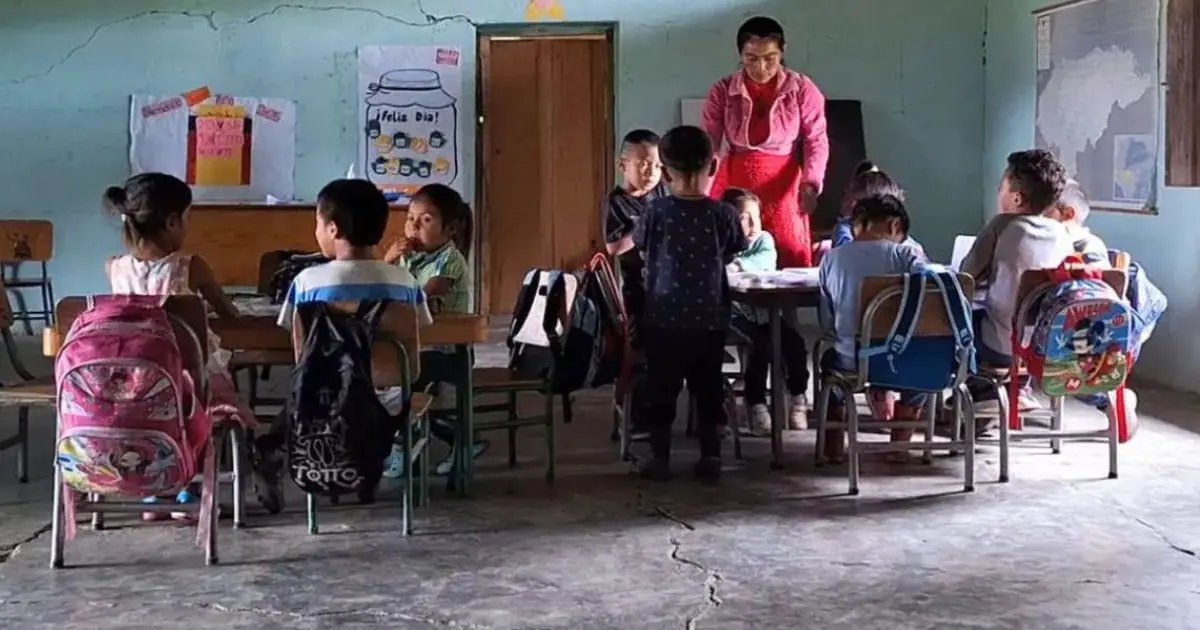
The technical diagnosis prepared by state authorities determined that the country’s school network requires surgical intervention due to the severe deterioration in its classrooms, roofs and basic sanitation systems.
The selection of this first block of schools was prioritized under criteria of extreme urgency in multiple departments, focusing on the rural and indigenous communities that suffered the direct impacts of climate phenomenas recent events and prolonged institutional abandonment.
“There are exactly 109 contracts in this first stage for the immediate intervention of the same number of educational centers nationwide,” said Arnold Burgos, deputy and president of the Education Commission of the National Congress.
Identification of educational centers in decline
The legislative contingency plan aims to expedite the arrival of builders to the neglected areas before the winter season worsens the damage to buildings. The educational authorities identified that the departments with the greatest accumulated needs correspond to the peripheral regions and border strips of the country.
“The studies were carried out by the Honduran Social Investment Fund together with the Ministry of Education to identify the schools that are in the worst conditions, because there are some that do not even have a roof, windows or floor,” Burgos explained.
The parliamentarian detailed that requests for technical and material assistance vary drastically according to the reality of each community. While some directors of rural schools urge the provision of basic furniture such as blackboards and desks, other educational centers require the construction of collapsed perimeter walls or the installation of sanitary modules and urinals.
For its part, the breakdown of the approved decree details that the financing of school works is supported by the reactivation of specialized programs such as the Educational Infrastructure Improvement Program (PROMINE) and the Infrastructure Network Support Program (PRE).
These schemes operate with external resources from the World Bank, the Inter-American Development Bank (IDB) and the German Development Bank (KfW). “Currently there are approximately 7,000 public educational centers in poor condition nationwide, so proper studies must be carried out and absolutely all of them intervened,” warned the president of the Education Commission.
Within the package of contracts ratified by the parliamentarians, a strong investment stands out in the department of Gracias a Dios, where the replacement of the Jesús Mejía Paz School and Kindergarten, the expansion of the SAT América Basic Education Center (CEB) and the reconstruction of the CEB República de Costa Rica will be financed.
Likewise, the international funds will cover large-scale works in Francisco Morazán, including the expansion of the Francisco Morazán Technical Government Institute and the replacement of the CEB Cerro Grande Zone 2. In addition to the school component, Article 1 of the regulations included a consulting services contract focused on the water sector for an amount of 1,567,625.74 dollars.
These specific cooperation funds were assigned to the SAMAN-ASP Consortium to carry out the review, design adjustment and technical supervision of the works to expand the drinking water supply system in the city of Gracias, in the department of Lempira.
The National Congress incorporated a budget line of national funds assigned to the FHIS to exclusively address the infrastructure damaged in the department of Colón due to the passage of Storm Sara.
Through this emergency route, the immediate intervention of Intercultural Bilingual Education (EIB) centers and schools such as Francisco Morazán, Abel Gonzalo Caballero and the Reyna Isabel Gerónimo Children’s Garden was ordered, whose facilities suffered severe flooding. To improve project execution, Article 2 of the law obliges FHIS to guarantee budget programming during fiscal year 2026 and future years.