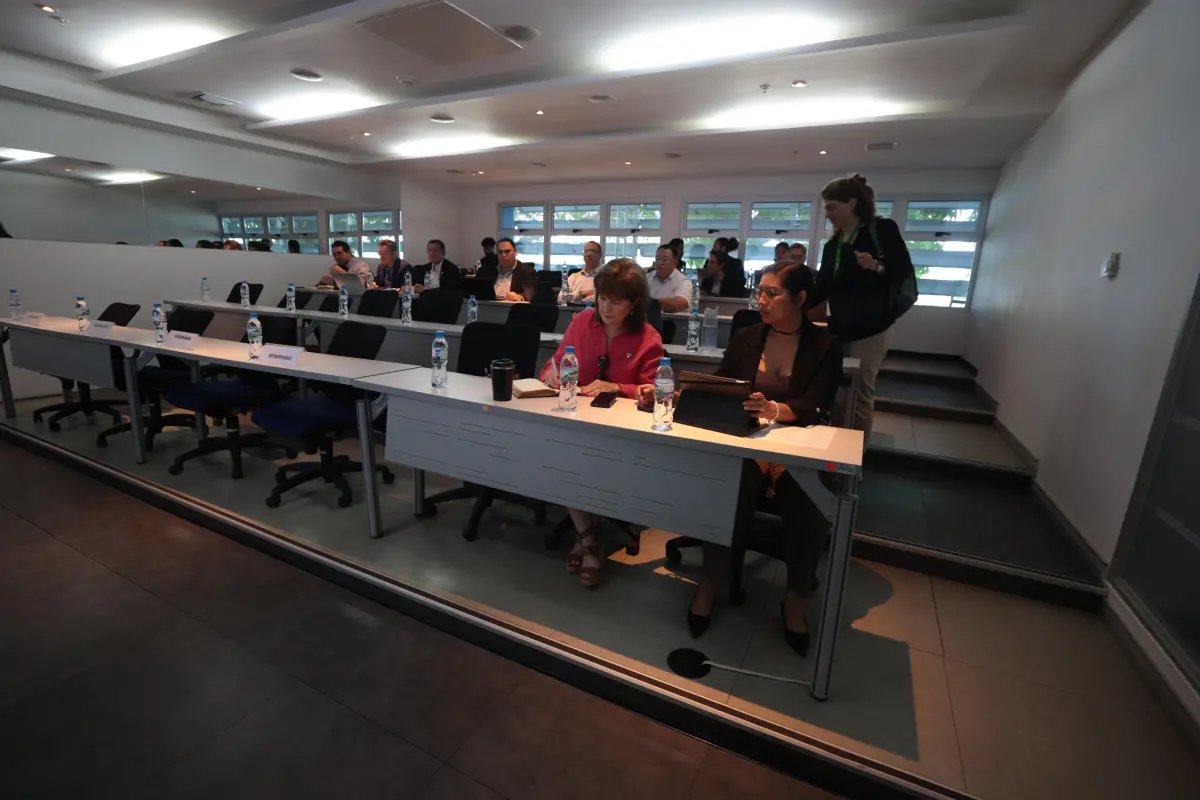
Panamanian science seeks to make its way onto the legislative agenda. After the culmination of three public policy formulation workshops organized by INDICASAT-AIP together with the National Assembly, the idea was consolidated that the country needs to translate its scientific potential into law proposals capable of promoting biotechnology and bioinnovation as engines of a new economic model.
The conferences, held on April 9, 23 and 29, brought together researchers and actors linked to the legislative field in a space for exchange that made it possible to connect scientific evidence with the formulation of initiatives aimed at national development.
The balance of the workshops left a clear message: Panama has knowledge, talent and scientific institutions with the capacity to contribute to the design of public policies, but that potential requires greater articulation with the spaces where decisions are made.
In this sense, the need to focus future law proposals on strategic sectors such as biotechnology and bioinnovation was identified, increasingly seen as tools to diversify the economy and move towards a model based on knowledge, sustainability and added value.
For the participants, talking about the bioeconomy should no longer be understood as a distant aspiration, but as a possible route to generate new growth opportunities, strengthen national capacities and take advantage of science and innovation more intelligently.
During the sessions, the importance of the scientific community developing more tools to communicate evidence, understand the institutional environment and participate with greater impact in the construction of public policies was also highlighted.
“These workshops demonstrated that there is a real opportunity to bring science closer to the public agenda and turn knowledge into a useful tool for the development of the country,” said Dr. Timothy Thomson, director of INDICASAT-AIP.
Deputy Miguel Ángel Campos Lima highlighted that science and innovation must become tools at the service of society, contributing to facing challenges in health, food security, environment and productive development.