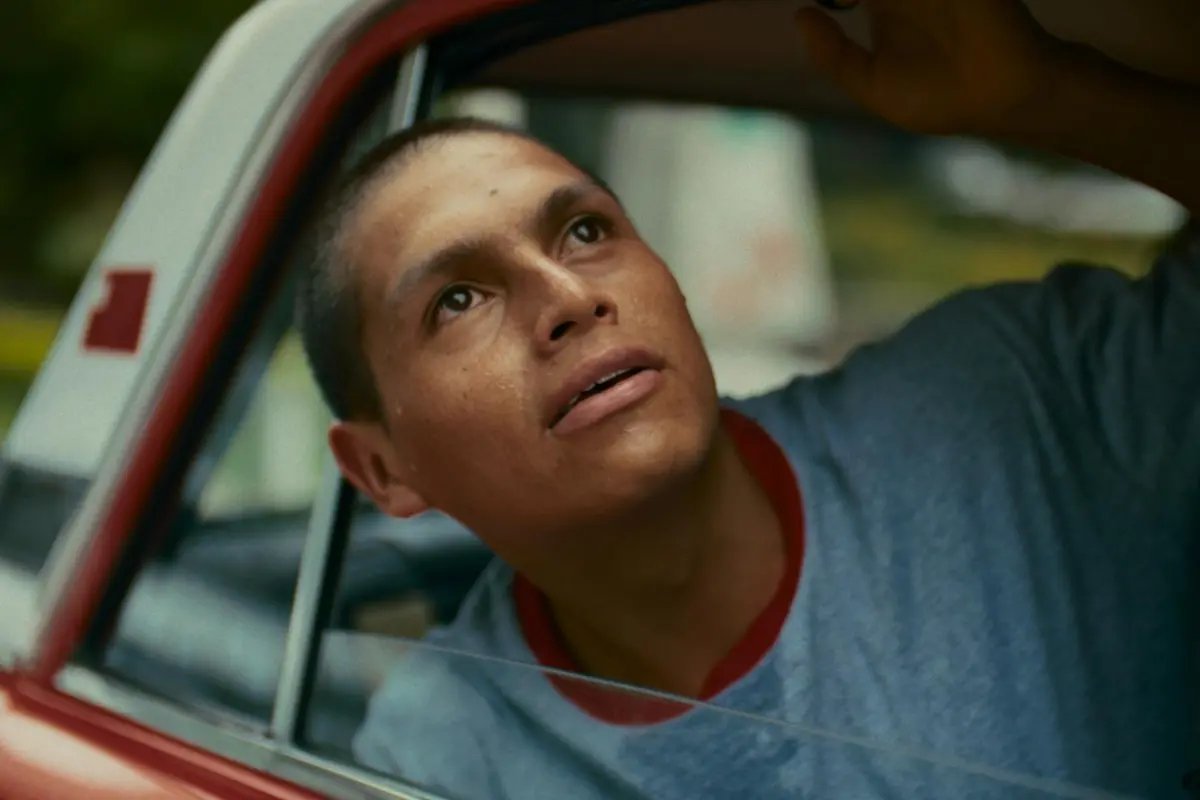
The team responsible for the movie ‘Chichero’ He still can’t wake up from his amazement after knowing that he will compete in different international film competitions. On the one hand, the tape will represent Panama in the race for Oscar Awards as well as in the Goya Awards of Spanish cinema. The film will soon see the light of day in the Panamanian cinemas at the end of September.
The tape – directed by Arturo Montenegro and Aaron Bromley – is located in the Peru in the 1980s where the conflict between the guerrillas is at its peak Luminous Path and the Army. Such a scenario forces the inhabitants of the Combopata district to abandon their homes. Among them is Josué, a young man who dreams of becoming a boxing champion. Separated from his loved ones and thrust into a reality he did not choose, he makes a promise to his family: to fight to build a better future for them.
Clinging to that dream, Josué leaves Peru and migrate to Panamainspired by the boxing glories of the time such as Roberto ‘Mano de Piedra’ Durán or Yuca Zapata. With no money, no contacts and far from everything he knows, he survives by selling chichas and empanadas on the streets. That’s when his life changes completely when he meets Gaby, a young woman with her own wounds and a silent struggle to regain control of her life. In the midst of precariousness and loneliness, both find unexpected hope in each other.
While Joshua tries to make his way in the boxing and fulfill the promise that took him far from home, he discovers that starting over also means facing decisions capable of transforming his life. Between love, family and the dream of a better future, you must decide how much you are willing to sacrifice to protect what you have fought for.
With the migrationlove and resistance as axes, ‘Chichero’ seeks to delve into the story of a protagonist who will not give up when it comes to fulfilling his dream, realizing that the most important battles in life are not always fought in a ring.
In interview with The Star of Panamathe screenwriter and film co-director Aaron Bromleyrecalled the moment 20 years ago when he realized that many of the chicheros that were in Panamathey were Peruvians. Some were guerrillas Luminous Path while others were members of the Peruvian Army. Bromley connected with that reality because he lived and studied at university in Peru.
What he found curious about that story is that although in that country there were many people who killed each other due to the context of the armed conflictthey finally had to emigrate to Panama escaping the consequences of that violence and they had no other alternative than to unite to get ahead in a country totally unknown to them.
“Those who had been enemies in Peru, here in Panama had to unite,” he said curiously.

The film tells the atmosphere that existed in Panama, a country full of pride in its boxing glories.
Bromley initially considered telling this story through documentary genre. However, the number of anecdotes they told him was such that he opted for a fiction film. The project subsequently received a Ibero-American aid to develop the script in Spain. As it was a quite ambitious project, with war scenes and filming in Peru and Panamafor now it did not have the necessary funds and the project was stored for many years.
Having actively collaborated with the co-director of the film Arturo Montenegro As his director of photography, he decided to join forces with the filmmaker to achieve the logistics and support necessary to develop the project. The film was also possible thanks to the fact that it managed to win the 2023 Cinema Fund Contestmade by Ministry of Culture.
“After 20 years this film could be made, this being a co-production with Spainwith recordings in Peru as well as Panamanian talent who lives outside the country. I consider it a bit of a Panama film for the world”, he expressed.
Bromley also highlighted that although the historical context of the film It is set in the 1980s, it contains themes that can be related to the reality that exists today. This story also puts on the table the parallelism of a region in a state of upheaval: the Peru of the armed violence of the 1980s is contrasted with the military regime that ruled Panama in that same decade.
“It is when the reality is stranger than fiction. We are telling a story through fiction, obviously, but in the end these are real stories of flesh and blood people. It is a very human film and, in the end, Panama is that country where people come and find an opportunity to be happy. I am Panamanian, but I have also felt like a migrant. I have lived in Spain, Peru and other places, and I have always shared that migrant sentiment. When I returned to Panama after 20 years, I also felt a bit like a migrant, despite being Panamanian. I know what it’s like to go to another country and start from scratch, and that feeling is also expressed a little in the film. (…) Now maybe we don’t have the same military regimes that there was in Panama in the 80s, but we do have migrations of people that they are escaping from something: from guerrillas, from conflicts. Conflicts change, but people continue traveling in search of well-being,” he commented.
On the other hand, Montenegro appreciated that the film is a reflection of Latin American realitywhich could be unchanged after several decades.
“This film reflects how dictatorships oppressed the people and caused terrible experiences that many people lived in different areas. In the case of Peru, these circumstances forced many people to migrate out of your countryas is currently the case with the migrations from Venezuela, Haiti or, more recently, with the Moroccans who try to enter Ceuta, in Spanish territory. Are cyclical migrationsterrible and painful that continue to impress us,” he commented, citing current examples of a world in boiling water.
a big surprise
The moment in which part of the team of the movie ‘Chichero’ found out that his film had been selected for represent Panama in the race towards Oscar Awards It was in an episode of ‘Shameless’ podcastled by Anna Marissa Altieri. In that chapter, both Montenegro as Bromley and one of the actresses in the film Andrea Perez Meanathey found out through Altieri that they managed to enter that competition, which was close to other international films that will be seen by the United States Film Academy.
“The first thing I thought about was the baby that Andrea is carrying in her womb, and the great emotion that that was going to mean for her, as she demonstrated at that moment. It was like all that joy of life being reborn and, furthermore, having a friend like Aaron by her side, and that Anna Marissa Altieri was so enthusiastic too. All of that enveloped us in a cloud of ecstasy and emotion,” Montenegro confided to this newspaper.

Andrea Pérez Meana plays Yazmín, a former Shining Path guerrilla who emigrates to Panama.
Andrea Perez Meanawho steps into Yazmín’s shoes, a former Shining Path guerrilla what decides emigrate to Panama. For Pérez Meana, this is a very special moment since she not only experiences that dream as an actress of participating in a production that is part of the Oscar race. On the other hand, she is pregnant with her first baby.
In the midst of everything, it’s like very crazy, because just yesterday I was talking to my family and my husband and I told them: “God is so wonderful that, when I have this blessing, he sends me like all the blessings at the same time. It has been a very beautiful process, honestly,” she confided.
Both Bromley, Montenegro and Pérez Meana remain optimistic about what comes next in the Oscar race.
“We have already qualified for the World Cup. If we win or lose later, that will be part of the way, but we did our best to get here. We are in the race for the Oscars and we are going to represent Panama with pride. I know that our Panamanian cinema It is still growing and there are other productions with much larger budgets, but we have to be happy with the work we have done. Like the soccer team, we are once again in a great competition and we are going to show our best side. We are giving our best. The important thing is that the work team is proud and that the people who see the film can learn about what is being done in Panama,” Bromley concluded.