The other day, in an absolutely random event, the song La Copa de la Vida, the official anthem of the 1998 World Cup, played by Ricky Martin, started playing. It only took 10 seconds for the energy on the dance floor to change. Not because the composition is magnificent – which it is, in its genre – but because it marked an entire generation and a particular moment that we all remember fondly.
And, of course, for scientific reasons: did you know that music activates the limbic system (emotions), the hippocampus (memory) and the reward circuits (dopamine)? That’s why when we hear a melody, the combination of these three activations means that experiences lived to the sound of a song are recorded more intensely and, years later, can be reactivated almost instantly. That’s what happened to the sound of Ricky Martin (Go, go, ¡gol! Alé, alé, alé /¡Arriba, va! El mundo esta de pie /Go, go, ¡gol! Alé, alé, alé!).
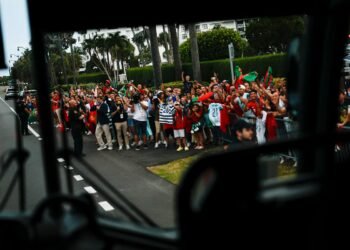
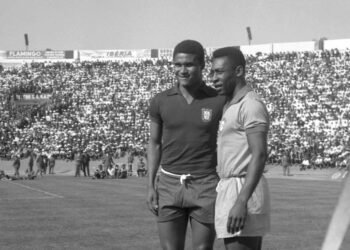
Suddenly, we were all in the 1990s, watching Fernando Couto, Luís Figo, Vítor Baía, Costinha, Nuno Gomes or Capucho fail to qualify for the World Cup under the command of Artur Jorge. But as we are people given to emotions, we rejoiced with others and the music served to cheer us up during the competition in which France became champions, after defeating Brazil in a final that remains in everyone’s memory – for those who, like me, have a piece of heart in the lands of Vera Cruz, it was a very bittersweet final. But anyway, the French love to upset us, don’t they?
Since we didn’t have a Portuguese team playing, we were able to dedicate ourselves to something we do well: taking the opportunity to suffer through other people’s games, to the sound of the Latin rhythm of La Copa dela Vida, which we memorized and interpreted in our best Portuguese.
What also happened in the following years, because the Football World Cup, gradually, also began to be synonymous with new hits musicals to be released to the world. Of course, in recent years – in fact, after 1998, precisely – the fact of choosing world-renowned artists to perform the competition’s official anthems has helped. After Ricky Martin, it was Anastacia’s turn to shake the world with the unforgettable ‘Boom’, and Herbert Grönemeyer was the performer of ‘Celebrate the Day’, at the World Cup in Germany. But the Germans have never been known for giving us unforgettable themes, have they? (I’m going to use the term boring, because that’s actually what this song was).
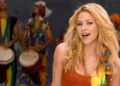
But, after this mistake casting, Shakira arrived, with the famous Waka Waka, for the World Cup in South Africa and the bar was scandalously raised again. The song became one of the most listened to in the history of YouTube and even today it is difficult to sit still when we hear it played. And whenever we hear it, what do we remember? Football, of course.
The theme played by the Colombian artist became, in fact, so popular that when Pitbull presented his “We are One” for the 2014 World Cup in Brazil, not even the appearances of Jennifer Lopez and Claudia Leitte made the reviews more friendly. During the first few days, everything that was said and written about the championship anthem was bad. Feelings did not calm down after Germany beat Brazil 7-1 (what a tragedy!), but it was music that took over the streets after the final, in which all Brazilians were German by birth.
The team coached by Joachim Löw was the star of a championship where no victory was obvious. Of course, we Portuguese were also German in that final, taking into account the 4-0 defeat in Salvador – if we were to lose, let it be against the world champion.
And as soon as, in the 113th minute (finally), Germany scored the winning goal against Lionel Messi’s team, at the iconic Maracanã, it was beautiful to see what happened in Rio de Janeiro: the windows opened wide, and as if agreed between all the locals, the speakers turned on at maximum volume to let Madonna’s voice echo through the city streets. “Don’t cry for me Argentina…” was the theme chosen for a night that would end in celebration, with Canarian and Argentine fans celebrating with Draft beer fresh and lots of caipirinha. Evita’s soundtrack gave way to samba and axé and the celebrations continued, with emotions running high.
Live it Up, performed by Nicky Jam, Will Smith and Era Istrefi for the 2018 World Cup in Russia, was better received than its predecessor, but still, the emotion of Waka Waka was not repeated. Qatar opted for an instrumental theme – after all, they didn’t need more things to go wrong, after Human Rights activists from all over the world were keeping an eye on the chaos that was the organization – and, this year, Shakira returned.
It is still not certain that the song will become as famous as La Copa de la Vida or Waka Waka, because the song also never returned to what it was in the pre-streaming era. What is certain is that it is not possible to talk about the World Cup without talking about music, especially because the reward systems that are activated in our brains are the same. And that’s what always enchants me about these World Championships. It’s just that, not infrequently, football is what matters least. There is celebration, music, emotion and the certainty that, during those periods of at least 90′, we are all together with a common purpose: to see who is the best on the field.
(If at the end of this text you do not include the playlist of the World Cup songs to listen to, you’re missing out on a lot of the excitement these days!)