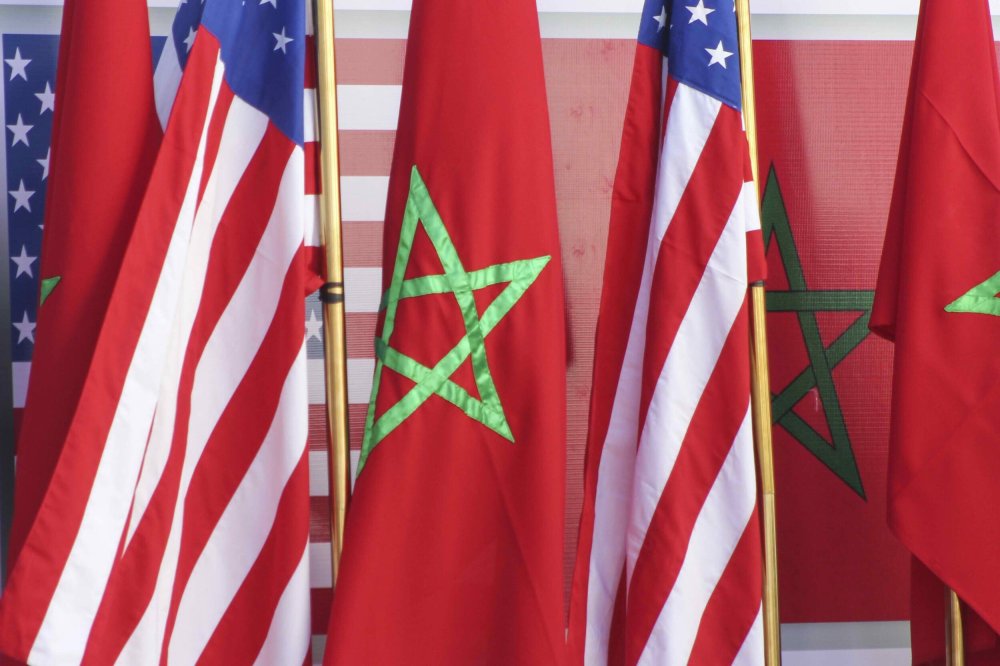
THE UNITED STATES are preparing to seal a plan of military cooperation of historical scope with the Morocconow extending until 2036. The information is recorded in black and white in the US military programming bill for fiscal year 2027 (National Defense Authorization Act-NDAA 2027). This highly strategic document of more than 1,500 pages, introduced by the Armed Services Committee of US Senateredefines the map of Washington’s priority alliances and places the Kingdom at the nerve center of its security doctrine.

Cooperative Security Sites and the Revival of USAF Strategic Runways
The first major axis of this military expansion plan is based on strengthening infrastructural and joint projection capabilities. The American document explicitly mentions the search for “options for the establishment of sites of security cooperatives in Morocco in order to promote regional stability and optimize joint preparation for crisis response. Even more significant, the US Congress wants to lay the foundations for a large-scale co-investment to revive the shared aeronautical history of the two nations. The law indeed provides for “taking into account the feasibility and desirability of a cost-sharing plan to modernize the tracks of the Strategic Air Command formerly exploited by the United States.
The technological leap: drones and AI at the heart of modern combat
This transition to advanced technological cooperation will be directly reflected in the evolution of the iconic military exercise African Lion. Congress is calling for a comprehensive reevaluation to expand the scope of these joint maneuvers to ensure they include a thorough consideration of cutting-edge issues. The exercises will now have to integrate new fields of strategic confrontation, in particular “the cybersecuritydrone operations and anti-drone capabilitiesTHE underwater technologiesthe fight against hybrid warfare, the protection of critical national infrastructures, logistics, mobility chains and adaptation to adverse use ofartificial intelligence and autonomous combat capabilities. By thus broadening the spectrum of cooperation in the fight against hybrid warfare and the protection of vital infrastructure, the United States is strengthening Morocco’s role as a shield and leader of regional security in the digital age.
Economic security: phosphate, a vital asset of the Pentagon
THE US Senate requires careful analysis of net dependence on the United States and highlights “the concentration of foreign suppliers, including the market share and geopolitical risk profile of Morocco, the China and other major producers. The mention, technical in appearance, reveals a reality that Rabat knows well: holder of the world’s largest phosphate reserve, the Kingdom appears on the map of strategic dependencies of the leading power on the planet. Where Washington scrutinizes a risk, Morocco can see a lever.
Through this military programming bill, Washington is not only sending a signal of continuity: it is institutionalizing an exceptional relationship. From the airport logistics to artificial intelligence applied to combat, through the securing of vital resources, Morocco confirms that it now plays in the court of the major strategic partners of the leading world power.