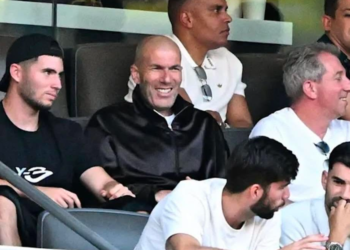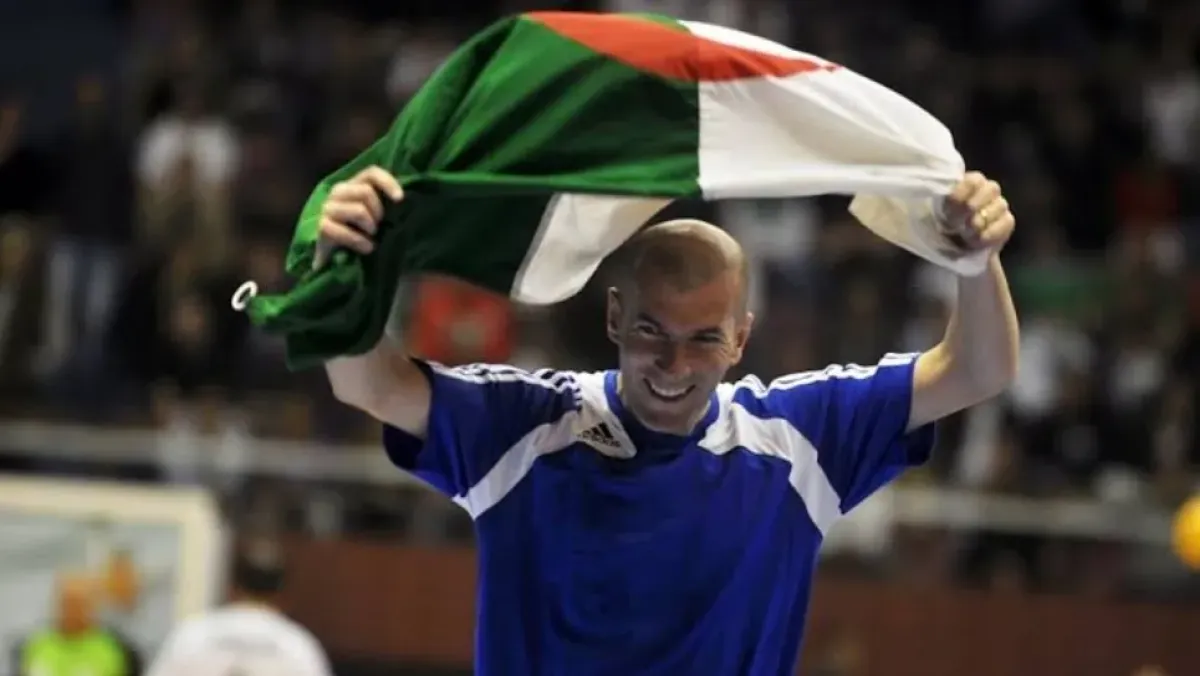
French football stars, the Franco-Algerian legend Zinedine Zidane, his compatriots Karim Benzema, and Kylian Mbappé, chose to distance themselves from delving into the case of the French sports journalist imprisoned in Algeria, and not to respond to his family’s requests to make an appeal for the release of their son, on the occasion of their attendance at the World Football Forum, following the example of the President of the International Federation of Association Football, Gianni Infantino, who brought up the issue in a way that turned the football body into a body of defense for the absent journalist.
While Gianni positioned himself as Glez’s guardian and expressed interest in his case and “see what he saw” in the position of journalists and teams most in need of his intervention to facilitate their arrival to the American green rectangle, the three French football stars adhered to the boundaries separating politics, sports and state sovereignty.
In light of Zizou, who was credited with winning the 1998 World Cup, and Ben Zema and Mbappe, maintaining an equal distance in the case between all parties, the family of the French journalist expressed their regret for the failure of prominent French football stars to respond to the calls directed at them to intervene or express support in his case, according to what was stated in their statements to French media.
The family confirmed, while hosting a television segment yesterday, that the call had reached the French football stars. This is clear. As for them not wanting to get involved in the case, this is also clear.
The refusal of the stars to get involved in the case of Glez and to publicly express their solidarity with him at an international football event is in itself a message that indicates, perhaps, their feeling of duplicity in dealing with many issues at the level of the leadership of the international football bloc, and there are many examples, in Russia, Palestine, Iran, the Somali government, the national teams, and the journalists who found difficulties in entering Uncle Sam’s country, which prompted them to remain silent.
The players’ refusal may be due to the three of them feeling the thin dividing line between politics, sports, and sovereignty, which are areas that overlap and mix in several cases, but they sometimes diverge in a way that the thin line turns into a steel wall, which is what they felt, especially since they are Africans and are aware of the nature of these areas on the African continent.
They understood the dimensions and stakes of this move and realized that being drawn into such matters puts them in the face of countries, authorities, governments and even peoples, and therefore they chose to stand in the middle of the field and not on one of its sides.
The historic “roosters” leader, Zidane, who has Algerian origins and the master of the round, undoubtedly also knows how to tame impulsiveness and recklessness in a turbulent, multiple, conflicting world of narratives and ideologies.
Two decades have passed since he “butted” the Italian player Materazzi and wasted a World Cup final victory that was within his reach. The inventor of the “La Roulette” dribble has matured and become sufficiently wise and has begun to manage the distance between emotion and politics and choose the timing of speech and silence.
As for Ben Zima, he, too, has realized, as a result of what happened in Gaza, Iran and elsewhere, the movement of international relations and the double standards in them, and has gained the ability to control his statements, emotions and positions.
As for Kylian Mbappé, who has Algerian blood running through his veins on his mother’s side, he seems to have sensed all aspects of the issue well before making his decision to express reservations regarding the calls of the Gulez family.