Tuesday, June 16, 2026
    The GeoStrategic Consensus
    No Result
    View All Result
    • Login
    • HOME
    • AMERICAS
      • Argentina
      • Brazil
      • Canada
      • Chile
      • Colombia
      • Costa Rica
      • Cuba
      • Dominican Republic
      • Ecuador
      • El Salvador
      • Greenland
      • Guatemala
      • Honduras
      • Mexico
      • Nicaragua
      • Panama
      • Paraguay
      • Peru
      • United States
      • Uruguay
      • Venezuela
    • ASIA-PACIFIC
      • Australia
      • Brunei Darussalam
      • Cambodia
      • China
      • Federated States of Micronesia
      • Fiji
      • Indonesia
      • Japan
      • Kiribati
      • Laos
      • Malaysia
      • Marshall Islands
      • Mongolia
      • Myanmar
      • Nauru
      • New Zealand
      • North Korea
      • Palau
      • Papua New Guinea
      • Philippines
      • Samoa
      • Singapore
      • Solomon Islands
      • South Korea
      • Taiwan
      • Thailand
      • Timor-Leste
      • Tonga
      • Tuvalu
      • Vanuatu
      • Vietnam
    • CARICOM
      • CARICOM – Non-English
        • Haiti
        • Suriname
      • CARICOM Associates
        • Anguilla
        • Bermuda
        • British-Virgin-Islands
        • Cayman-Islands
        • Curacao
        • Turks-and-Caicos
      • CARICOM English
        • Antigua and Barbuda
        • Barbados
        • Belize
        • Dominica
        • Grenada
        • Guyana
        • Jamaica
        • Montserrat
        • Saint Kitts and Nevis
        • Saint Lucia
        • Saint Vincent and the Grenadines
        • The Bahamas
        • Trinidad and Tobago
    • EURASIA
      • Armenia
      • Azerbaijan
      • Balarus
      • Georgia
      • Kazakhstan
      • Kyrgyzstan
      • Moldova
      • Russia
      • Tajikistan
      • Turkmenistan
      • Ukraine
      • Uzbekistan
    • EUROPE
      • Albania
      • Andorra
      • Austria
      • Bosnia and Herzegovina
      • Bulgaria
      • Croatia
      • Cyprus
      • Czech Republic
      • Denmark
      • Estonia
      • Finland
      • France
      • Germany
      • Greece
      • Holy See
      • Hungary
      • Iceland
      • Ireland
      • Italy
      • Kosovo
      • Latvia
      • Liechtenstein
      • Lithuania
      • Luxembourg
      • Malta
      • Monaco
      • Montenegro
      • Netherlands
      • North Macedonia
      • Norway
      • Poland
      • Portugal
      • Romania
      • San Marino
      • Serbia
      • Slovakia
      • Slovenia
      • Spain
      • Sweden
      • Switzerland
      • United Kingdom
    • MIDDLE EAST AND NORTH AFRICA
      • Algeria
      • Bahrain
      • Egypt
      • Iran
      • Iraq
      • Israel
      • Jordan
      • Kuwait
      • Lebanon
      • Lybia
      • Morocco
      • Oman
      • Palestinian Territories
      • Qatar
      • Saudi Arabia
      • Syria
      • Tunisia
      • Turkey
      • United Arab Emirates
      • Western Sahara
      • Yemen
    • SOUTH ASIA
      • Afghanistan
      • Bangladesh
      • Bhutan
      • India
      • Maldives
      • Nepal
      • Pakistan
      • Sri Lanka
    • SUB-SAHARAN AFRICA
      • Angola
      • Benin
      • Botswana
      • Burkina Faso
      • Burundi
      • Cabo Verde
      • Cameroon
      • Central African Republic
      • Chad
      • Comoros
      • Cote d’Ivoire
      • Democratic Republic of the Congo
      • Djibouti
      • Equatorial Guinea
      • Eritrea
      • Eswatini
      • Ethiopia
      • Gabon
      • Gambia
      • Ghana
      • Guinea
      • Guinea Bissau
      • Kenya
      • Lesotho
      • Liberia
      • Madagascar
      • Malawi
      • Mali
      • Mauritania
      • Mauritius
      • Mozambique
      • Namibia
      • Niger
      • Nigeria
      • Republic of the Congo
      • Rwanda
      • Sao Tome and Principe
      • Senegal
      • Seychelles
      • Sierra Leone
      • Somalia
      • South Africa
      • South Sudan
      • Sudan
      • Tanzania
      • Togo
      • Uganda
      • Zambia
      • Zimbabwe
    • HOME
    • AMERICAS
      • Argentina
      • Brazil
      • Canada
      • Chile
      • Colombia
      • Costa Rica
      • Cuba
      • Dominican Republic
      • Ecuador
      • El Salvador
      • Greenland
      • Guatemala
      • Honduras
      • Mexico
      • Nicaragua
      • Panama
      • Paraguay
      • Peru
      • United States
      • Uruguay
      • Venezuela
    • ASIA-PACIFIC
      • Australia
      • Brunei Darussalam
      • Cambodia
      • China
      • Federated States of Micronesia
      • Fiji
      • Indonesia
      • Japan
      • Kiribati
      • Laos
      • Malaysia
      • Marshall Islands
      • Mongolia
      • Myanmar
      • Nauru
      • New Zealand
      • North Korea
      • Palau
      • Papua New Guinea
      • Philippines
      • Samoa
      • Singapore
      • Solomon Islands
      • South Korea
      • Taiwan
      • Thailand
      • Timor-Leste
      • Tonga
      • Tuvalu
      • Vanuatu
      • Vietnam
    • CARICOM
      • CARICOM – Non-English
        • Haiti
        • Suriname
      • CARICOM Associates
        • Anguilla
        • Bermuda
        • British-Virgin-Islands
        • Cayman-Islands
        • Curacao
        • Turks-and-Caicos
      • CARICOM English
        • Antigua and Barbuda
        • Barbados
        • Belize
        • Dominica
        • Grenada
        • Guyana
        • Jamaica
        • Montserrat
        • Saint Kitts and Nevis
        • Saint Lucia
        • Saint Vincent and the Grenadines
        • The Bahamas
        • Trinidad and Tobago
    • EURASIA
      • Armenia
      • Azerbaijan
      • Balarus
      • Georgia
      • Kazakhstan
      • Kyrgyzstan
      • Moldova
      • Russia
      • Tajikistan
      • Turkmenistan
      • Ukraine
      • Uzbekistan
    • EUROPE
      • Albania
      • Andorra
      • Austria
      • Bosnia and Herzegovina
      • Bulgaria
      • Croatia
      • Cyprus
      • Czech Republic
      • Denmark
      • Estonia
      • Finland
      • France
      • Germany
      • Greece
      • Holy See
      • Hungary
      • Iceland
      • Ireland
      • Italy
      • Kosovo
      • Latvia
      • Liechtenstein
      • Lithuania
      • Luxembourg
      • Malta
      • Monaco
      • Montenegro
      • Netherlands
      • North Macedonia
      • Norway
      • Poland
      • Portugal
      • Romania
      • San Marino
      • Serbia
      • Slovakia
      • Slovenia
      • Spain
      • Sweden
      • Switzerland
      • United Kingdom
    • MIDDLE EAST AND NORTH AFRICA
      • Algeria
      • Bahrain
      • Egypt
      • Iran
      • Iraq
      • Israel
      • Jordan
      • Kuwait
      • Lebanon
      • Lybia
      • Morocco
      • Oman
      • Palestinian Territories
      • Qatar
      • Saudi Arabia
      • Syria
      • Tunisia
      • Turkey
      • United Arab Emirates
      • Western Sahara
      • Yemen
    • SOUTH ASIA
      • Afghanistan
      • Bangladesh
      • Bhutan
      • India
      • Maldives
      • Nepal
      • Pakistan
      • Sri Lanka
    • SUB-SAHARAN AFRICA
      • Angola
      • Benin
      • Botswana
      • Burkina Faso
      • Burundi
      • Cabo Verde
      • Cameroon
      • Central African Republic
      • Chad
      • Comoros
      • Cote d’Ivoire
      • Democratic Republic of the Congo
      • Djibouti
      • Equatorial Guinea
      • Eritrea
      • Eswatini
      • Ethiopia
      • Gabon
      • Gambia
      • Ghana
      • Guinea
      • Guinea Bissau
      • Kenya
      • Lesotho
      • Liberia
      • Madagascar
      • Malawi
      • Mali
      • Mauritania
      • Mauritius
      • Mozambique
      • Namibia
      • Niger
      • Nigeria
      • Republic of the Congo
      • Rwanda
      • Sao Tome and Principe
      • Senegal
      • Seychelles
      • Sierra Leone
      • Somalia
      • South Africa
      • South Sudan
      • Sudan
      • Tanzania
      • Togo
      • Uganda
      • Zambia
      • Zimbabwe
    No Result
    View All Result
    Agentially
    No Result
    View All Result
    Home MIDDLE EAST and NORTH AFRICA Algeria

    A Franco-Algerian researcher monitors a hidden influence of artificial intelligence in the election campaign

    The Analyst by The Analyst
    June 16, 2026
    in Algeria
    A Franco-Algerian researcher monitors a hidden influence of artificial intelligence in the election campaign


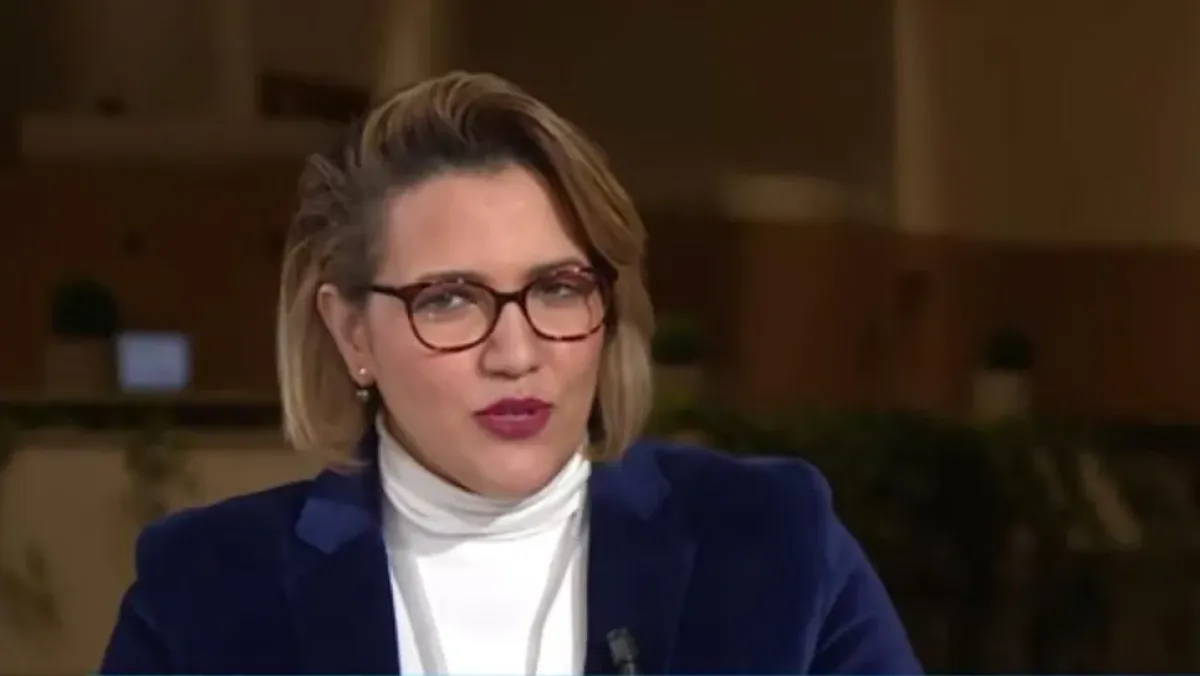
    As an expert and author in the field of artificial intelligence and its uses, the Franco-Algerian researcher, Warda Barachid Baelich, reveals the use of the characteristics of artificial intelligence applications in the electoral campaign and in the current legislative elections.

    READ ALSO

    After the defeat by five…the Tunisian League takes this decision – Al-Shorouk Online

    Do you know where Curacao is located? – Al-Shorouk Online

    In an interview with Al-Khabar, the author of the book “Humans in the Age of Artificial Intelligence” explained the secrets of these uses, while sorting out their pros, cons, and fears.

    From the beginning of the electoral campaign, it was observed that many candidates resorted to using artificial intelligence tools and applications. What is your assessment of this trend and does it have any effects on the process?

    Yes, without a doubt… Artificial intelligence is already bringing about a profound transformation in the mechanisms and essence of electoral campaigns on several levels, but it is important to understand the nature, depth, and limits of this transformation. These technologies not only change the characteristics of posters, slogans, and texts, but also change the speed of content production, its volume, the degree of personalization, and even the patterns and systems of communication and interaction between candidates, their surroundings, and voters.

    In the past, the electoral campaign relied mainly on a work team, a political message, a geographical area, and a field strategy. Today, artificial intelligence has shortened many stages and accelerated content production, analyzing voter aspirations, testing multiple message formats, creating images and visual materials, crafting speeches, segmenting audiences into different categories, and improving the effectiveness of political communication.

    But the real question is not only: What does artificial intelligence enable? But what will the state of the process become when the process of political communication becomes completely subject to technology, and sometimes it is difficult to distinguish between what is human and what is automated?

    To me, AI can enrich public debate if it helps improve explanation, facilitate understanding, and make political programs clearer and more accessible for citizens to interact with the programs, but it can also impoverish that debate, if it turns politics into mere engineering to attract attention and capture attention, without generating human interaction. The danger lies in seeing the citizen not as a free individual possessing a consciousness that must be enlightened and persuaded by the argument, but rather as a behavioral target that is intended to be influenced and directed.

    What are the most prominent uses of artificial intelligence in the election campaign, in your opinion, and what are the medium-term effects of these uses?

    There are indeed many of them… The first use is in the production of content: posters, slogans, electoral texts, speeches, publications for social networks, video scenarios and their composition, translations and adaptation of messages to target groups.

    The second use is analysis, as artificial intelligence can help understand citizens’ concerns, monitor emerging topics that are consistent with public trends, analyze online interactions and comments, know prevailing trends, and the expectations of residents of a particular region compared to others.

    The third use is to personalize communication: the same message can be adapted to different audiences: young people, women, entrepreneurs, students, farmers, residents of a specific region, or even members of the community abroad.

    The fourth use relates to the internal organization of the campaign: preparing meetings, summarizing documents, structuring the electoral program, anticipating potential questions, coordinating teams, or following up and monitoring media content.

    Finally, there are more sensitive uses, such as chatbots, conversational agents, or automated tools for digital mobilization.

    I would also like to point out that these uses are not problematic in and of themselves. Artificial intelligence can help make an election campaign clearer, more accessible to the public, and better organized, but it becomes troubling when it is used to create an illusion, create the illusion of false closeness to citizens, manipulate, or spread misinformation.

    What are the limits of benefiting from the services provided by this technology?

    Regarding campaign posters and political texts, it is clear that many candidates have resorted to artificial intelligence, with varying degrees of clarity. This in itself does not surprise me, as it is necessary to keep up with the times; Today, artificial intelligence has become a tool for creativity, formulation, and raising the level of political communication. However, this technology, like any powerful tool, requires a great deal of judgment and discernment. Some posters, when designed unbalanced, appear too artificial, have been subjected to exaggerated modifications, or lack visual harmony, may cause confusion and deception, and instead of enhancing the credibility of the candidate, they may lead to sowing doubts about the content, and turn into a breach of ethics. Therefore, the real challenge lies in serving the political message, not replacing it. It is able to elevate a campaign when it adds clarity, aesthetics, and an educational dimension to it, but it may weaken it when it gives the impression that political communication is manufactured, disconnected from reality, and lacks real embodiment. In my view, the proper use of artificial intelligence in political work is based on five basic principles: accuracy, authenticity, consistency, transparency, and responsibility.

    Can artificial intelligence agents and programmers be used to carry out specific tasks in communication, propaganda, or electoral mobilization, and does this communication model affect the essence of the political process?

    Yes, from a technical standpoint, this is actually possible today. AI-based agents are able to analyze public opinion, produce messages directed to specific groups, respond to citizens, adapt political discourse to the target audience, and enhance the communication strategy.

    In the context of the Algerian elections, resort to this advanced type of use remains limited and not widely visible. Currently observed uses appear to be mainly concentrated in the production of content, such as posters, text, logos, and visual materials. This is a natural stage that reflects the gradual integration of these tools into modern professional standards for political communication.

    If these technical limits were previously explained by the difficulty of dealing with the local dialect and the linguistic and semantic challenges it poses, the emergence of sovereign and culturally rooted artificial intelligence models, such as the Nojoom.AI platform and the AQL-42B model, shows that these technological barriers are disappearing.

    And here lies the true line of vigilance. The problem begins when artificial intelligence is no longer a means for organizing or clarifying political discourse, but rather turns into a tool for simulating popular support, creating a false sense of closeness to citizens, directing public perception, or disrupting the citizen’s ability to discriminate and make independent judgment.

    The American example of 2024 is telling in this context. The Democratic primary in New Hampshire featured a robocall that used an AI-generated voice imitating Joe Biden’s voice, urging some voters not to vote. It was no longer just political communication supported by technology, but rather a direct form of manipulation by exploiting the authority and credibility of a public figure, and for me this is exactly the slippage that should be anticipated and avoided.

    Therefore, artificial intelligence can accompany and assist the electoral campaign, but it should not turn into a hidden structure to influence voters. In political action, modernity gains its value only when it is closely linked to the requirements of transparency, integrity, and democratic responsibility.

    How do the uses of artificial intelligence affect the voting behavior of citizens?

    Yes, AI can influence the voting process itself, but it does so very invisibly, by influencing what is most intimate about humans: their way of perceiving and understanding the world. Its true ability does not lie in imposing a political choice directly and explicitly, but rather in reformulating the story that a person tells himself about the reality around him, in a quiet and invisible way. It does not impose anything by force, but rather infiltrates areas of doubt, nourishes latent hopes, amplifies buried feelings of anger, and gradually affects the structure from which thoughts and judgments are formed.

    The nature of political influence has changed in the modern era and is no longer based on a large mass speech delivered in public squares that brings people together or divides them in front of everyone, but rather is distributed into billions of hidden individual messages. Thanks to precise algorithms, artificial intelligence can isolate each voter individually and deliver content tailored to them, so that every image, rumor or emotional message is tailored to their specific fears, aspirations or vulnerabilities. Here we are not faced with just a traditional political persuasion process, but rather an attempt to control collective attention and influence collective consciousness, which may transform the public democratic debate into a group of isolated individual worlds, where each citizen receives a different version of reality.

    In this context, one of the most important challenges facing our time is embodied, a challenge that goes beyond the technical aspect and touches upon human dignity itself. Democracy is not based only on the physical act of placing the ballot paper in the box, but rather depends primarily on the clarity of vision of citizens and their ability to make informed decisions.

    A free citizen is not only one who has the right to vote, but rather he is one with an independent consciousness who is aware of the apparent and hidden forces that are trying to influence his judgment and direct his choices. When the truth is withheld from him or deeply distorted, it means that part of his ability to control his destiny is taken away. I have great confidence in the maturity of our citizens, whose history has repeatedly demonstrated their ability to distinguish between truth and deception when crucial issues are at stake.

    Source link

    Related Posts

    After the defeat by five…the Tunisian League takes this decision – Al-Shorouk Online
    Algeria

    After the defeat by five…the Tunisian League takes this decision – Al-Shorouk Online

    June 16, 2026
    Do you know where Curacao is located? – Al-Shorouk Online
    Algeria

    Do you know where Curacao is located? – Al-Shorouk Online

    June 16, 2026
    Trump announces a peace agreement with Iran
    Algeria

    Trump announces a peace agreement with Iran

    June 16, 2026
    Ministry of Religious Affairs and Endowments: Tuesday, the first day of Muharram 1448 AH – Al-Shorouk Online
    Algeria

    Ministry of Religious Affairs and Endowments: Tuesday, the first day of Muharram 1448 AH – Al-Shorouk Online

    June 15, 2026
    Boualem Khoukhi gives Qatar a historic point
    Algeria

    Boualem Khoukhi gives Qatar a historic point

    June 15, 2026
    Heavy rains sweep 46 states
    Algeria

    Heavy rains sweep 46 states

    June 15, 2026
    Next Post
    After the defeat by five…the Tunisian League takes this decision – Al-Shorouk Online

    After the defeat by five...the Tunisian League takes this decision - Al-Shorouk Online

    POPULAR NEWS

    Halls from Istanbul: European integration brings new opportunities for investment and economic growth

    Halls from Istanbul: European integration brings new opportunities for investment and economic growth

    June 15, 2026
    “The national holiday will be anything but run-of-the-mill”

    “The national holiday will be anything but run-of-the-mill”

    June 15, 2026
    Ho Chi Minh City seeks public feedback on roadmap for transition to clean-energy vehicles

    Ho Chi Minh City seeks public feedback on roadmap for transition to clean-energy vehicles

    June 16, 2026

    Blannahassett Island, a Marshall landmark, hosts a pavilion at the space, which was heavily …

    June 16, 2026
    Stateless people need protection, not removal to Nauru

    Stateless people need protection, not removal to Nauru

    June 15, 2026

    EDITOR'S PICK

    Here Are the Adversaries Trump Has Threatened and Prosecuted

    Here Are the Adversaries Trump Has Threatened and Prosecuted

    June 15, 2026
    The Lighthouse Trail of the Costa de la Muerte: the route across the Atlantic that leads to Finisterre but without pilgrims

    The Lighthouse Trail of the Costa de la Muerte: the route across the Atlantic that leads to Finisterre but without pilgrims

    June 16, 2026
    Former minister Doina Pană says she was poisoned with mercury because she tried to stop the “deforestation”

    Former minister Doina Pană says she was poisoned with mercury because she tried to stop the “deforestation”

    June 15, 2026
    A man who got lost in the catacombs was found in Odesa: photo

    A man who got lost in the catacombs was found in Odesa: photo

    June 16, 2026

    Recent Posts

    • Ho Chi Minh City seeks public feedback on roadmap for transition to clean-energy vehicles
    • Donald Trump announced the resumption of shipping through the Strait of Hormuz
    • “Only an idiot can think that I can justify someone who consciously led RA to capitulation.” Serzh Sargsyan
    • U.S. launches second wave of attacks against Iran

      © 2026 Agentially - Navigating shifting sovereignties and global risk .

      Welcome Back!

      Login to your account below

      Forgotten Password?

      Retrieve your password

      Please enter your username or email address to reset your password.

      Log In
      No Result
      View All Result

        © 2026 Agentially - Navigating shifting sovereignties and global risk .

        This website uses cookies. By continuing to use this website you are giving consent to cookies being used. Visit our Privacy and Cookie Policy.