-
Translated by: Flutura Gashi-Mehmeti

- June 21, 2026 11:03 am
- Share to:
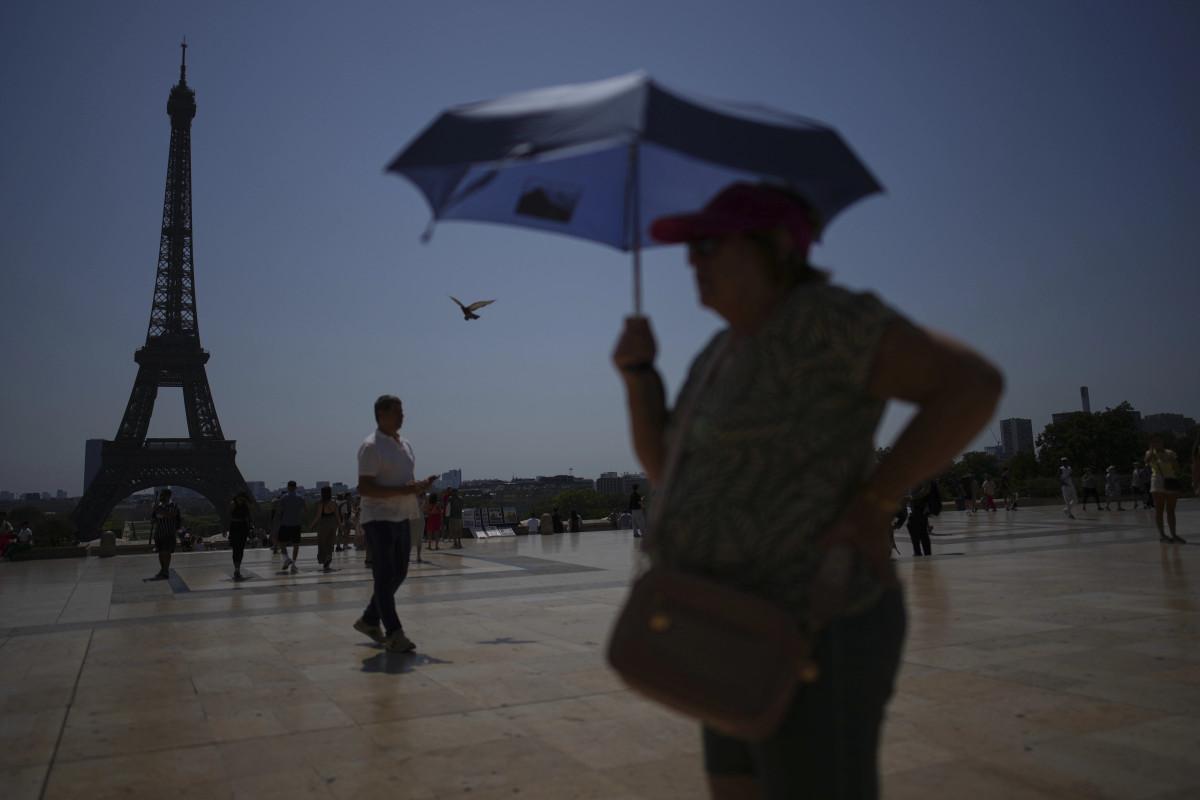
A severe heatwave sweeping much of Europe has forced France to impose a partial alcohol ban, Germany to issue nationwide warnings and Spain to close an area to soccer fans as temperatures approach record highs.
In France, 35 of its 96 departments or regions are expected to issue a red alert for the heat wave on Sunday, with temperatures of 39 to 40 degrees Celsius expected from the southwest, through the Paris region to Burgundy, while in some areas temperatures could even reach 41 degrees Celsius.
After an emergency meeting, Prime Minister Sebastien Lecornu has decided to temporarily ban the consumption of alcohol on Sunday during the annual Fête de la Musique festivals and other public events to be held in those 35 regions. However, authorities in Paris ordered parks to remain open throughout the day and night.
Heat warnings were issued across much of Germany, with temperatures approaching 38C. The German weather service DWD has warned that the combination of heat and humidity could cause severe thunderstorms.
Across the Alps, temperatures expected to reach 36-37 degrees Celsius are changing daily life and tourism in some Italian cities.
Visitors queued under the scorching sun outside the Colosseum as Rome’s summer heat turned sightseeing into an endurance test. Some sought relief in the cooler subterranean spaces below the partially hidden remains of the Temple of Claudius.
In the northern city of Bologna, one of the hottest on the Italian peninsula, people cooled off by splashing water on their faces at the 16th-century Fountain of Neptune.
Meanwhile, in Spain, the soccer federation has decided to close the fan zone it had set up with giant screens in the Plaza de Colón square in Madrid. This means fans will have to watch Spain’s World Cup match against Saudi Arabia elsewhere.
Scientists say climate change is making heat waves more frequent and intense across Europe, increasing the risk of health emergencies and economic disruptions during the summer months.
The economic cost of extreme heat is also drawing more and more attention.
The governor of the Bank of France, Emmanuel Moulin, has said that the short-term effects on economic growth are “somewhat unclear”, citing both the decrease in productivity and the increase in energy consumption.
However, he warned that in the medium term, heat waves negatively affect economic activity.