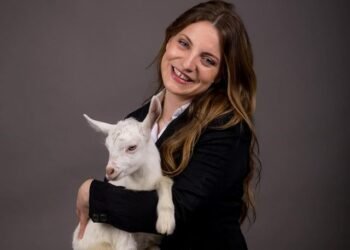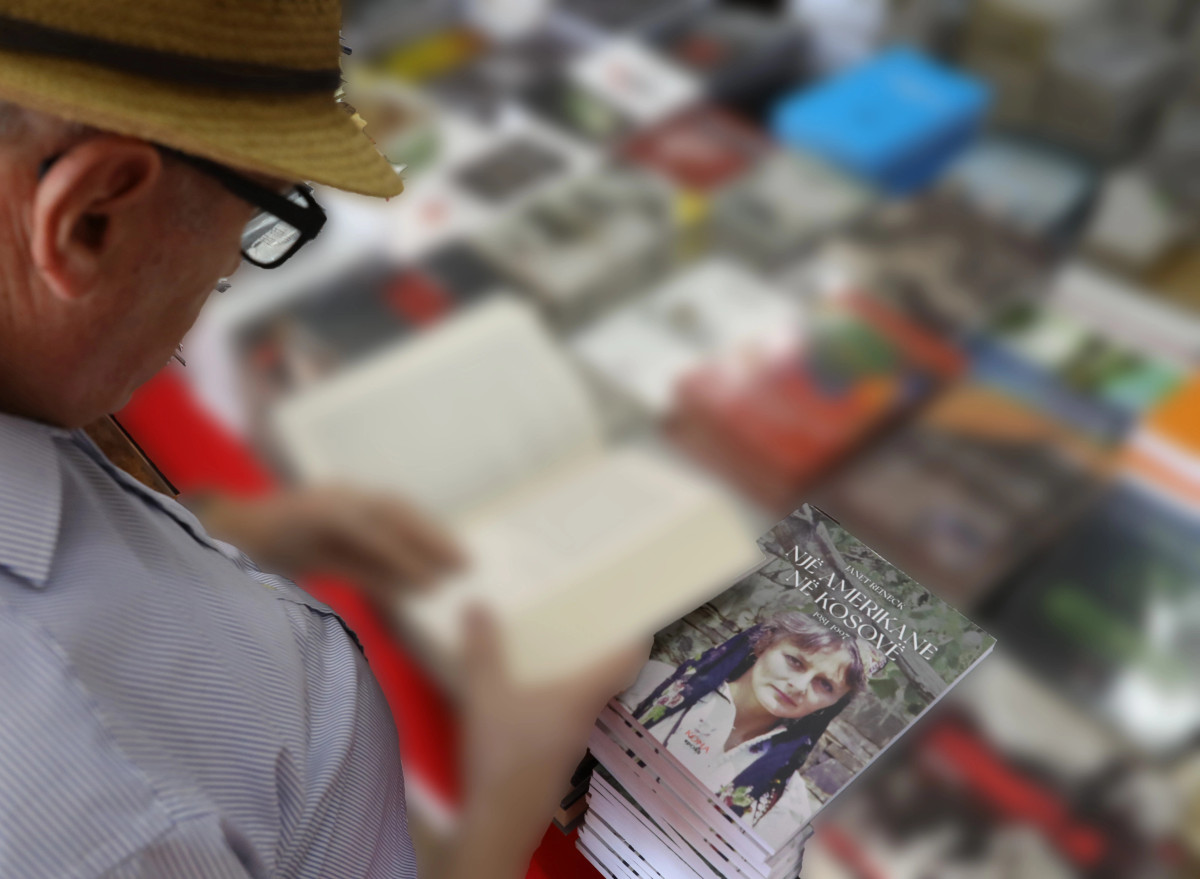
In the book “An American in Kosovo”, KOHA Publications, 2026, Janet Reineck with so much style and direct language, has revealed many things about which we Kosovars may have guessed, but we did not know precisely. With the eyes and mind of an American woman, full of love for the people who accompanied her throughout her stay here, she tells about what she sees and feels. It tells, between the lines, about the reasons that finally made him come back to live here
I believe that most of us who gathered in the hall of the Palace of Youth and Sports where the Book Fair is held know Janet long before she became a TV star. I happened to hear about an American who had come to Kosovo to study the traditions of the Albanians of Kosovo almost 45 years ago – when Janet Reineck appeared in the “Shota Ensemble”, which my mother led at the time, to be embodied with the dances of different Albanian regions.
Mother would speak of her to me as a young woman with an extraordinary ability to learn languages that were distant and unknown to her and a rare talent to learn dances, easy and beautiful and with amazing rhythm.
Although Janet, after two years of stay in Kosovo, would return to America, and then come to Kosovo again, I would not meet her until 1994 – at the time when things in Kosovo were getting worse and worse.
She would come as a project manager for the organization “Oxfam” as well as the International Rescue Committee with the aim of implementing water supply and sanitation projects in schools from Gjilan and Vitia – unlike her research work so far, she would deal with humanitarian interventions there, with an advantage compared to other foreigners who came to Kosovo: Janet communicated in Albanian with the villagers, while she had learned a lot from our mentality, so the approach could to adapt to the circumstances in which he worked.
Without a doubt, now as an expert of the traditions from the regions of Opojë and Has, it was easier for her to understand and assimilate the traditions of Anamorava in addition to the daily work she did in the field together with her local team.
Her job, besides improving sanitary conditions in schools, was also to convince patriarchal families that girls should be educated for their own good and that of Kosovar society.
Towards the end of her mission with the IRC, the authorities in Belgrade would deny her a residence and work visa. As a result, Janet would return to America, and follow the Kosovo war from afar – making efforts from across the Atlantic to influence a people she had fallen in love with during the eight years, on and off, that she had been in Kosovo.
Janet would come and go, but an idea would stick in her mind: to spend her retirement years in Kosovo, doing what she knows best – to continue research in the field, but now in a different form.
For what I will talk about next, it was not included in the book in which, with so much style and direct language, he revealed many things about which we Kosovars may have guessed, but we did not know precisely.
With the eyes and mind of an American woman, full of love for the people who accompanied her throughout her stay here, she tells about what she sees and feels. It tells, between the lines, about the reasons that finally made him come back to live here.
Two years ago, Janet came up with the proposal to make a show on the ground – where apart from visually presenting what she talks about in the book, she would introduce us to Kosovo in her eyes. Her idea was to travel to different parts of Kosovo and other Albanian lands and talk to “ordinary people” about the peculiarities, troubles and joys – in a word, about life outside the preconceived frames.
Janet managed to conquer our hearts – I believe that there are few who will not have seen her on the screen and who will not recognize her on the streets of any settlement in Kosovo. And we, on the other hand, adopted it: for some time now, Janet also has the citizenship of Kosovo. It has become completely Kosovar. Citizen of the state for which she contributed to its creation with work, energy and courage in complicated and difficult times.
Today we are inaugurating the reprint of the book which was published by her friend, the anthropologist, Arsim Canolli with the publishing house “Cuneus” and translated by Nazim Haliti.
It’s a reprint, because Janet Reineck’s account is worth reading anyway. It is already part of our history narrated by a woman full of energy, desire and love for a people that has now become hers.
The speech given at the inauguration of the work, “An American in Kosovo” by Janet Reinecki, on Thursday, June 18, at the Book Fair in Pristina