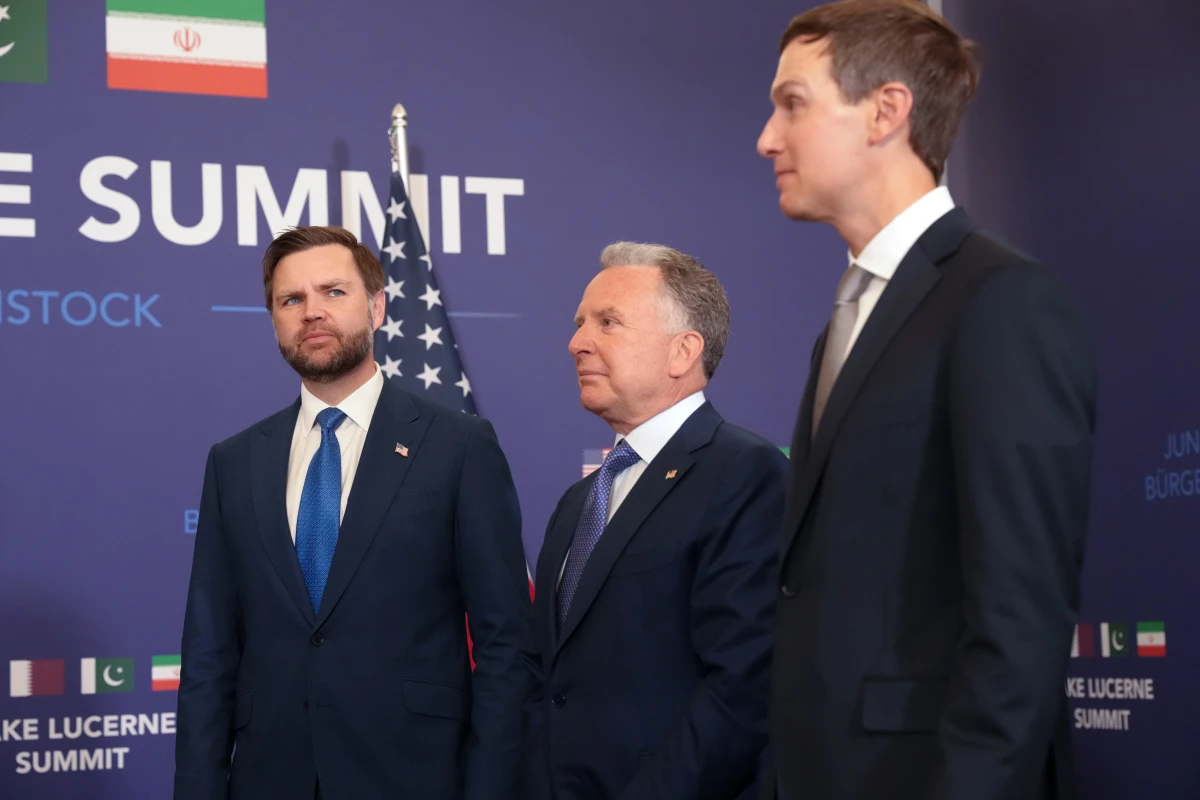
Direct talks between the US and Iran are expected to begin in Switzerland, despite the Iranian military saying it has closed the Strait of Hormuz again because of Israeli attacks in southern Lebanon.
Iran has also cited the violation of the agreement with the US to end the war as a reason for closing the strait. However, the US military has stated that “traffic continues to flow” through the strait.
US Vice President JD Vance arrived in Switzerland early Sunday morning. The new round of negotiations is expected to start later in the day, the BBC reports.
An Iranian delegation, including Parliament Speaker Mohammad Bagher Ghalibaf and Foreign Minister Abbas Araghchi, arrived late on Saturday.
US and Iranian officials will be joined in the talks by Pakistan’s Prime Minister Shehbaz Sharif and the country’s armed forces chief, Field Marshal Asim Munir.
Pakistan has acted as a mediator throughout the war and hosted an earlier round of negotiations between the US and Iran.
“Pakistan will continue to support the implementation of the understandings between Iran and the United States,” Pakistan’s Foreign Ministry said in a statement ahead of the talks.
Vance said he hoped to make progress “on the nuclear issue” and on the “Lebanon ceasefire issue.”
Speaking to reporters before boarding the plane, he was asked about clashes between Israel and Hezbollah as well as Israeli airstrikes in southern Lebanon.
“Things are actually getting better there and the situation is calming down a little bit. It’s going to be something that we have to constantly manage to make sure that both Israel and Lebanon are safe. That’s basically the goal: to make the whole region safe and stable,” he replied.
The spokesman of Iran’s Foreign Ministry, Esmail Baghaei, has said that his country would demand that “the other side fulfills its commitments”.
Earlier this week, the presidents of the US and Iran signed an initial agreement aimed at ending the war, including the conflict in Lebanon, with immediate effect. The agreement included a commitment to further talks with the aim of reaching a final agreement within the next 60 days.
The situation is complicated by ongoing clashes between Israel and Hezbollah, the Iran-backed group that operates in the southern suburbs of Beirut.
On Saturday, at least 47 people were killed in Lebanon after a series of Israeli airstrikes, according to the country’s Health Ministry.
The Israel Defense Forces (IDF) said they had struck 80 Hezbollah-linked targets and killed “dozens” of its members.
The IDF also stated that four Israeli soldiers were killed.
Israel and Hezbollah have continued to exchange fire since the announcement of the US-Iran deal, but an immediate ceasefire between them was confirmed on Friday afternoon.
Before the deal, Israel had said it had no intention of withdrawing its forces from Lebanon and insisted that its conflict with Hezbollah was separate from the war against Iran.
Hezbollah said the Israeli strikes in Lebanon were an attempt to “sabotage” the broader US-Iran deal.
The US government has criticized ongoing Israeli operations in Lebanon, which was embroiled in war when Hezbollah fired rockets at Israel in retaliation for US-Israeli strikes that killed Iran’s supreme leader.
Lebanon’s Health Ministry said 4,057 people have been killed since the conflict between Israel and Hezbollah resumed on March 2.
Iran’s Islamic Revolutionary Guard Corps (IRGC) said Israeli attacks in Lebanon violated ceasefire commitments and that the Strait of Hormuz, which had reopened after the US-Iran deal to end the war, had been closed again.
Justifying the decision to close the strait, the Iranian military accused the US of violating the US-Iran agreement by not implementing the first point of the 14-point memorandum, which provides for “the immediate and permanent cessation of military operations on all fronts, including Lebanon.”
However, following the Iranian statement, US Central Command (CENTCOM) spokesman Tim Hawkins said “traffic continues to flow”. He added that US forces are “monitoring the situation to make sure this continues”, stressing that “Iran does not control the Strait of Hormuz”.
CENTCOM said 55 merchant ships passed through the strait on Saturday, carrying more than 17 million barrels of oil for global markets.
Trump threatens Iran as talks take place in Switzerland
1 d. ago / 21 Jun 2026 15:56
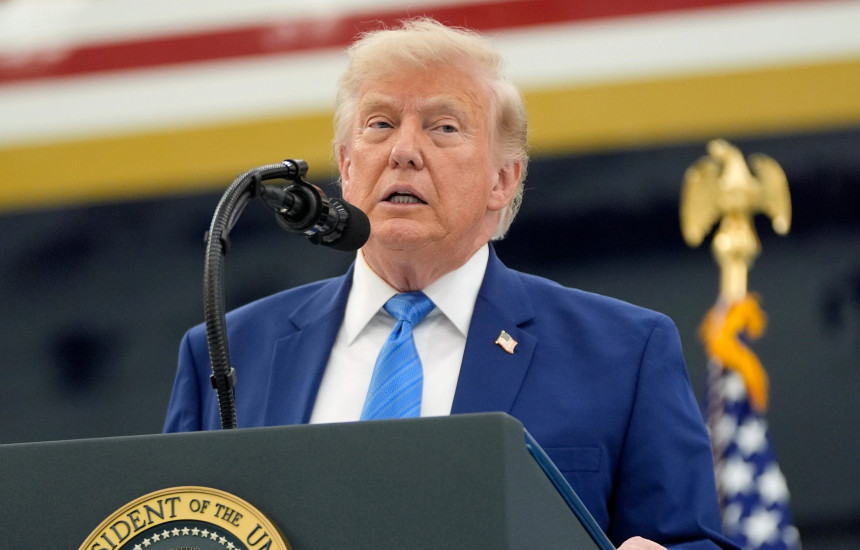
The American President, Donald Trump, has written in Social Truth that Iran should stop its representatives in Lebanon from creating problems.
Trump is referring to the Iranian-backed Hezbollah militant group, which is continuing attacks with Israel in southern Lebanon.
The US president has threatened that if Iran does not do this, then the US will strike again.
“Iran must immediately stop its highly paid proxies in Lebanon from causing trouble. If it doesn’t, we will hit Iran very hard again, just like we did last week, only harder,” Trump wrote.
Trump’s statement comes as US-Iran talks are taking place in Switzerland, according to the agreement signed by both countries this week.
The Israel-Hezbollah attacks have jeopardized the US-Iran deal, causing talks that were scheduled to begin on Friday to be postponed to Sunday.
Iran insists that without a ceasefire in Lebanon, the deal will not be preserved.
Meanwhile, Israel says it will not withdraw from the security zone in southern Lebanon and that its army is allowed to respond whenever there are attacks.
Vance: US ready to radically transform relations with Iran
1 d. ago / 21 Jun 2026 15:11
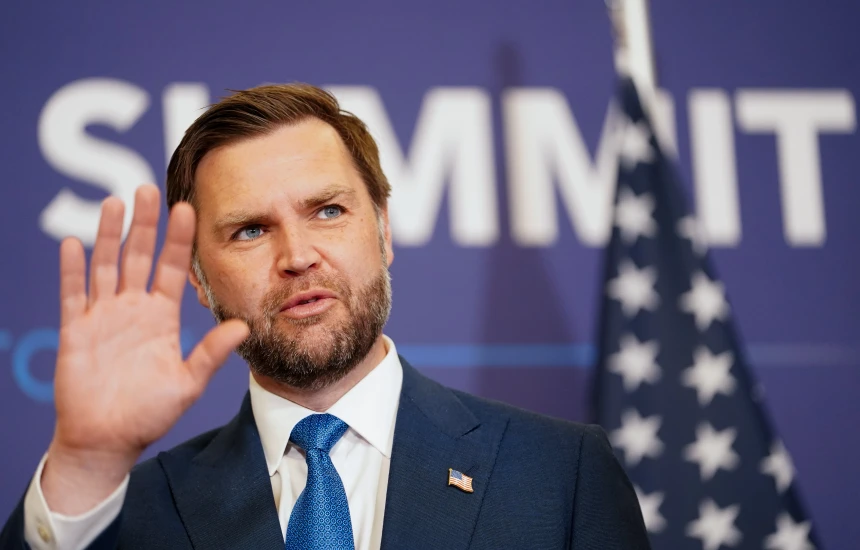
US Vice President JD Vance said before the high-level meeting with the Iranian delegation on Sunday in Switzerland that the US is ready to “radically transform” relations with Iran.
“Never before have Iranian and American leadership met at such a high level,” Vance said.
“What the president has asked us to do is turn a new page to transform our relationship with the people of Iran and extend an outstretched hand that says to the people of Iran that if your leadership is willing to give up being a driver of regional instability, if they’re willing to give up their long-term nuclear weapons ambitions, then the United States is willing to fundamentally transform our relationship with that place,” said Vance.
He added that great progress has been made in the last few hours and it is expected that there will be additional progress in the coming hours.
According to Vance, the technical negotiations may not resolve every dispute, but as he put it, they “allow us to sit together as a team for the first time in history.”
Iran says the US should recognize its right to enrich uranium
1 d. ago / 21 Jun 2026 14:48

Iran’s President Masoud Pezeshkian said on Sunday that Iran will maintain its right to enrich uranium, claiming that the United States must accept this.
“We will not submit to force, oppression and humiliation. Nor will we give up the right to enrichment. And they must accept this”, said Pezeshkian.
He made the comments during a meeting with the country’s banking officials.
US Vice President JD Vance and senior Iranian officials began talks in Switzerland on Sunday over Tehran’s nuclear program and to draft a fragile interim deal to end the war in Iran.
The framework was signed last week, and now chief US and Iranian negotiators have a 60-day deadline to reach an agreement on technical details that have major implications for the world economy and global security.
US-Iran talks begin in Switzerland
1 d. ago / 21 Jun 2026 14:18
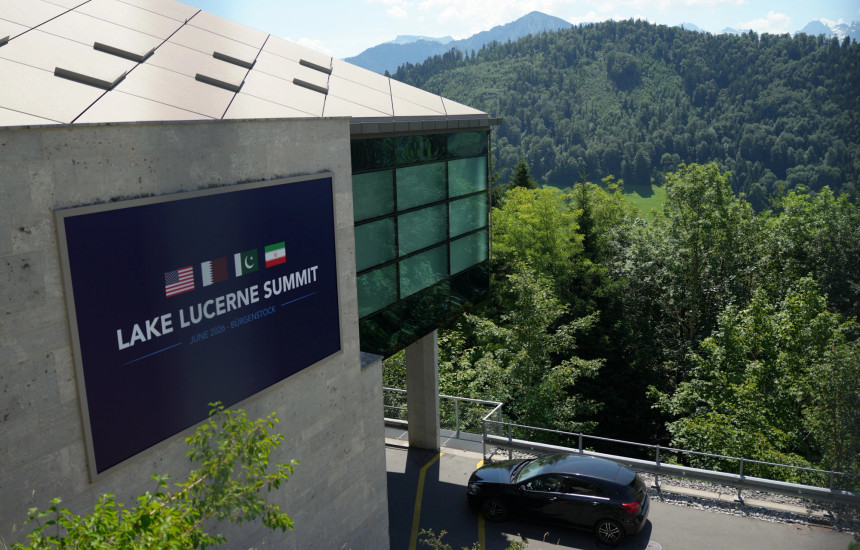
Talks between Iran and the United States, aimed at strengthening the fragile interim agreement to end the conflict, have faced difficulties, including Iran’s decision to keep the Strait of Hormuz closed in protest at US President Donald Trump’s inability to force Israel to stop fighting in Lebanon.
The Ministry of Foreign Affairs of Qatar announced through a statement on Sunday afternoon that the talks have already started. They are being held at a tourist resort in Lucerne, Switzerland.
US Vice President JD Vance, who leads the US delegation, had earlier stated that he would add the issue of Lebanon to the agenda, which was originally designed to focus on opening the Strait of Hormuz, lifting US sanctions on Iranian oil exports and unlocking Iranian assets frozen abroad.
The Iranian delegation is led by the speaker of the parliament, Mohammad Bagher Ghalibaf, but the presence of the deputy oil minister and the governor of Iran’s central bank shows that Tehran wants to focus mainly on the conditions for the lifting of sanctions.
The Swiss Foreign Ministry has said that delegations from the US and Iran, as well as mediators from Pakistan and Qatar, are all present at the luxury resort where the talks are taking place.
Israel says it will not withdraw from the security zone in Lebanon
1 d. ago / 21 Jun 2026 13:29
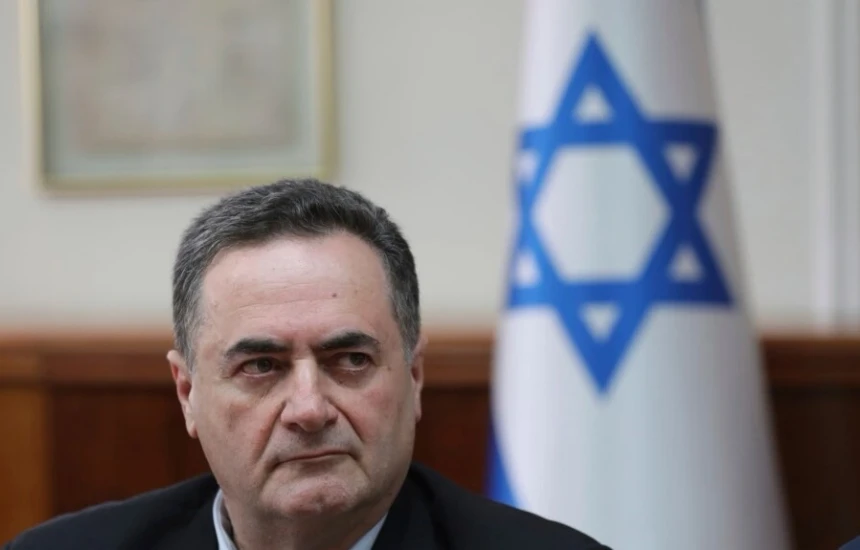
The Israeli Minister of Defense, Israel Katz, has declared to Reuters on Sunday that there was and is not “any limitation” for the Israeli soldiers to act towards the elimination of threats in Lebanon.
He also said that the troops will not be withdrawn from the security zone there.
His statement comes as US and Iranian delegations have gathered in Switzerland, with the mediation of Pakistan’s top officials, to start negotiations, as provided for in the agreement signed between the two countries this week.
Israeli strikes killed at least 20 people in Lebanon on Saturday, Lebanon’s state news agency NNA reported, a day after a ceasefire with Iran-backed Hezbollah came into effect after months of escalating violence.
Iran says that for the deal with the US to be implemented, the war in Lebanon must end
1 d. ago / 21 Jun 2026 13:15
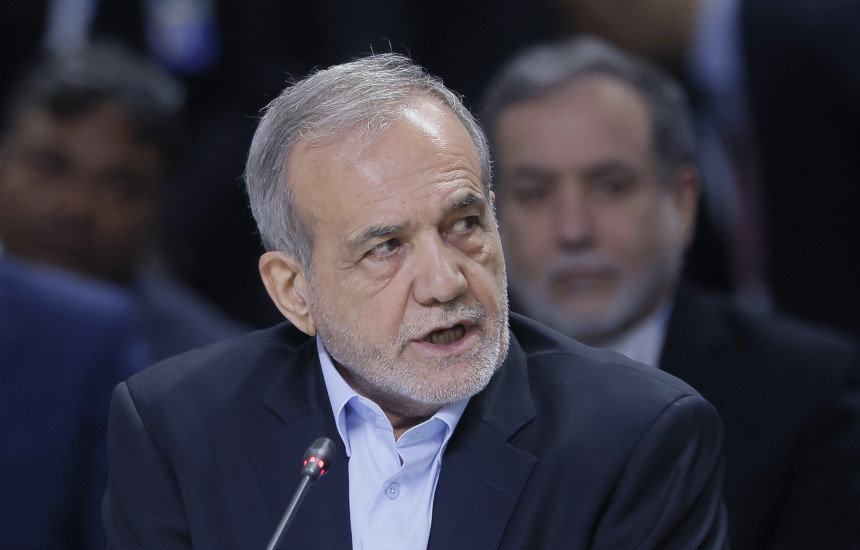
The peace agreement between the US and Iran cannot be implemented if the war in Lebanon does not end, said Seyed Mehdi Tabatabaie, deputy head of Communication and Information in the Office of the President of Iran.
“The continuation of the crimes of the Zionist regime in Lebanon will lead to the nullity of the entire agreement,” he wrote on Platform X, ahead of Sunday’s talks in Switzerland.
Iran will raise the issue of violations of the initial US-Iran peace deal at this afternoon’s meeting, Iran’s top negotiator, Mohammad Bagher Baghaei, said, according to the state-run Fars news agency.
A spokesman for the Iranian negotiating team has said that the plan of the Iranian delegation is for the talks to continue until Sunday evening and that it is unlikely that they will last longer.
Meanwhile, Iranian President Masoud Pezeshkian has said that Iran’s former Supreme Leader had made it clear that Tehran did not want to possess nuclear weapons, referring to US demands that Iran not acquire one.
“The only point for America is that we don’t have an atomic bomb. This is something that even the martyred leader has repeatedly said: we don’t want an atomic bomb. America said to write this and sign it, and we signed it,” said Pezeshkian.