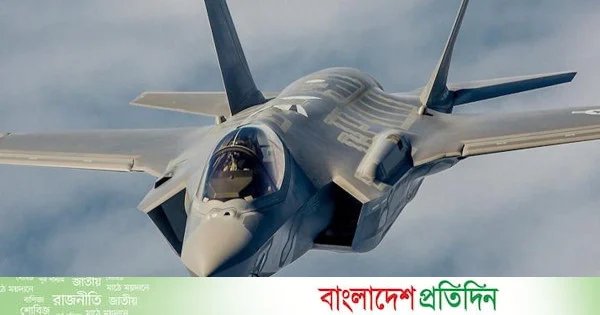
Amid growing tensions over the Taiwan Strait, the message of a deep crisis in US Air Force capabilities has emerged. While the F-35 stealth fighter is considered essential in the fight against China on the modern battlefield, the aircraft’s severe maintenance crisis and lack of readiness are currently a major headache for US military planners.
According to a recent report by the US Government’s Generate Accountability Office, or GAO, the F-35 program’s capability rate has fallen dramatically due to supply chain complexity and contractor oversight. What was once 38 percent, has now come down to just 25 percent. The overall mission capability of the entire fleet has also suffered major degradation. While the U.S. military plans to adopt a new $14 billion strategy to address the situation, limited private-sector manufacturing capacity and growing funding shortfalls make meeting this goal uncertain.
According to analysts, the role of the F-35 will be crucial in the event of a conflict centered on Taiwan. Because China’s air defense system is currently very strong, which conventional non-stealth aircraft like F-16 or F-18 would struggle to overcome. Only stealth-capable aircraft are capable of operating inside missile systems such as China’s S-400 or HQ-9B. Worryingly, however, aircraft that are key to maintaining US superiority on the battlefield are now sitting on the ground beyond repair.
Meanwhile, China is expanding its military industrial capacity at an unprecedented pace. Recent data shows that China is rapidly expanding its infrastructure to build several generations of fighter jets, including the J-20 stealth fighter, which will make it the world’s largest fighter fleet within a few years. Against this rapid advance of China, this crisis in the preparedness of US forces raises major questions about the effectiveness of US strategy in the battlefield. So now the question is bigger than how many F-35s the US has; How many planes will be ready to fly in case of war.
According to military experts, the biggest challenge for the US is not just to have advanced technologies in this modern battlefield, but to keep them operational all the time.
Source: Asia Times
BD daily/NH