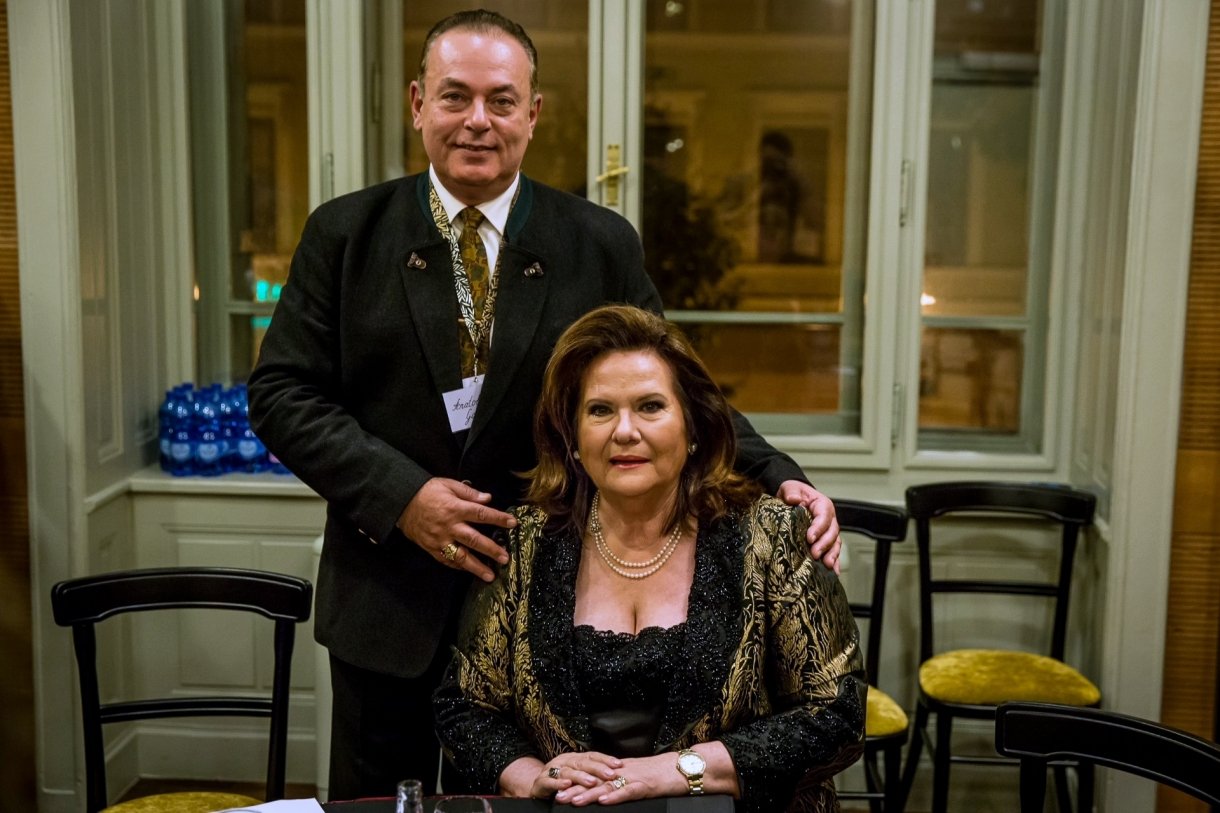
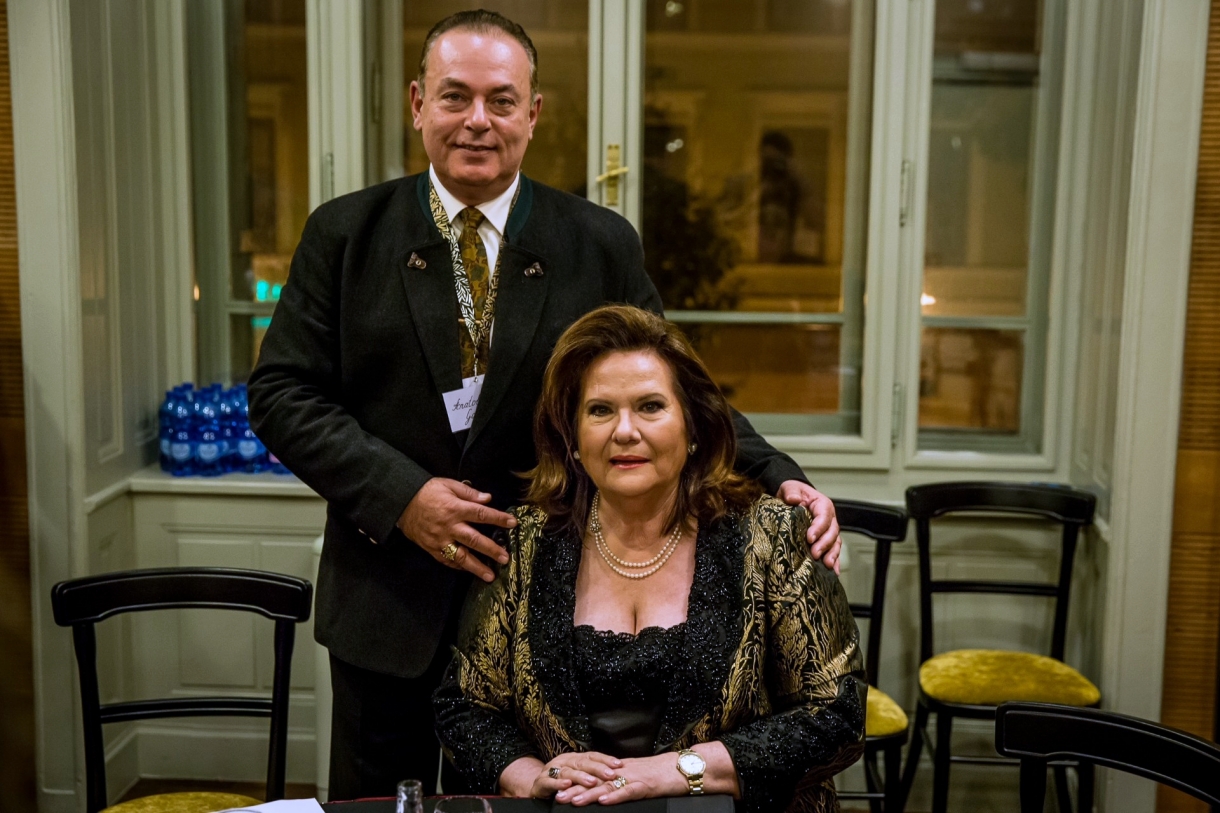
Today, Éva Marton—an opera singer who has been awarded the Kossuth Prize, the Order of St. Stephen of Hungary, and the title of Artist of the Nation, and considered one of the world’s most outstanding dramatic sopranos—celebrates her 80th birthday.

Éva Marton. Photo: Hungary Today
Éva Marton was born on June 18, 1943, in Budapest. She completed her studies at the Academy of Music in 1968, where she earned degrees in opera singing and voice teaching, after which she signed a contract with the Hungarian State Opera House. There, she made her debut in Rimsky-Korsakov’s opera The Golden Cockerel as Queen Shemaha. This successful debut was followed by further triumphs at the theater on Andrássy Avenue, including roles as Tosca, Manon Lescaut, Rodelinda, Tatjana, and Freia. Her striking soprano voice caught the attention not only of the audience but also of Christoph von Dohnányi, who offered her a contract with the Frankfurt Opera in 1972. Marton accepted the offer, and her international career took flight.
Happy birthday to the greatest Hungarian soprano, Éva Marton born #OTD in 1943. #ÉvaMarton #OperaBudapest #birthday pic.twitter.com/wE2ByhugsA
— HungarianStateOpera (@OperaBudapest) June 18, 2026
That same year, she performed at the Maggio Musicale Fiorentino in Florence in the role of Matilde in Rossini’s opera William Tell. In 1973, she took the stage at the Vienna State Opera, and a year later, she made her mark in Munich. Her successes were crowned with invitations from the world’s most prestigious opera houses.
By 1976, she was already performing on the stage of the Metropolitan Opera in New York in Wagner’s Die Meistersinger von Nürnberg as Eva. A decade later, she shone in the role of the Empress in R. Strauss’s Die Frau ohne Schatten at La Scala in Milan, conducted by Wolfgang Sawallisch. In 1987, she made her debut at the New York MET, where she took on the title role in Turandot, performing alongside Plácido Domingo and Leona Mitchell. In 1990, she appeared as Electra at London’s Covent Garden under the baton of György Solti; in 1991, she gave a brilliant performance in the same opera at Carnegie Hall in New York, accompanied by the Vienna Philharmonic and conducted by Lorin Maazel. She celebrated her 25th anniversary as an opera singer at the Hungarian State Opera House, where she portrayed Gertrudis in Bánk bán in 1993.
Not only did she appear countless times on the major international stages mentioned above over the course of these four decades, but she also traveled the world from Buenos Aires to Tokyo. In 2010, in Geneva, she portrayed Clytemnestra in Elektra under the baton of Stefan Soltesz, effectively bidding farewell to the international opera stage.
Since the 2000s, she has devoted a great deal of attention to the younger generation and to the presence of opera as an art form in the cultural sector, as she has been teaching, serving on juries, and acting as an artistic director ever since. She is a member of the Hungarian Academy of Arts and a senior advisor to the Hungarian State Opera House. From 2005 to 2013, she headed the Vocal Department at the Liszt Ferenc Academy of Music; as a professor emerita, she continues to teach there. Since 2014, the Éva Marton International Vocal Competition, named in her honor, has been held annually, and she serves as its jury chair.
Her outstanding career, recognized internationally, has also been honored with numerous awards in Hungary; she received the Kossuth Prize in 1997, was named Artist of the Nation in 2004, and was awarded the Hungarian Order of St. Stephen in 2016. To celebrate her 80th birthday, the Opera House is organizing a gala concert on June 18 at 7:00 p.m., featuring special guest Jonathan Tetelman, alongside her students, who will showcase their talents in honor of the artist.

Via deszkavizio.hu; Featured image: Marton Éva