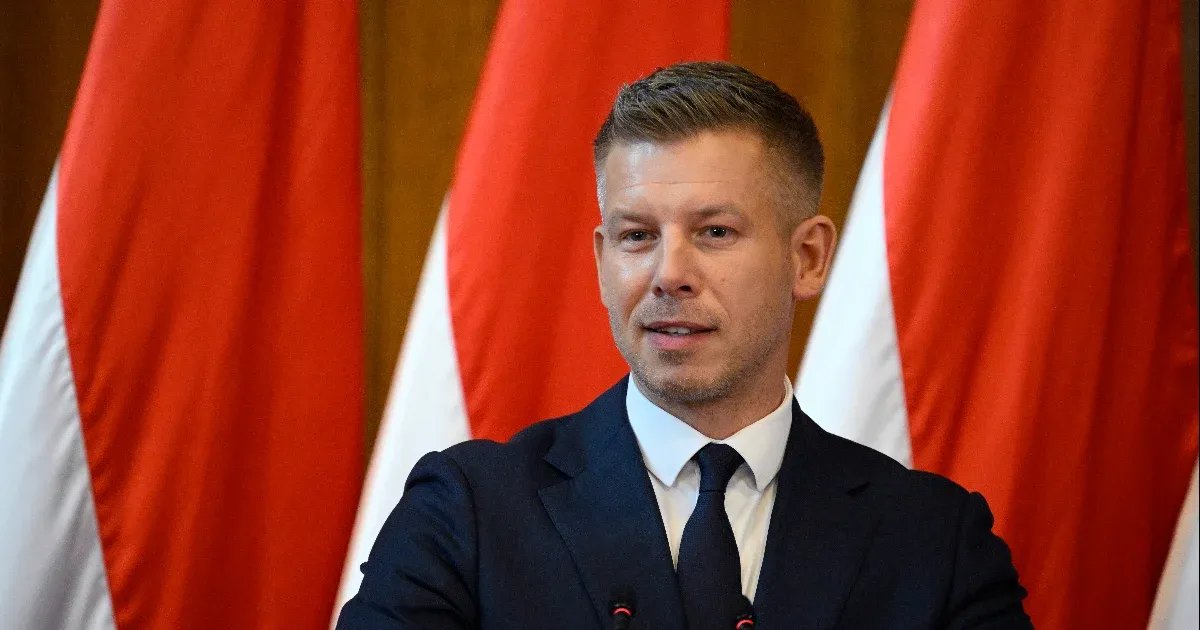
The government submitted for social consultation the draft law on the establishment of the National Asset Recovery and Defense Office. After Péter Magyar prime minister several times on Monday too spoke the About NVVH – according to the draft, this would be the official abbreviation – the draft does not reveal much new information about the basic tasks of the organization.
NVVH will have broad powers. One of its groups, the pre-criminal case group, will carry out a risk analysis, so they can look into bank accounts, registers and official documents. For this, they can also use the help of the police, the prosecutor’s office and the NAV. The office will be able to initiate public asset protection and criminal proceedings, depending on the suspicions that arise.
The NVVH will receive precise information from the NAV about those companies whose annual sales revenue is 75 percent from public procurement, and will be able to examine, among other things
- organizations and institutions operating from the central budget,
- the use of support from the public finances or assets provided from the public finances for any purpose and under any legal title;
- management of the local self-government, the national self-government and their association;
- the asset management of state or local government owned or partially owned, as well as all publicly owned economic organizations;
- and planned, ongoing or previous measures or projects receiving financial support in whole or in part from the European Union.
NVVH is authorized during the investigation
- to enter a room related to the subject of the investigation, archive, client area, server room, warehouse or other non-residential premises;
- to view documents, registers, contracts, certificates, decision-preparatory documents, electronic data files and data carriers related to the subject of the investigation;
- make copies, extracts, certificates or electronic backups of documents, registers and electronic data files;
- save data related to the subject of the investigation from the electronic system;
- to request information necessary for the investigation, as well as
- record the findings of the on-site inspection in a report.
They must notify the person concerned of the investigation at least five days in advance, unless it may result in the destruction of relevant documents and assets or the failure of the investigation.
The office will have a president, who will be elected by the National Assembly for a six-year term based on the draft, and after the end of his term, he cannot apply for the position again. It will have four deputy presidents, all of whom will be responsible for different areas. It will be
- deputy president of public finance,
- investigative vice president,
- deputy president responsible for prosecution,
- and vice president of appeals.
The president must have a criminal record and have a background in law, economics, government, politics, economics, or some other social science, with 15 years of professional experience. Neither the president nor the deputy president can be a person who was a member of parliament, EP, local government or nationality, mayor or mayor in the six years before his election. He cannot be a member of the government, senior political leader, government commissioner, minister or prime minister’s commissioner. In addition, he cannot be a member of a party.
The president’s salary is seven times the judicial salary base, that of the deputy presidents is 5.5 times the judicial salary base, so according to the current situation roughly HUF 5 and 4 million. The president is entitled to the same allowances as a minister, and his deputies are entitled to the same allowances as a state secretary for public administration, and the president is entitled to 20 days of additional leave per year and his deputies to 15 days per year. The president and his deputies are entitled to the same immunity as parliamentarians, and upon their election and annually thereafter, they make a declaration of assets, based on the same rules that apply to representatives. If they refuse to do so, fail to do so, or present false information, their mandate may be terminated due to a conflict of interest.