Slovenian winter centers because of climate changeshorter winters and new tourist habits are turning into year-round mountain centers. The cable cars, which were once almost exclusively the domain of skiers, today also carry hikers, cyclists, families, lovers of adrenaline and peace in nature. European funds also contributed a significant part of the funds for the transformation, worth several million euros.
Attractive all year round
Until a few years ago, the equation of Slovenian ski resorts was quite simple. If it snowed, the machines worked, the hotels and cabins filled up, the local economy lived. If there was no snow, the problems began. And the lack of snow is something we will have to get used to living with. The logic of the past is therefore rapidly changing. Slovenian ski resorts want to be less and less dependent only on the white gifts of mother nature, as winters are becoming shorter, less predictable and more and more risky for business. That is why the biggest transformation of mountain tourism in history is taking place in Slovenia. Ski resorts no longer want to be just seasonal destinations, but places that live all twelve months of the year.
Ski resorts no longer want to be only seasonal destinations, but places that live all twelve months of the year.
An important part of this transformation was made possible by the European Union. After the covid-19 pandemic, an extensive mechanism was established for the recovery of the economy, from which Slovenia allocated part of the funds to the restructuring of the tourism industry. As part of the European Cohesion Policy in the 2014-2020 programming period, the former Ministry of Economy, Tourism and Sport allocated EUR 55.4 million in grants for the transformation of ski centers into modern mountain centers.
It is one of the largest investment cycles in Slovenian mountain tourism to date. The European funds were not intended only for improving the skiing infrastructure, but primarily for reducing seasonal dependence and adapting to climate change. Mountain tourism is considered to be one of the most vulnerable industries, as it is increasingly dependent on weather conditions over which managers have no influence.
Nine Slovenian centers received support: Krvavec, Mariborsko Pohorje, Rogla, Golte, Vogel, Kope, Cerkno, Trije kralji and Velika planina. The goal of the projects was not to create more ski kilometers, but to ensure that mountain centers are attractive all year round.

Due to its proximity to Ljubljana, Krvavec is one of the most accessible Slovenian mountain centers. PHOTO: Work documentation
Kope as a symbol of new development
One of the most vivid examples of the new direction is Golte. The once prominent winter ski area above Mozir is being developed into a modern year-round destination with the help of European funds. The new infrastructure includes updated lift facilities, digitization of ticket sales and many new products for visitors outside the winter season. Among them are an adventure park, abseiling, children’s theme park, free fall, a park with slides and trampolines, and stargazing in special domes by the lake. The goal is no longer just to attract a skier for a day, but a family or an individual who will spend a weekend or vacation in the mountains regardless of the season.
In the past, the main concern of the managers was how many days in the season there would be enough snow for skiing, but today they are mainly thinking about how to attract visitors even when the ski slopes turn green. At Kopa, they realized this years ago.

Boštjan Paradiž says that they want to create a destination that offers guests quality experiences all year round. PHOTO: Kope mountain resort
“Years ago, we realized that three months of the ski season is not enough for the long-term stable development of the mountain center. We wanted to create a destination that offers guests quality experiences all year round and does not depend solely on weather conditions,” he explains Boštjan Paradisedirector of the company Vabo, which manages the Kope mountain resort.
Before making the decision, they studied the development trends of domestic and foreign mountain centers and searched for an answer to the question of how to make the best possible use of their infrastructure all year round. The result is large-scale investments that today are changing the image of the entire area.
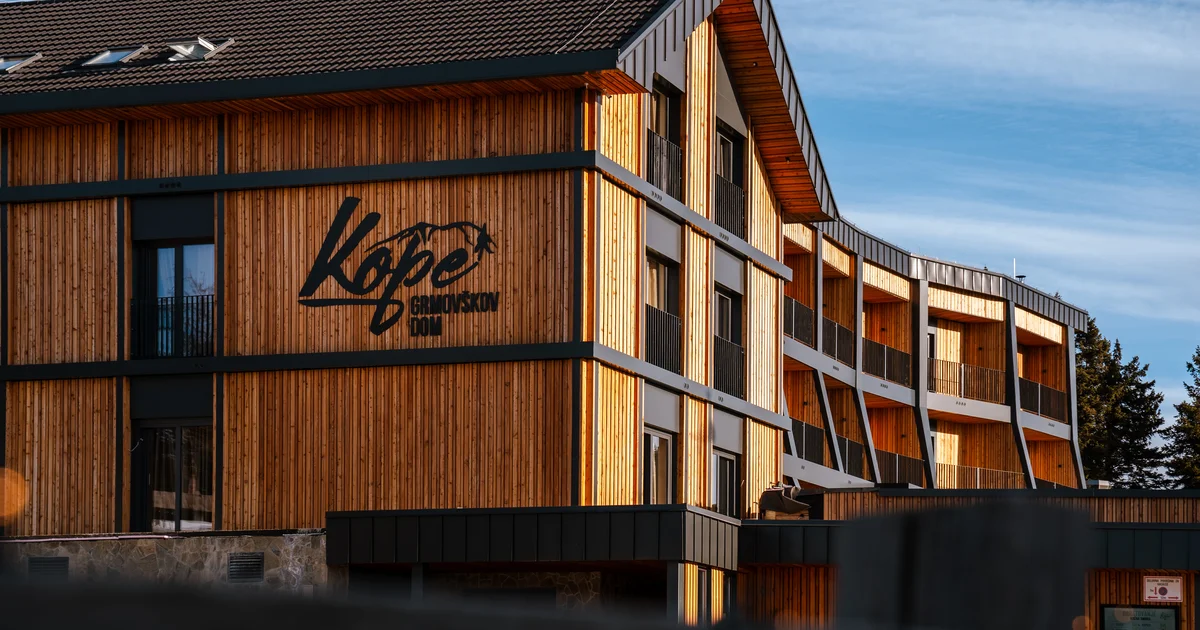
Also with the help of European funds, they renovated the accommodation facilities, developed the wellness offer, built a new boutique camp, updated the cable car infrastructure and developed new tourist products.
The new four-seaters Kopnik and Pahernik and the Velika Kopa ski lift are important acquisitions for the winter part of the offer, and more and more attention is paid to activities in the warmer part of the year. Among them are new cycling routes, a mountain biking school, electric bikes, an adrenaline park and the APP KOPE digital application.
According to Paradiž, such investments also have a strong impact on the wider environment. Greater attendance means more work for local vendors, artisans, suppliers and service providers, and the extension of the tourist season contributes to more stable jobs and a reduction in the pronounced seasonality of employment. The development of Kop is such an important development impulse for the wider Carinthia.
The development of Kop is an important development impulse for the wider Carinthia.
The transformation is far from over. They will soon open the Panorama Kope hotel with wellness and swimming pools, they are also planning a larger wellness complex near Grmovškov dom and the Divji petelin camp. The long-term goal is clear – in addition to skiers, to attract families, hikers, cyclists, sports groups and business guests.
From Pohorje to Vogel
Similar stories are being written elsewhere in Slovenia. In Mariborsko Pohorje, the future is increasingly associated with mountain biking. The new four-seater Ruška and the updates of the Pohorska cable car are accompanied by three new cycling routes, exercise parks, mountain go-karts and modern digital support for visitors.
Krvavec, one of the most accessible Slovenian mountain centers due to its proximity to Ljubljana, is developing an adventure park, trim tracks, disc golf, electric bike rental and guided tours in addition to the new six-seater Zvoh.
On Rogla, in addition to the new six-seater Mašinžaga, visitors are attracted by a bicycle park, a flying slide, mountain carts, sports festivals and culinary experiences. Vogel is betting on a new panoramic cable car, an outdoor park, children’s activities, themed routes and a gastronomic offer, while Velika planina is strengthening family tourism with e-bikes, playgrounds and new infrastructure.

Mašinžaga Park on Rogla PHOTO: Matevž Hribar
Even in Cerkno and at Treh Kralji, development is based on activities that are not only related to skiing. Adrenaline and bike parks, climbing walls, archery ranges and the offer for paragliders are becoming as important as ski slopes.
Homeliness and comfort
The transformation of Slovenian mountain tourism is not limited only to ski resorts. Part of the European funds was also intended for mountain lodges and cabins, which are increasingly becoming an important part of the year-round tourist offer. For many buildings, it was not just about cosmetic corrections, but about thorough renovations. The home under Storžič got a new facade, insulation, water treatment plant, renovated rooms and a more modern kitchen. In addition to energy rehabilitation and a new roof, a solar power plant was installed at the cottage on Dobrča, and long-standing problems with water supply were solved by building larger reservoirs.

The home under Storžič got a new facade, insulation, water treatment plant, renovated rooms and a more modern kitchen. PHOTO: Tina Horvat
The renovation of Vojko’s cottage on Nanos was similarly extensive, where part of the building had to be rebuilt, as the dilapidated wooden structure could no longer be restored. At Resevna, they renovated the attic, replaced all key installations, and renovated the home energetically.
In Gustlnov dom in Vrat, the former group accommodation with 40 beds has been transformed into a more modern outpost with individual rooms adapted to families and visitors looking for more privacy. Such changes show how the expectations of guests in the mountains are changing.
The renovations show that modern mountain tourism is no longer just a matter of new chairlifts and adrenaline attractions. More and more visitors come to the mountains for hiking, peace, genuine contact with nature and quality accommodation. Mountain huts and homes can offer what large tourist complexes often cannot – a sense of home, local cuisine and direct contact with the mountain environment.

One of the major acquisitions is the adrenaline park on the Cerknik ski resort. PHOTO: Postojna Cave
Once upon a time, snow was the main capital of Slovenian ski resorts, but now it is increasingly becoming a diverse offer. Here, European funds played the role of an important accelerator of development. Without them, many a new chairlift, renovated mountain hut, bicycle park or accommodation facility would have to wait many years to be implemented, and some projects would remain only on paper. That is why the European millions not only brought new tourist products, but also helped to change the way of thinking about what mountain tourism means in Slovenia. Today, it is no longer a question of how to survive the winter, but how to attract visitors to the mountains all twelve months of the year.

Photo Ministry for Regional Development and Cohesion
The rubric is created in cooperation with the Ministry of Local Self-Government, Cohesion and Regional Development.