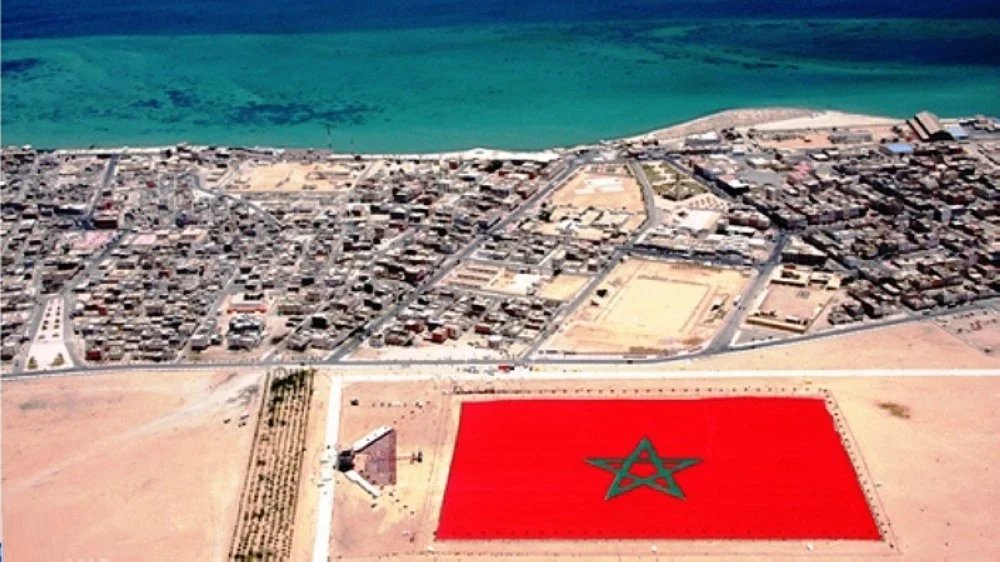
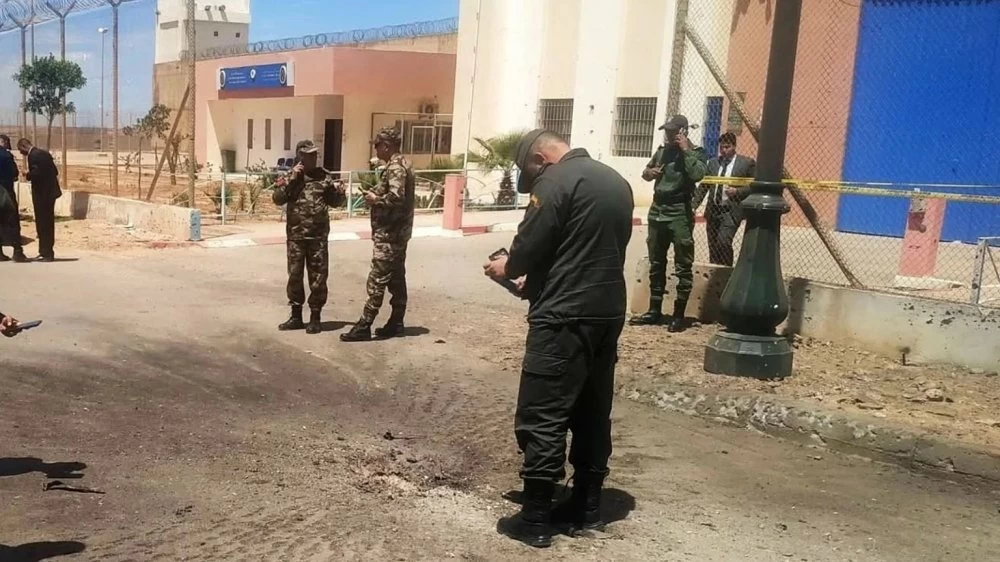
The Mission of UNITED STATES at the United Nations condemned in very clear terms the attacks perpetrated by the Polisario front last Tuesday and which targeted civilian areas in the city ofEs-Smara. “We condemn the attacks carried out by the separatist Polisario Front in the town of Smara, Morocco, because of the threat that these violent acts pose to regional stability and to the progress made towards peace, especially since they go against the climate of dialogue that marked the last discussions,” read an official statement from the Mission, shared on social networks and republished by the US State Department.
In addition to condemning, the US Mission to United Nations emphasized the need to end the conflict around the Moroccan Sahara on the basis of the resolution of the Security Council of October 2025. “It is time to end a conflict that has lasted for 50 years and, as highlighted in United Nations Security Council Resolution 2797, the Moroccan autonomy initiative constitutes a serious path towards peace in Western Sahara,” it is specified. At the same time, the Mission did not fail to urge “all parties who refuse peace to engage constructively and sincerely in favor of a better future. The status quo can no longer continue.”
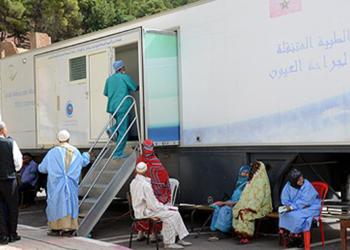
Commenting on these attacks, the ambassador of UNITED STATES At Morocco, Duke Buchan IIIposted on his X account: “Yesterday I was in Dakhla, where American and Moroccan doctors worked side by side to provide medical care to residents of the Moroccan Sahara. Meanwhile, those opposed to peace have launched missiles against civilian infrastructure. The terms of the US ambassador are diplomatic, carefully chosen and say a lot about an American course of action which wants to put an end to a conflict which threatens regional stability and which certain parties want to perpetuate, against the will of the international community.
The conflict “cannot wait another 50, 150 or 200 years to be resolved”
The senior American official also stressed that “we are working within the framework of the latest Security Council resolution (Editor’s note: Resolution 2797) with a view to reaching a peaceful solution to this conflict which has persisted for an unacceptable length of time,” adding that “this situation cannot wait another 50, 150 or 200 years to be resolved.” Mr. Landau also reaffirmed, during discussions with Mr. Bourita, the constant support of the United States “for Morocco’s serious, credible and realistic autonomy proposal”, which he characterized as “the only basis for a just and lasting solution to the territorial dispute concerning the Sahara”.
Less than 24 hours later, another heavyweight in European diplomacy provided support to Morocco. On April 30, Germany, while emphasizing the centrality of autonomy under Moroccan sovereignty, declared that it intended to act in accordance with this position on the diplomatic and economic levels. This position was expressed in the joint declaration adopted at the end of the second session of the Multidimensional Strategic Dialogue Morocco-Germanyheld on Thursday, April 30 in Rabat, between the Minister of Foreign Affairs, African Cooperation and Moroccans Living Abroad, Nasser Bourita, and his German counterpart, Johann Wadephul. The latter also affirmed that Berlin was willing to support economic development in the southern provinces of the Kingdom. The head of German diplomacy in fact underlined “Germany’s availability to support economic development (in the southern provinces), in order to achieve sustainable development and create a favorable investment environment, in particular by encouraging more German companies to get involved in it”.
During the month of April, in addition to the United States and Germany, a dozen countries unequivocally expressed their support for the Moroccan autonomy plan and the Kingdom’s sovereignty over the Sahara. From theEuropean Union to theAustriaand theEcuador to the Zambia passing through the SwissTHE Burundi and the Gabonor even the Honduras which decided outright to freeze its recognition of the pseudo-SADR, Morocco is reaping the fruits of a wise and visionary diplomacy, aligned with international legality and fundamentally attached to stability and co-development.
It is this serious and irreversible trend that seems to have panicked the Polisario front, which thus sees the noose tightening around it and its regional support. Since the UN Security Council resolution in October 2025, the separatist entity has watched, helplessly and with dismay, the collapse of its outdated theses. Especially since more and more congressmen are quick to sign the Polisario Front Terrorist Designation Act (HR 4119), a text which will definitively ban the separatist front from the international community. In desperation, the Polisario therefore chose to wage the war that has always been its own, that of terrorizing civilians and acting as an actor of destabilization and division in the service of unacknowledged agendas.
From the attacks of October 2023 to those of May 2026
However, Mr. Hilale had stressed that we could not ignore the existence of a “beam of clues” which all converge towards the same party, “which has spoken itself”. The first clue is the press release from the armed separatist group “Polisario” where it is said that “the Saharawi liberation army” (sic) targeted three regions: El Mahbes, Es-Smara and El Farsia”. Another clue: while the international press began to report on the explosions, at no time did the Polisario deny it, even though everything indicated that it was they who were behind it, the Moroccan diplomat said.
For the October 2023 attacks, international humanitarian law and UN Security Council resolutions could not be clearer: “Any targeting of civilians is a terrorist act, an act of war. And so this implies consequences and responsibilities. For the moment, what we can say is that these explosions will not go unpunished, the perpetrators will assume responsibility both legally and politically. Not only the perpetrators, but also those who are behind them, who shelter them, who arm them,” declared Mr. Hilale. There is no reason why it should be any different for the attacks of May 5, 2026.