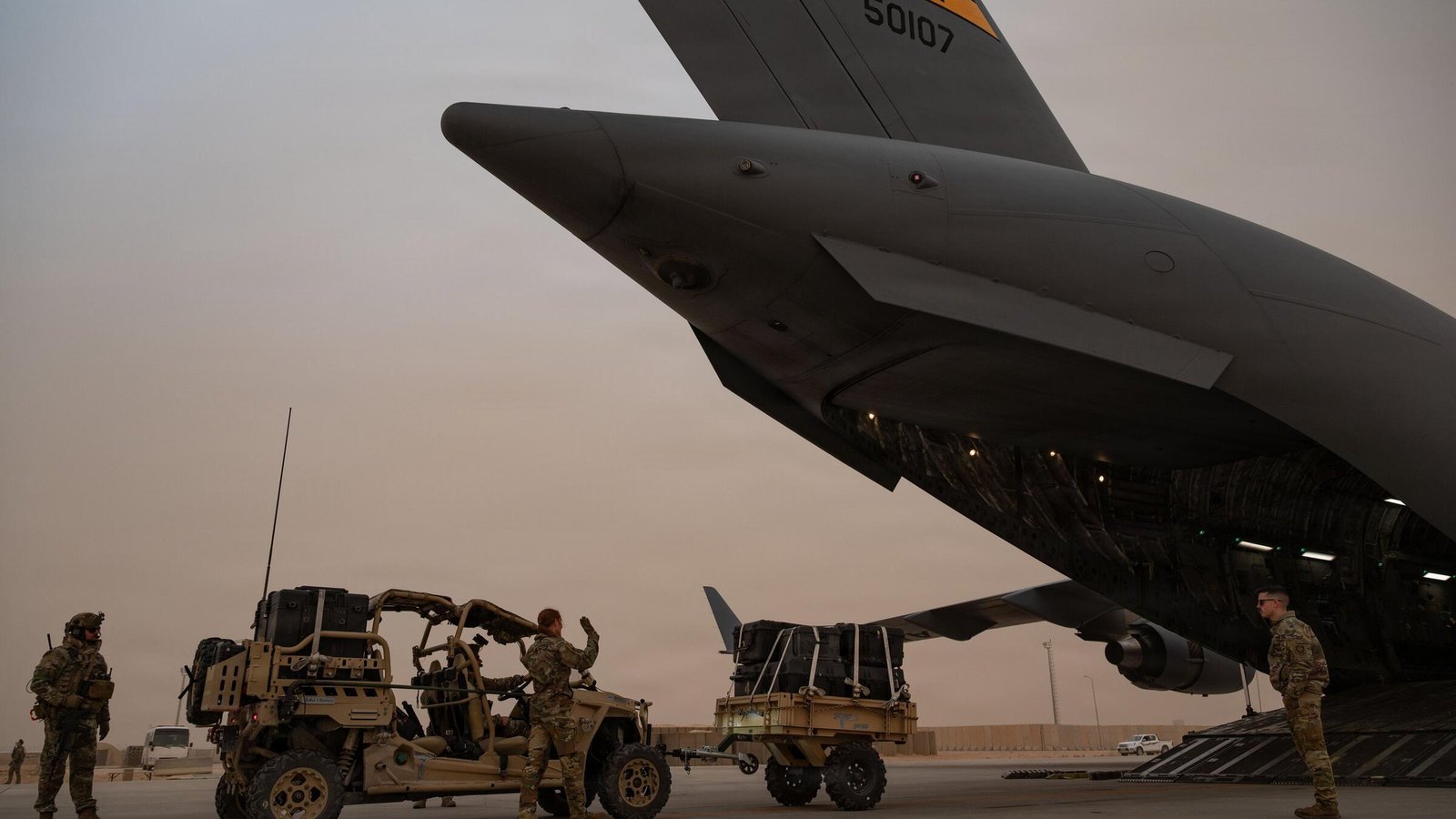
U.S. Secretary of Defense Pete Hegseth has decided to withdraw approximately 5,000 troops from Germany, Pentagon spokesperson Sean Parnell said on Friday, as quoted by Fox News.
The Secretary of War ordered the withdrawal of around 5,000 soldiers from Germany. “This decision follows a thorough review of force posture (…) in Europe and reflects the needs and conditions on the ground,” Parnell said in a statement.
He announced that the withdrawal operation would be completed within the next 6-12 months. The spokesperson confirmed this information in response to a question from Polish Press Agency, but did not answer where the troops would be relocated or which bases would be affected.
According to CBS News, citing anonymous defense officials, some of the forces withdrawn from Europe may return to the United States and later be redeployed abroad, likely to the Indo-Pacific region.
CBS reported that the withdrawal would affect one combat brigade in Germany, after the number of units in Europe increased following Russian invasion of Ukraine. Plans to deploy a long-range artillery battalion have also been scrapped.
The announcement comes a day after President Donald Trump said he was considering such a move, suggesting it could be retaliation for Germany’s stance on the U.S. war with Iran and criticism of the intervention by German authorities, including Chancellor Friedrich Merz. According to Politico, Trump’s decision surprised Pentagon officials, who had not planned such a move.
Trump also suggested that similar decisions could likely be taken regarding Spain and Italy, where key U.S. naval and air bases are also located. So far, these announcements have not been implemented.
Approximately 36,000 U.S. troops have been stationed in Germany. Only Japan hosts a larger contingent, at around 45,000. In 2020, Trump announced the withdrawal of 9,500 troops, accusing Berlin of failing to meet its obligations to NATO. Some of the troops were expected to be relocated to Poland, but those plans were not implemented at the time.
Trump has criticized NATO allies over their stance in the war with Iran, both regarding the use of bases in some European countries – particularly directing criticism at Spain, Italy, the United Kingdom, and Germany – and for failing to assist in efforts to reopen the Strait of Hormuz. The U.S. president has repeatedly said that while the United States has supported its allies, they have not reciprocated and would fail in a critical situation.
In early April, The Wall Street Journal reported that the U.S. was considering options to “punish” allies such as Spain and Germany for insufficient support in the war with Iran by shifting troops from bases in those countries to states such as Poland, Romania, Lithuania, or Greece. Later, Reuters reported that Trump had been discussing with advisers the possibility of withdrawing some U.S. troops from Europe back to the United States. Meanwhile, according to last week’s reports by Politico, a list of “good and bad” NATO countries was drawn up at the White House.
At the beginning of this year, Congress passed provisions as part of the annual Pentagon budget bill that prohibit reducing U.S. forces in Europe below 76,000 for more than 45 days unless the Secretary of Defense and the head of United States European Command submit separate reports to Congress justifying the decision.
According to Reuters, at the end of last year the number of troops permanently stationed in Europe stood at around 68,000, though this did not include approximately 10,000 soldiers in Poland, most of whom are there on a rotational basis. Earlier estimates put the total number of troops at around 80,000.