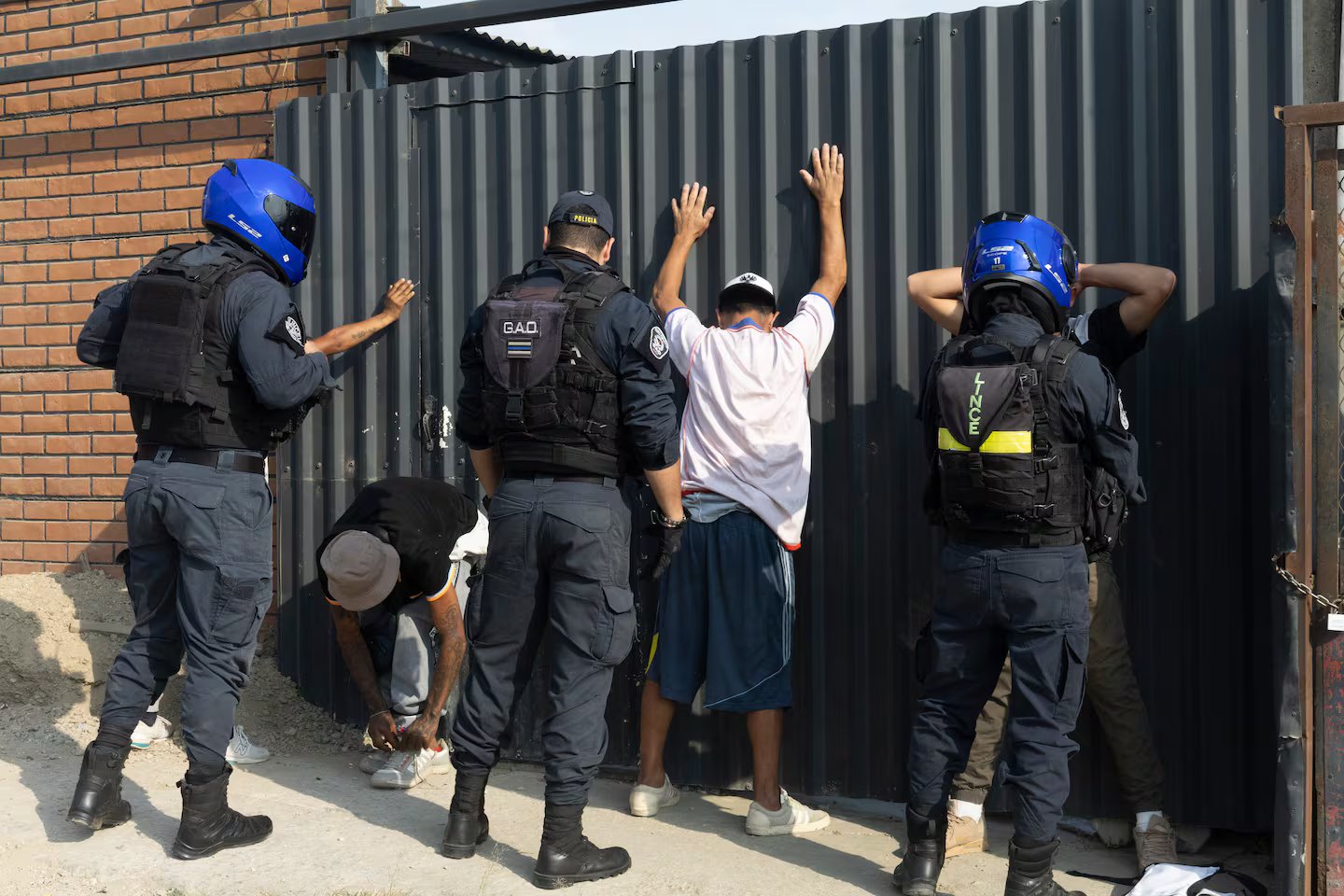
Each strike against drug gangs It implies specific progress in the endless fight against drug trafficking and sale. The relief they generate is key to the quality of life of the affected communities, also burdened by other problems. However, the effect of these actions will be temporary in the territories, as well as limited in combating the structural challenge of drug trafficking and crime in general, if they are not part of more comprehensive approaches.
This is precisely what it is about. Strategic Plan for Containment and Control of Violence (Pecov), developed and led by the Judicial Investigation Organization (OIJ), in which the Public Force, the Drug Control Police, the municipal police, the Public Ministry and the courts also actively participate.
As we announced last Sunday, one of its main components is attack retail outlets as a “gateway” to the criminal groups of which they are a part. It is based on a correct assumption, which was stated by the acting director of the OIJ, Michael Soto: above that last link in the disastrous chain, “there is an entire structure and apparatus to provide, to collect money, to control the territory.” They are, ultimately, the ones that must be dismantled to obtain substantive results.
Moving from the bottom up in the fight against organized crime It implies, among other things, a systematic look, obtaining and sophisticated management of data, intelligence work, setting and measuring goals, detailed planning and fluid coordination between the various police forces and judicial bodies. This has been happening since the plan was launched, at the end of 2023.
Prioritizing the attack on drug trafficking is one of the four pillars of Pecov. The others, all interrelated, are solving homicides, creating organized crime units in all OIJ offices in the country and monitoring cases with metrics by offices. These data, in turn, become an invaluable source for decision making.
In addition to the change in approach, the fight against drug trafficking has received a boost from the constitutional and legal reforms approved last year by the Legislative Assembly, which allow the extradition of nationals in cases of terrorism and organized crime. The extraditions already approved and executed, more 18 more in processhave become a deterrent for the domes.
As we said in our March 4 editorial previous, “one swallow does not make a summer”, and the initial data cannot yet be considered a sign of a trend. However, In the first months of this year there has been a drop in homicidesnot only on a national scale, but also in the provinces particularly affected, such as Limón and Puntarenas. If the pace of decline continues, Soto estimates that 2026 could close with the lowest rate since 2023although still very high for our historical record and authentic citizen safety.
The exception, we hope momentary, has been Cartago, due to the clashes between gangs, which have claimed multiple victims and spread great fear in a traditionally peaceful province. For some reason the OIJ has directed its attention towards her. Furthermore, their mayoralties they decided take the initiativecall a meeting between key authorities to improve security and create a Provincial Council to promote and monitor coordinated action.
His plan is comprehensive, and contemplates a component neglected – and even eroded – by the current government: social development and prevention. For this reason, the Carthaginian mayors, in a document that gave rise to their initiative, called for a national agreement that contemplates not only the strengthening of police capabilities and the improvement of existing legal regulations, but also prevention.
The acting director of the OIJ, for his part, warned in our information that, without social investment and advances in human developmentthe achievements obtained with the best intervention strategies will be unsustainable over time.
The lesson so far is that with methodical and well-executed police strategies, such as Pecov, within the framework of our rule of law, much more progress can be made than with hollow announcements, distribution of blame or, worse still, threats of suspension of guarantees. But its long-term impact will depend on comprehensive policies, in which quality political leadership is essential.