Madrid/The average salary of the state sector in Cuba has not increased by a thousand pesos in one year. From 6,667.3 pesos between January and August 2025, it went to 7,354.2 pesos in the same period this year, according to figures published this Tuesday by the National Statistics and Information Office (Onei), in his report Selected indicators of the business and budget system. The informal exchange rate – the one used by the vast majority of the Island’s inhabitants – today does not reach 9.5 dollars.
If we add to this inflation – 25% year-on-year and 4.92% monthly, according to the most recent numbers recorded – one can conceive the misery that an increase of just 6.12% is for State workers.
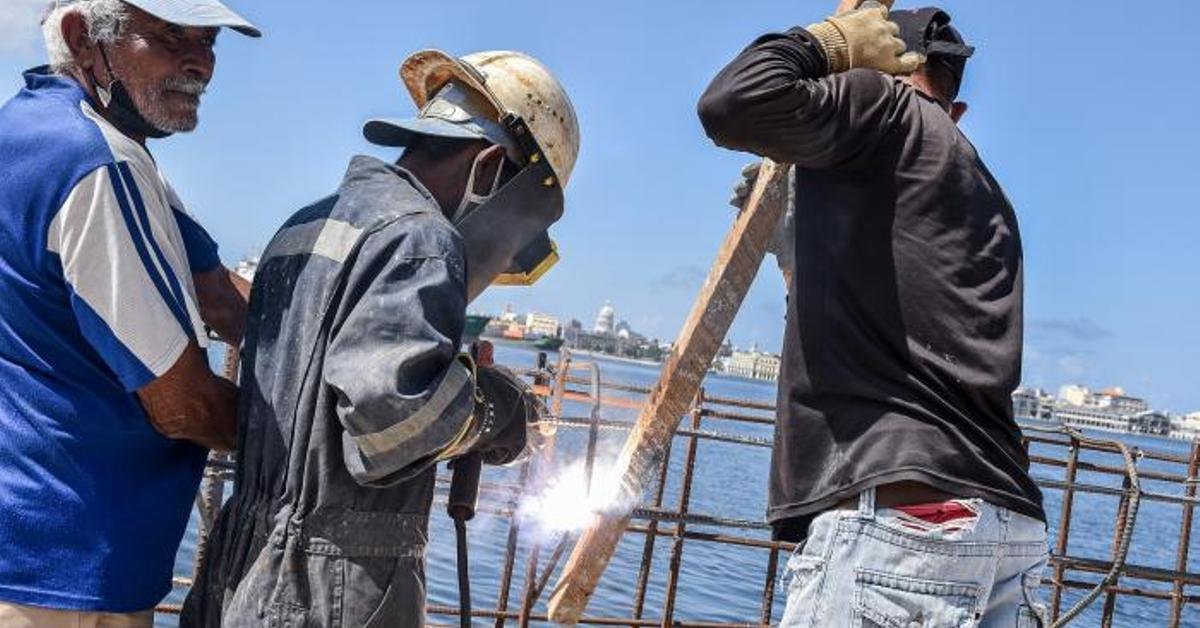
The salary gaps between the different economic branches also reflect the distorted priorities of the public administration. While an agricultural worker barely earns an average of 6,903 pesos per month (8.7 dollars at the informal exchange rate on Tuesday), the construction sector tops the table with 14,743 pesos (18.66 dollars), followed by the supply of electricity, gas and water (13,376 pesos, 16.9 dollars) and the exploitation of mines and quarries (12,590 pesos, 15.9 dollars). For their part, key sectors for social well-being such as education and public health are left behind with average salaries of 8,824 (11.1 dollars) and 7,005 pesos (8.8 dollars) respectively, unable to compete with the prices of the informal market that suffocate the daily lives of Cuban families.
Having registered more than one trillion pesos in the previous period, the global turnover of the business system fell to 697,188.9 million pesos
On the other hand, while the accrued salary fund rose to more than 115,225 million pesos, the efficiency of the national economy fell from 50.5% in the same period of the previous year to 44.9%. That is, you are paying more money for less work and for fewer available goods.
Because beyond the rising salaries, Onei reveals a much more serious fact about the state productive apparatus: sales of goods and services plummeted by more than 32% compared to the first eight months of 2025. Having registered more than one trillion pesos in the previous period, the global turnover of the business system fell to 697,188.9 million pesos.
The blow is particularly evident in retail trade, the direct thermometer of the population’s consumption. Retail sales suffered a decline of 29.6%, barely adding up in a market marked by chronic shortages of basic products. Gastronomy and state services have rapidly lost ground compared to the dynamics of the private and underground economy. Furthermore, the territorial gap once again highlights the hypertrophy of the capital: Havana accounted for more than 68% of the country’s total retail sales, leaving the rest of the provinces in a situation of almost absolute commercial destitution.
The deterioration in business income has taken a devastating toll on businesses’ bottom lines. Accumulated profits before taxes fell 27.9%, reaching 109,441.9 million pesos. Likewise, the number of insolvent state companies increased by 34%: there are now 382 State entities that accumulate losses, adding a negative balance of more than 8,956 million pesos. In provinces like Holguín, the global balance of the business sector closed directly in negative territory, driven by the dismal performances of local industries.
In state retail trade, for example, almost half of the figures had to be estimated due to lack of reliable reports.
By analyzing the anatomy of these losses due to economic activities, the official report reveals the failure of key sectors for the country’s development. Surprisingly, mining and quarrying accounted for 38.8% of all business sector losses, followed by manufacturing industries (15.5%), trade and repair of personal effects (10.0%) and transportation, storage and communications (8.5%). Even the mythical sugar industry, reduced today to a shadow of what it once was, represented 8.5% of the financial gap caused by unproductive companies.
Although the report attempts to offer a balanced reading by highlighting that 61.5% of large companies continue to generate the majority of net sales and profits, the methodological consistency indicators of the document itself show the lack of administrative control. For several business and accounting lines, the percentages of direct non-imputed data – that is, actual information collected without resorting to estimates or reporting gaps – fell to levels close to 50%. In state retail trade, for example, almost half of the figures had to be estimated due to lack of reliable reports.
While the regime continues to proclaim desperate measures to try to revive the economy and boasting of salary adjustments that inflation devours Before reaching your pocket, Onei’s own official data confirms what the street experiences daily: a hypertrophied, inefficient business system with million-dollar losses, financed at the expense of a Cuban peso that is worth less every day.