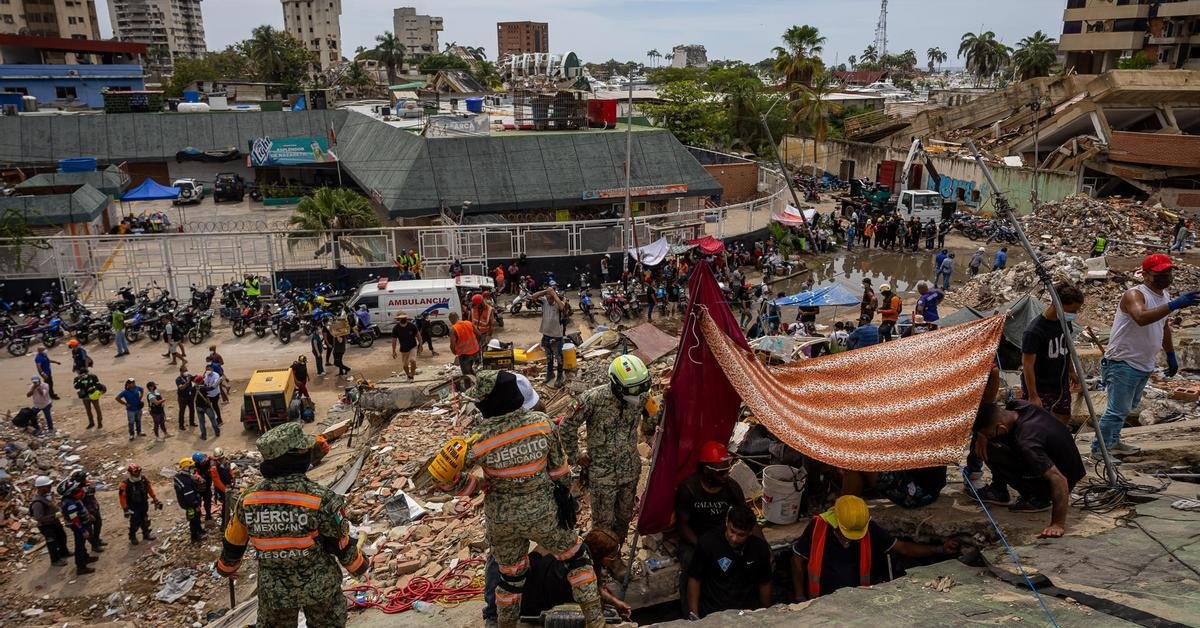
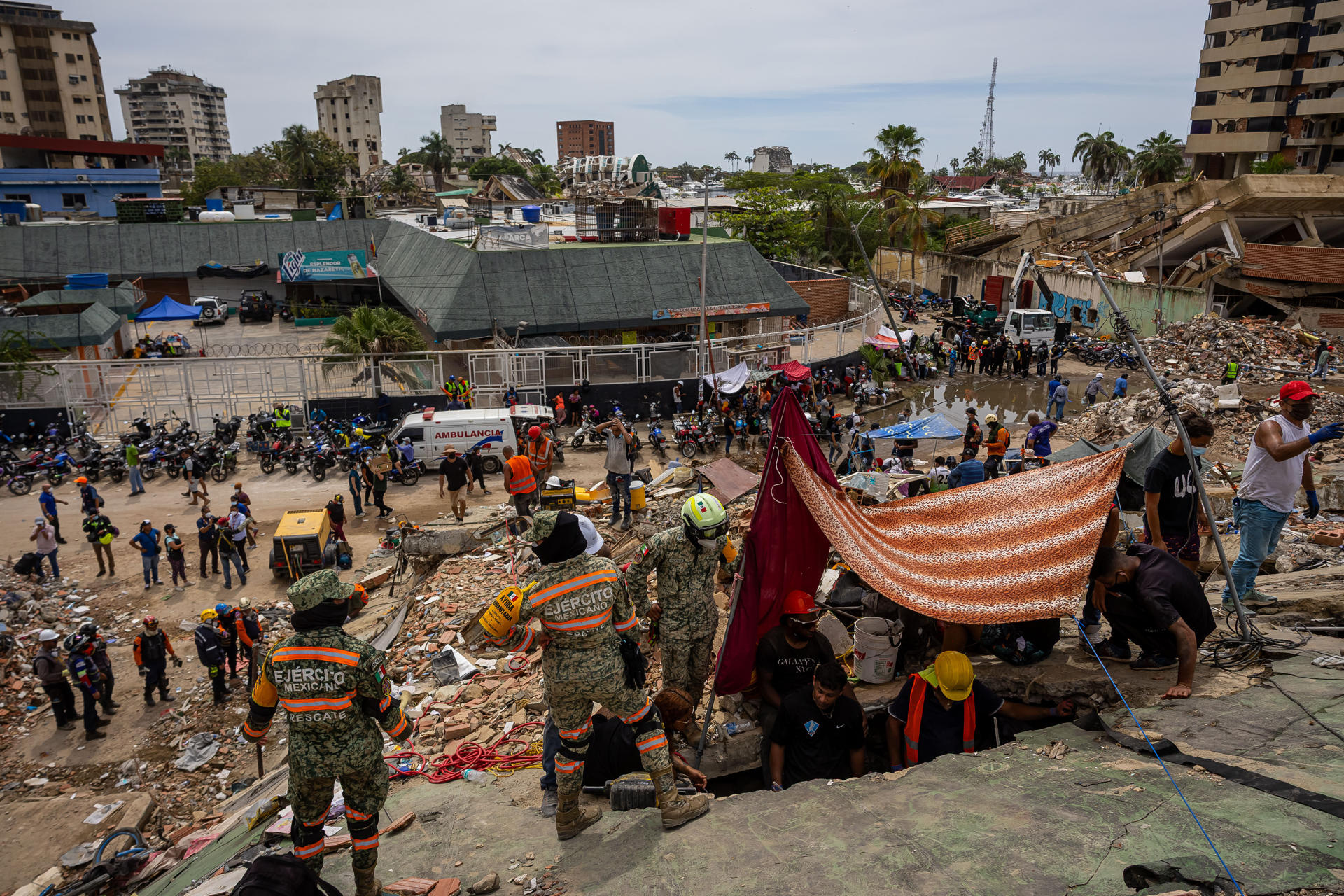
Havana/The United States has taken a predominant role in rescue efforts after the earthquakes registered in Venezuela a week ago. The White House has deployed more than 900 troops within the country and another 800 in Puerto Rico and Curacao, in the Caribbean, according to the Reuters agency from General Francis Donovan, commander of the United States Southern Command.
The military officer noted that US forces have participated in search and rescue operations, as well as facilitating the arrival of humanitarian aid and the reactivation of the airport. The Army also deployed at least five MQ-9 Reaper drones over Venezuela, which, along with an intelligence unit in Miami, track “hemispheric threats to make sure roads are open and know where damaged buildings are,” Donovan said, due to the difficulty of collecting that information on the ground.
The presence of military elements for these tasks would have been unthinkable at the beginning of the year. However, after the capture of Nicolás Maduro by the same Army that today collaborates with the country, the link between both countries has taken a radical turn. “January 3 wasn’t that long ago, and think about how this relationship has evolved,” Donovan told Reuters.
At the same time, the tension between the United States and Maria Corina Machadowho from Panama has denounced that Caracas has prevented his entry. “The regime closed the airspace of our country to prevent my entry. I want to return to Venezuela to accompany them in these heartbreaking hours, I want my hands to join theirs in the search, in the consolation and in the hug,” expressed the top leader of Vente Venezuela through a video last Monday.
The tension between the United States and María Corina Machado, who from Panama has denounced that Caracas has prevented her from entering, is unobjectionable.
According to Reuters, Machado has contacted several US government officials in recent days to ask for help in facilitating his return to Venezuela, an official explained on condition of anonymity.
“We support his return to Venezuela, but does it have to be 24 hours after a large-scale humanitarian catastrophe in which the number of fatalities continues to increase?” questioned the White House official.
The New York Times He also noted that Donald Trump’s government has rejected her requests several times and has let the opposition know that she has become a “distraction,” which “has transformed months of latent tensions into an open break with the most popular policy in Venezuela,” according to six people who spoke with the New York newspaper.
Regarding the disaster caused by the earthquakes, the Venezuelan government’s response has been criticized for not having acted more quickly to send heavy machinery and search and rescue teams, leaving residents alone, using their hands, shovels and ropes as they desperately searched for their relatives in the crucial first days after the disaster.
The Democratic Unitary Platform reiterated “serious weaknesses” of the State in responding to the double earthquake
The largest opposition coalition in Venezuela, grouped in the Democratic Unitary Platform (PUD), reiterated this Wednesday “serious weaknesses” of the State in responding to the double earthquake that has left 2,295 dead and 11,267 injured, according to Government figures this Wednesday, which has not updated the number of missing people.
“This tragedy has also revealed the serious weaknesses of the State in responding to an emergency of this magnitude, a consequence of years of institutional deterioration that we Venezuelans pay for today,” the PUD stated in its X account.
The coalition put itself at the service of all Venezuelans affected by the earthquakes and expressed its commitment to “accompany and contribute to the solidarity efforts that the country needs today.”
A total of 80,870 families have been assisted, while in the disaster zone there are a total of 3,660 foreign rescuers, 148 dogs, 49 support vehicles and 26,121 Venezuelan troops, according to the Government. In addition, 15,467 people have registered as volunteers in rescue efforts.
As the days go by, the difficulties in carrying out rescue work and the reduced chances of finding people alive have led the Dutch urban search and rescue team to announce this Wednesday the conclusion of its mission in the country.
“The chances of finding people alive now are already very small. At this time, other types of help are much more needed”
“The chances of finding people alive now are already very small. At this moment other types of help are much more needed,” Jorg van Waardhuizen, a member of the group, told the public channel NOS.
Martin Evers, deputy commander of the Dutch team, stated that they will return to the Netherlands “with mixed feelings, because there is a lot to do in a country that was already going through a humanitarian crisis before these earthquakes.”
So far, the Government has confirmed that 6,461 people have been rescued and that 855 buildings were damaged, of which 189 completely collapsed.
The damage caused to homes and economic assets, such as vehicles, buildings or businesses, has a preliminary estimate of 6.7 billion dollars, according to a satellite assessment based on the Rapid Digital Analysis of the United Nations Development Program (UNDP).
The president in charge of Venezuela, Delcy Rodríguez, declared national mourning for seven days
This Wednesday, one week after the tragedy, the president in charge of Venezuela, Delcy Rodríguez, declared national mourning for seven days starting at 6:00 p.m. local time. “In tribute to the memory of the victims, I have decided to declare national mourning for seven days,” the president said in a message published on Telegram.
Rodríguez pointed out that, “in these moments of deep sadness,” he embraces those who suffer this tragedy and reaffirmed his commitment to “accompany and protect them.”