It was just 30 minutes. After months without knowing with certainty where his son was, Narcí Nagel Montero de Mota arrived on March 13, 2026 at the Guasiparo military prison, in Charallave, Miranda state, and was able to see him. According to the prisoner himself, she confessed to him that her tears had remained outside.
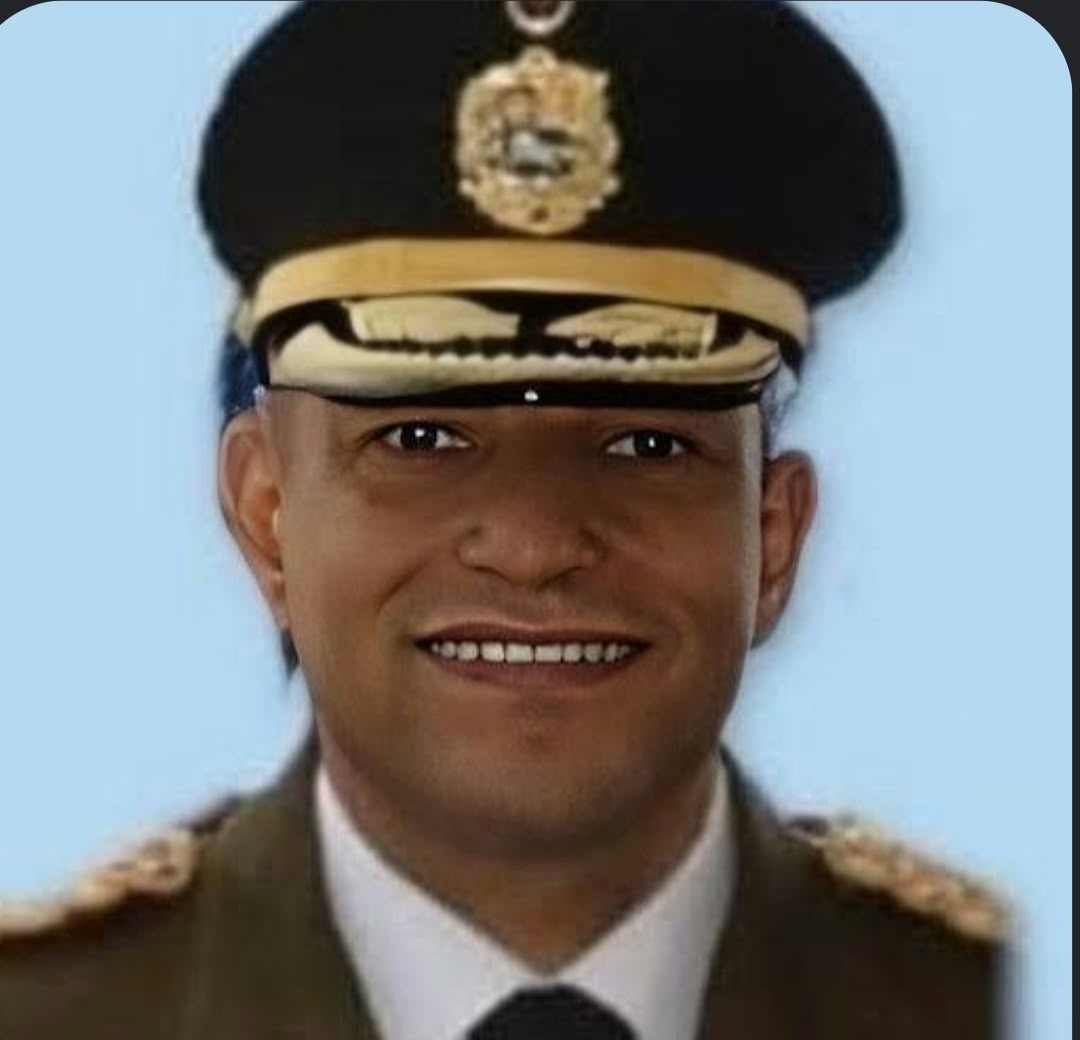
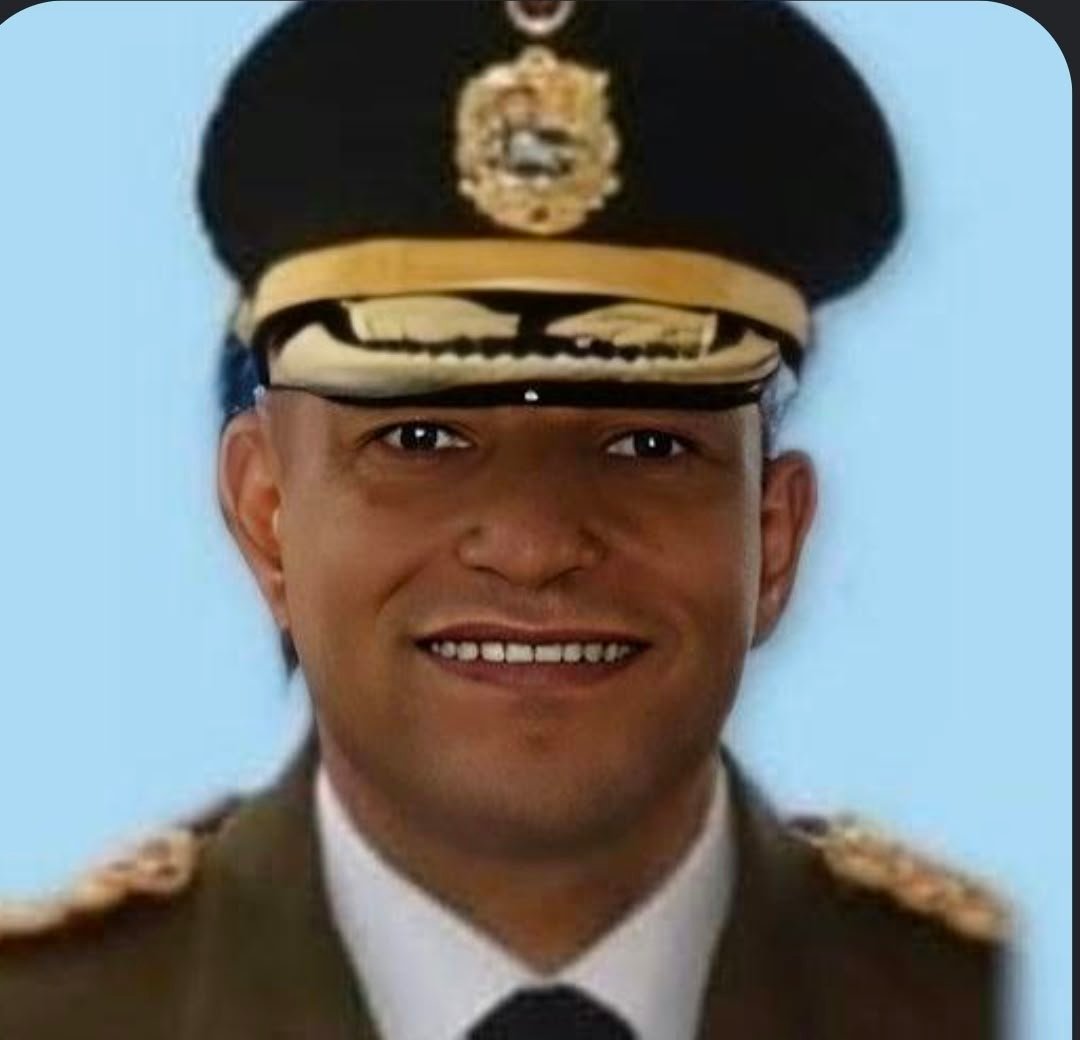
That son is an Army lieutenant colonel Deibis Esteban Mota Marrerowho has been in prison for more than eight years. He was arrested on March 2, 2018 and sentenced to seven years and six months in prison. According to the documentation of his case, he served his sentence in September 2025. Even so, he did not regain his freedom.
«I was beaten, handcuffed and with my hands tied»
— Deibis Mota, in his letter of October 22, 2026
From Ocumare del Tuy in command of a battalion
His story began far from military offices. His lawyer, Alonso Medina Roa, describes him as a man from a “very humble, very hard-working, very united” family, originally from Ocumare del Tuy. He has a son. Over the years he became the first commander of the 413th Armored Battalion “General of Division Pedro León Torres”, assigned to the 41st Armored Brigade, in the state of Carabobo.
On March 2, 2018, he received a call from his superiors and went to the brigade commander’s office. That day his life changed. According to the story collected by the United Nations, he was interrogated for his alleged participation in a conspiratorial meeting and detained by Dgcim officials, without an arrest warrant.
His defense maintains that those meetings were conversations about the dramatic situation of the troops, their shortcomings and deficiencies. According to the lawyer, those conversations ended up becoming accusations of conspiracy.
His family found out about the arrest the next day. He had to go to the Dgcim headquarters in Valencia to confirm where he was.
A sentence served and a door that did not open
On December 16, 2020, he was convicted of instigating military rebellion. The sentence was later ratified by the Supreme Court of Justice. In 2022, the Inter-American Commission on Human Rights (IACHR) granted him precautionary measures due to the risk to his life, integrity and health. In 2025, the UN Working Group on Arbitrary Detention declared his detention arbitrary and called for his immediate release.
But the door did not open. According to his lawyer, during the execution of the sentence he was not aware of the alternative measures provided for by law and the court never notified the execution order.
Months after serving his sentence, and while he was still incarcerated, a new case was opened against him for alleged conspiratorial meetings within the penitentiary itself. His lawyer affirms that he was presented before a court electronically and that his right to appoint his trusted defender was not guaranteed.
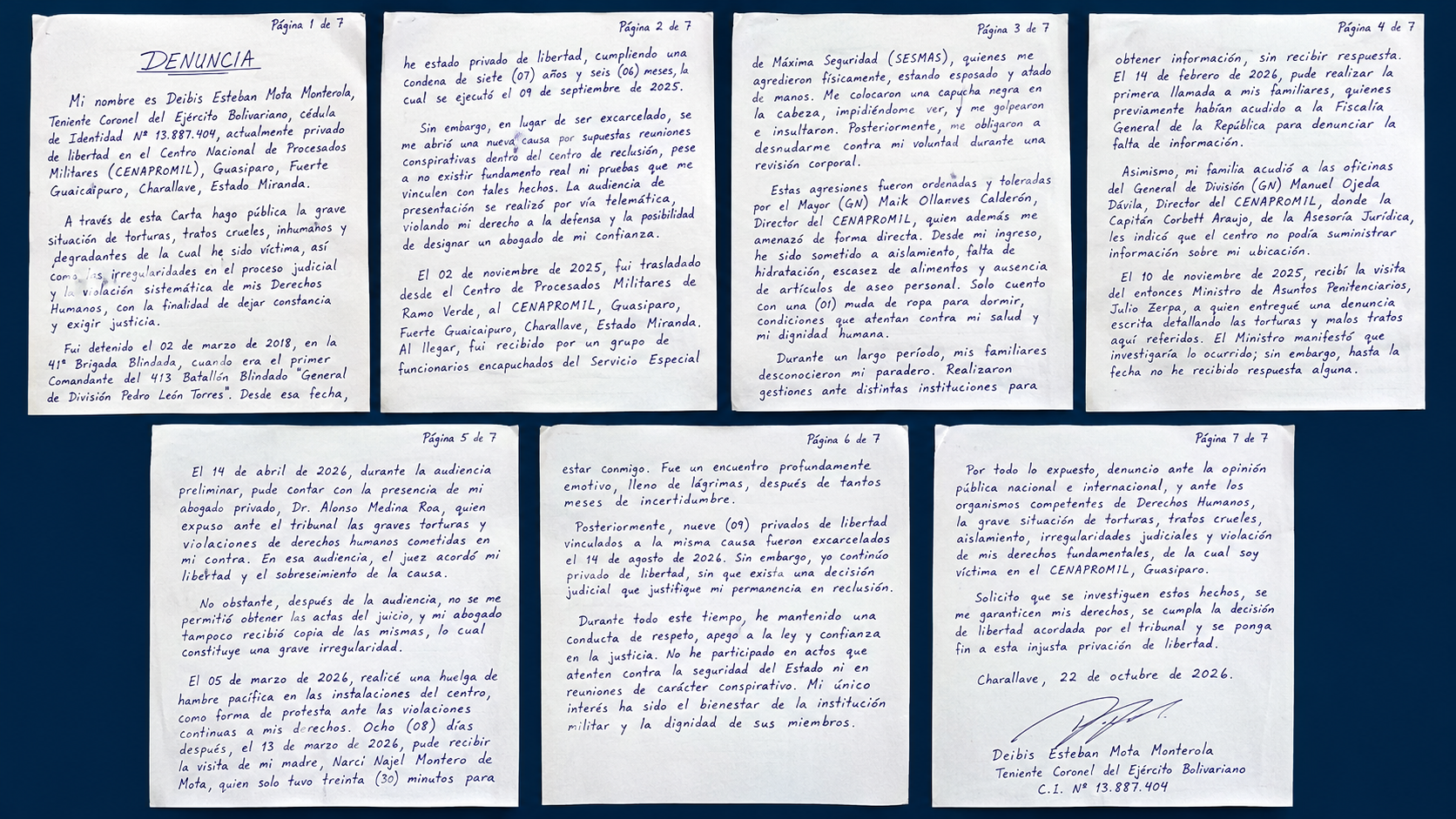
Handwritten letter that Lieutenant Colonel Deibis Mota made public on October 22, 2026, in which he recounts the alleged torture, mistreatment and judicial irregularities that he claims to have suffered in a military prison
“I was beaten”
In a handwritten letter titled “Complaint” and dated October 22, 2026, Mota recounts what he claims to have experienced since his transfer. According to his testimony, on November 2, 2025, they took him from Ramo Verde to Guasiparo. There he was received by hooded officials from the Special Maximum Security Service (Sesmas). He claims they beat him, insulted him, spat on him and put a black hood on him. He also says he was forced to strip naked during a search.
He then describes a confinement with little water, little food and no toiletries, with only one change of clothes to sleep in. He writes that he spent 110 days without seeing the sun.
Months without hearing from him
His family, according to the story, could not find out where he was. His wife went to the Attorney General’s Office. His relatives knocked on the doors of the Cenapromil management, where, according to the letter, they responded that they could not give them information about his whereabouts.
The first call to his relatives came on February 14, 2026. On March 5, he went on a peaceful hunger strike. Eight days later his mother arrived, with her 30 minutes.
Debis Mota affirms that on November 10, 2025, he submitted a complaint to the then Minister of Penitentiary Affairs, Julio Zerpa, who told him that he would find out what happened. He claims he never received a response.
A freedom that does not come
A preliminary hearing was held in April 2026. Mota writes that, with his lawyer present, the judge “gave them freedom and dismissal of the case.” But he denounces that, after exposing the torture in the courtroom, they did not give him the minutes, and his lawyer did not receive a copy either. Without that document, the scope of that decision cannot be verified. According to the defense, the file now awaits oral trial before the First Military Trial Court.
On August 14, 2026, according to the letter, nine detainees in the same case were released. He remained imprisoned.
Their complaints are personal testimony and still require contrast with documents and with the version of the indicated authorities. But the underlying question does not change: why is a soldier who has already served his sentence and whose detention the UN considered arbitrary still imprisoned? Meanwhile, a mother waits, a son grows up with his father behind bars and a family from Ocumare del Tuy continues searching for answers.