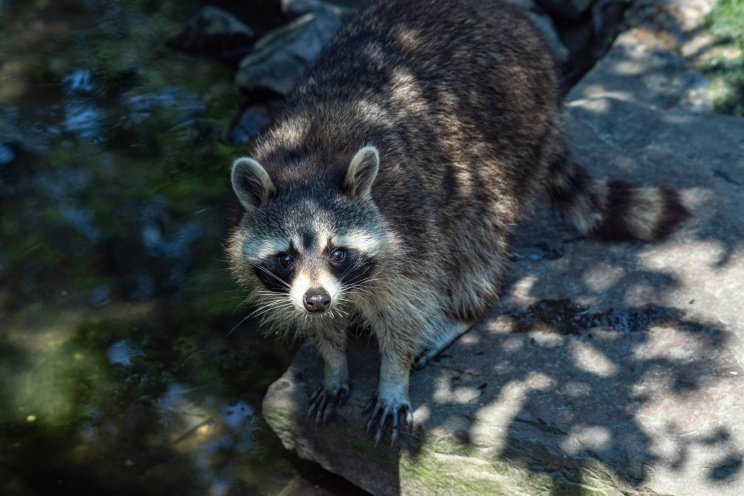

Raccoons (Procyon lotor) have arrived at the Szeged Wildlife Park. The mammals were captured in the wild near Ócsa in Pest County by wildlife conservation experts, the zoo announced on its social media page.
Raccoons are native to North and Central America and were introduced to Europe in the 1930s, first to Germany, primarily for fur harvesting and wildlife management purposes. As a result of escapes and intentional releases, they began to spread rapidly; today, they have been spotted in the wild in 27 European countries.
The raccoon first appeared in Hungary in the 1980s and now has a stable domestic population.
It is considered an invasive species, and its spread poses a threat to native wildlife; moreover, it spreads numerous diseases that infect both animals and humans. For this reason, private individuals have been prohibited from keeping them in Hungary since 2010. Since 2016, it has been listed as an invasive species by the European Union, meaning that private individuals are prohibited from keeping or trading them; they may only be bred in zoos under strict conditions.
They live solitary lives, are primarily nocturnal, and spend their days curled up in the tree canopy. They move within an area of one to three kilometers in diameter, which may overlap with the territories of other individuals. They frequently consume plant fruits and seeds, and occasionally cultivated fruits such as apricots, melons, and plums, but their diet also includes arthropods, fish, amphibians, rodents, and eggs.
They adapt well to various habitats and human proximity, and in populated areas they often scavenge for food in trash cans.
The raccoon, which is 60–90 centimeters long and weighs 6–7 kilograms, has ten times as many sensory receptors on its paws as a human has on the palm of their hand, and these become even more sensitive when wet. It performs its characteristic “washing” behavior to use touch to assess the properties of the food it has obtained.

Via MTI; Featured photo: Pexels