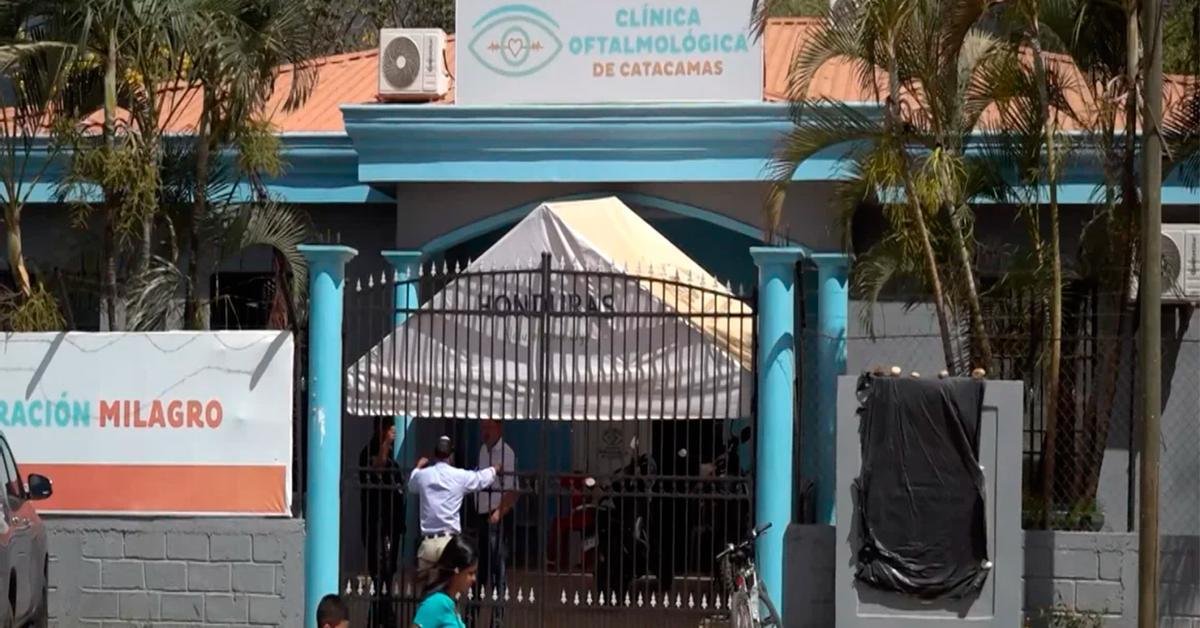
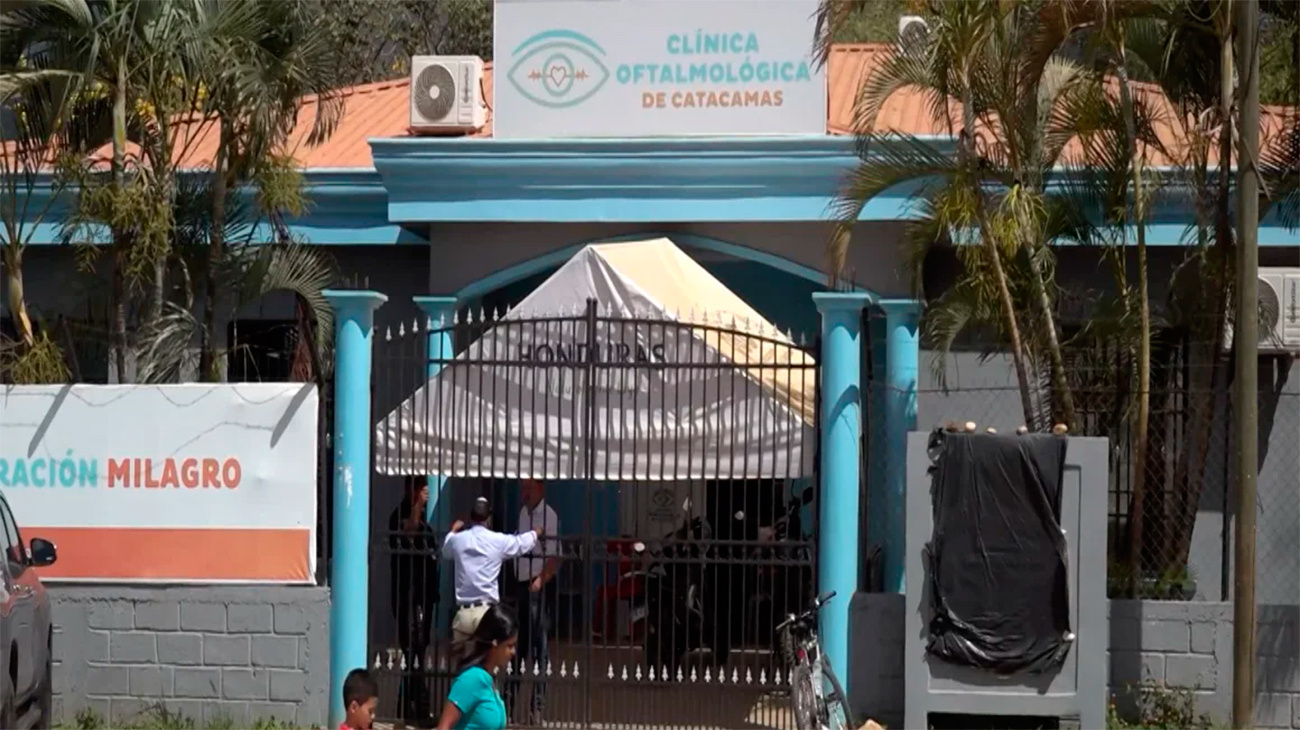
Havana/The Ministry of Health (Sesal) has not filled with Honduran specialists the positions that were attended by Cuban doctors in the ophthalmological clinics located in Siguatepeque, Santa Bárbara (Colina and Arada), Catacamas and the Central District and the centers remain closed. “The equipment and instruments remain in the facilities waiting for what the Government promised to arrive,” lamented the mayor of San José de Colinas, Luis Ramón Perdomo, in interview with CNN.
Honduras has closed clinics without offering alternatives. Last March, the vice minister of the Sesal, Ángel Eduardo Midence, announced the start of hiring doctors for these centers, however, he acknowledged that they trusted that through “a verbal dialogue” with the Cubans, they would “give them three months” to fill the spaces that they would leave vacant. It was not like that, the doctors returned to the Island last February.
The closure of the facilities in Colinas cut short the clinical follow-up of dozens of patients. Horacio Carabantes was one of them, his cataract surgery was canceled three days before schedule. “We were left with nothing because they left,” this retired man told CNN. “The hope was them.”
Honduras canceled the agreement which the regime’s ally Xiomara Castro promoted with Cuba for the hiring of Cuban doctors, through which $6,604,800 entered the Island’s coffers. The departure of the doctors occurred amidst accusations. La Sesal revealed that the Island sent electricians among the brigadetelecommunications technicians, economists and administrative staff who were paid $1,600 per month.
Cuban personnel received several additional benefits. “By mandate, we were obliged to guarantee housing and transportation,” confirmed the vice minister of the Sesal.
“By mandate, we were obliged to guarantee housing and transportation,” confirmed the vice minister of the Sesal.
The closure of clinics also hit the communities’ economies. The mayor of San José de Colinas regretted “the fall of the economy.” The place, he specified, generated a constant flow of visitors of between 100 and 200 people a day, including patients and companions. Hotels, cafeterias, transporters and motorcycle taxis depended, in part, on this activity.
In the five ophthalmological clinics, free consultations, lenses and surgeries were offered, which in the private system cost $2,400, inaccessible to a large part of Hondurans. The Government has said that they will reopen the facilities with Honduran doctors, but local authorities and the patients themselves doubt the viability of that promise.
The end of the agreement with Cuba, CNN assures, came about due to pressure from the United States. In Mexico, President Claudia Sheinbaum ratified the presence of specialists from the Island. “They are paid what they have to be paid. They receive their salary. It is not that ‘come here and the Cuban Government will pay you whatever it wants there’, no. They are paid a salary. And it is part, obviously, of a bilateral agreement,” she commented.
However, a Cuban specialist who defected and identified herself as Alicia told France 24 that as part of the brigades, she “felt imprisoned and without freedom.” The doctor confirmed that upon arriving in the country, their documents are taken away, which limits their autonomy inside and outside of work.
Upon arriving at their assigned destinations, the authorities retained their documents. That loss of control over his identity marked, he says, the beginning of a dynamic that limited his autonomy inside and outside of work.
In Mexico, President Claudia Sheinbaum ratified the presence of specialists from the Island.
Alicia also reported that they were pressured to increase the numbers in their reports. “If you operate on five patients, you have to provide ten for the Government to obtain its statistics,” he said during the forum “Modern slavery and Cuban medical missions in Mexico,” held in Mexico City and organized by the Foundation for Human Rights in Cuba, an NGO based in Miami that tries to make visible the situation of around 24,000 professionals deployed in 56 countries.
The regime keeps about 75% of the salary it receives for each specialty. She is currently in the process of more than a year and a half to regularize her immigration status, away from her family, because she cannot return to the Island. “We have to work on whatever appears, except in health, in anything private, private.”
Alicia stressed that she does not have access to public health until she has a residence. “If they give it to us, we can revalidate and we can integrate into the system. In the meantime, we can’t do it.”