Monday, May 4, 2026
    The GeoStrategic Consensus
    No Result
    View All Result
    • Login
    • HOME
    • AMERICAS
      • Argentina
      • Brazil
      • Canada
      • Chile
      • Colombia
      • Costa Rica
      • Cuba
      • Dominican Republic
      • Ecuador
      • El Salvador
      • Greenland
      • Guatemala
      • Honduras
      • Mexico
      • Nicaragua
      • Panama
      • Paraguay
      • Peru
      • United States
      • Uruguay
      • Venezuela
    • ASIA-PACIFIC
      • Australia
      • Brunei Darussalam
      • Cambodia
      • China
      • Federated States of Micronesia
      • Fiji
      • Indonesia
      • Japan
      • Kiribati
      • Laos
      • Malaysia
      • Marshall Islands
      • Mongolia
      • Myanmar
      • Nauru
      • New Zealand
      • North Korea
      • Palau
      • Papua New Guinea
      • Philippines
      • Samoa
      • Singapore
      • Solomon Islands
      • South Korea
      • Taiwan
      • Thailand
      • Timor-Leste
      • Tonga
      • Tuvalu
      • Vanuatu
      • Vietnam
    • CARICOM
      • CARICOM – Non-English
        • Haiti
        • Suriname
      • CARICOM Associates
        • Anguilla
        • Bermuda
        • British-Virgin-Islands
        • Cayman-Islands
        • Curacao
        • Turks-and-Caicos
      • CARICOM English
        • Antigua and Barbuda
        • Barbados
        • Belize
        • Dominica
        • Grenada
        • Guyana
        • Jamaica
        • Montserrat
        • Saint Kitts and Nevis
        • Saint Lucia
        • Saint Vincent and the Grenadines
        • The Bahamas
        • Trinidad and Tobago
    • EURASIA
      • Armenia
      • Azerbaijan
      • Balarus
      • Georgia
      • Kazakhstan
      • Kyrgyzstan
      • Moldova
      • Russia
      • Tajikistan
      • Turkmenistan
      • Ukraine
      • Uzbekistan
    • EUROPE
      • Albania
      • Andorra
      • Austria
      • Bosnia and Herzegovina
      • Bulgaria
      • Croatia
      • Cyprus
      • Czech Republic
      • Denmark
      • Estonia
      • Finland
      • France
      • Germany
      • Greece
      • Holy See
      • Hungary
      • Iceland
      • Ireland
      • Italy
      • Kosovo
      • Latvia
      • Liechtenstein
      • Lithuania
      • Luxembourg
      • Malta
      • Monaco
      • Montenegro
      • Netherlands
      • North Macedonia
      • Norway
      • Poland
      • Portugal
      • Romania
      • San Marino
      • Serbia
      • Slovakia
      • Slovenia
      • Spain
      • Sweden
      • Switzerland
      • United Kingdom
    • MIDDLE EAST AND NORTH AFRICA
      • Algeria
      • Bahrain
      • Egypt
      • Iran
      • Iraq
      • Israel
      • Jordan
      • Kuwait
      • Lebanon
      • Lybia
      • Morocco
      • Oman
      • Palestinian Territories
      • Qatar
      • Saudi Arabia
      • Syria
      • Tunisia
      • Turkey
      • United Arab Emirates
      • Western Sahara
      • Yemen
    • SOUTH ASIA
      • Afghanistan
      • Bangladesh
      • Bhutan
      • India
      • Maldives
      • Nepal
      • Pakistan
      • Sri Lanka
    • SUB-SAHARAN AFRICA
      • Angola
      • Benin
      • Botswana
      • Burkina Faso
      • Burundi
      • Cabo Verde
      • Cameroon
      • Central African Republic
      • Chad
      • Comoros
      • Cote d’Ivoire
      • Democratic Republic of the Congo
      • Djibouti
      • Equatorial Guinea
      • Eritrea
      • Eswatini
      • Ethiopia
      • Gabon
      • Gambia
      • Ghana
      • Guinea
      • Guinea Bissau
      • Kenya
      • Lesotho
      • Liberia
      • Madagascar
      • Malawi
      • Mali
      • Mauritania
      • Mauritius
      • Mozambique
      • Namibia
      • Niger
      • Nigeria
      • Republic of the Congo
      • Rwanda
      • Sao Tome and Principe
      • Senegal
      • Seychelles
      • Sierra Leone
      • Somalia
      • South Africa
      • South Sudan
      • Sudan
      • Tanzania
      • Togo
      • Uganda
      • Zambia
      • Zimbabwe
    • HOME
    • AMERICAS
      • Argentina
      • Brazil
      • Canada
      • Chile
      • Colombia
      • Costa Rica
      • Cuba
      • Dominican Republic
      • Ecuador
      • El Salvador
      • Greenland
      • Guatemala
      • Honduras
      • Mexico
      • Nicaragua
      • Panama
      • Paraguay
      • Peru
      • United States
      • Uruguay
      • Venezuela
    • ASIA-PACIFIC
      • Australia
      • Brunei Darussalam
      • Cambodia
      • China
      • Federated States of Micronesia
      • Fiji
      • Indonesia
      • Japan
      • Kiribati
      • Laos
      • Malaysia
      • Marshall Islands
      • Mongolia
      • Myanmar
      • Nauru
      • New Zealand
      • North Korea
      • Palau
      • Papua New Guinea
      • Philippines
      • Samoa
      • Singapore
      • Solomon Islands
      • South Korea
      • Taiwan
      • Thailand
      • Timor-Leste
      • Tonga
      • Tuvalu
      • Vanuatu
      • Vietnam
    • CARICOM
      • CARICOM – Non-English
        • Haiti
        • Suriname
      • CARICOM Associates
        • Anguilla
        • Bermuda
        • British-Virgin-Islands
        • Cayman-Islands
        • Curacao
        • Turks-and-Caicos
      • CARICOM English
        • Antigua and Barbuda
        • Barbados
        • Belize
        • Dominica
        • Grenada
        • Guyana
        • Jamaica
        • Montserrat
        • Saint Kitts and Nevis
        • Saint Lucia
        • Saint Vincent and the Grenadines
        • The Bahamas
        • Trinidad and Tobago
    • EURASIA
      • Armenia
      • Azerbaijan
      • Balarus
      • Georgia
      • Kazakhstan
      • Kyrgyzstan
      • Moldova
      • Russia
      • Tajikistan
      • Turkmenistan
      • Ukraine
      • Uzbekistan
    • EUROPE
      • Albania
      • Andorra
      • Austria
      • Bosnia and Herzegovina
      • Bulgaria
      • Croatia
      • Cyprus
      • Czech Republic
      • Denmark
      • Estonia
      • Finland
      • France
      • Germany
      • Greece
      • Holy See
      • Hungary
      • Iceland
      • Ireland
      • Italy
      • Kosovo
      • Latvia
      • Liechtenstein
      • Lithuania
      • Luxembourg
      • Malta
      • Monaco
      • Montenegro
      • Netherlands
      • North Macedonia
      • Norway
      • Poland
      • Portugal
      • Romania
      • San Marino
      • Serbia
      • Slovakia
      • Slovenia
      • Spain
      • Sweden
      • Switzerland
      • United Kingdom
    • MIDDLE EAST AND NORTH AFRICA
      • Algeria
      • Bahrain
      • Egypt
      • Iran
      • Iraq
      • Israel
      • Jordan
      • Kuwait
      • Lebanon
      • Lybia
      • Morocco
      • Oman
      • Palestinian Territories
      • Qatar
      • Saudi Arabia
      • Syria
      • Tunisia
      • Turkey
      • United Arab Emirates
      • Western Sahara
      • Yemen
    • SOUTH ASIA
      • Afghanistan
      • Bangladesh
      • Bhutan
      • India
      • Maldives
      • Nepal
      • Pakistan
      • Sri Lanka
    • SUB-SAHARAN AFRICA
      • Angola
      • Benin
      • Botswana
      • Burkina Faso
      • Burundi
      • Cabo Verde
      • Cameroon
      • Central African Republic
      • Chad
      • Comoros
      • Cote d’Ivoire
      • Democratic Republic of the Congo
      • Djibouti
      • Equatorial Guinea
      • Eritrea
      • Eswatini
      • Ethiopia
      • Gabon
      • Gambia
      • Ghana
      • Guinea
      • Guinea Bissau
      • Kenya
      • Lesotho
      • Liberia
      • Madagascar
      • Malawi
      • Mali
      • Mauritania
      • Mauritius
      • Mozambique
      • Namibia
      • Niger
      • Nigeria
      • Republic of the Congo
      • Rwanda
      • Sao Tome and Principe
      • Senegal
      • Seychelles
      • Sierra Leone
      • Somalia
      • South Africa
      • South Sudan
      • Sudan
      • Tanzania
      • Togo
      • Uganda
      • Zambia
      • Zimbabwe
    No Result
    View All Result
    Agentially
    No Result
    View All Result
    Home EUROPE Hungary

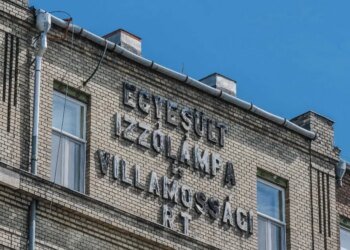
    Telex: What can a state of law do if public money loses its character as public property?

    The Analyst by The Analyst
    April 24, 2026
    in Hungary
    Telex: What can a state of law do if public money loses its character as public property?


    This is Névért, the thematic economic blog of Telex, in which you can read articles by external analysts and experts. The articles published in the blog and the opinions expressed in them reflect the position of the authors.

    READ ALSO

    G7: György Matolcsy’s name comes up as soon as they start investigating the spontaneous privatization – but not like that

    Old Hungarian Friend Sends Support to Donald Trump after Assassination Attempt

    After the corrupt prime minister lost power, his private assets of more than 250 million dollars were seized and not only he, but also the bankers and financial advisors who helped him were imprisoned. The example of Malaysia shows that it is rarely, but possible, to hold the main actors of corruption networks interwoven with politicians accountable and to recover at least part of the national wealth. In our article, we take a look at these precedents, deviating from international “practice” to tools that can be transferred within the framework of the rule of law and to some opportunities provided by the current Hungarian regulations.

    The Wolf of Wall Street and the Malaysian public money billions

    The Wolf of Wall Street one of the memorable scenes of the movie, when the protagonist of the investment fraud (Jordan Belfort – Leonardo DiCaprio) tries to bribe the FBI agent investigating him with a larger sum on board his luxurious yacht. The attempt goes awry: “Nice job, little man… It’s going to be huge to book this damn boat!” – beckons the unwavering federal investigator, and by the end of the film, which is based on a true story, the protagonist loses not only his yacht, but also his freedom, his entire property and his family. A lesser-known fact about the film, directed by Oscar-winning Martin Scorsese, is that its $100 million budget was financed entirely with money stolen from Malaysian taxpayers by a criminal ring linked to former Malaysian Prime Minister Najib Razak and his godson.

    Through the series of frauds known as the 1MDB (1Malaysia Development Berhad) scandal, the money of the Malaysian national wealth fund named 1MDB was transferred to Najib and his circle embezzled using opaque foundation structures and offshore companiesand used it to acquire luxurious properties, yachts and other valuable assets (including the rights to the said film). While in power, the corrupt Najib successfully prevented criminal proceedings against him and his cronies, even though some of his abuses were documented by a few brave investigative journalists. Journalists were interrogated, threatened, and some imprisoned by the police and intelligence services under the influence of the Najib regime. Najib’s loss was caused by the fact that he failed the elections, and the government that took office after him promised to hold accountable the political criminals who acquired fabulous fortunes.

    As a result of the investigation conducted with the cooperation of American law enforcement agencies and other foreign authorities, not only Najib, but also the financial advisors and bankers working for the prestigious Goldman Sachs who contributed to the creation of corrupt structures were sentenced to life imprisonment, and roughly 70 percent of the 11 billion dollars embezzled from taxpayers was recovered, and the investment fund established by the Malaysian Ministry of Finance for this purpose placed on account.

    As for the first half of the story, it is unfortunately difficult not to notice the parallels between Malaysia and Hungary. It is worth remembering that in 2014 it was said in the Parliament that in Hungary public money can sometimes lose the character of public propertyjust as it became known that as a result of the economic activity of a network of companies established during György Matolcsy’s presidency of the MNB and led by people close to him, hundreds of billions of forints worth of assets could be lost, according to the State Audit Office, a through an “essentially opaque structure that makes the evaluation of real assets almost impossible”.. Meanwhile, the estimated fortune of Lőrinc Mészáros alone increased to more than 5 billion dollars, and more and more news about zebras, yachts, and private planes appeared, which raised the ability of NER’s clientele to destroy public wealth to Malaysian heights.

    In addition, due to abuses related to public procurement and systemic shortcomings in the effective detection of corruption crimes, the European Union is withholding more than 10 billion euros in payments from cohesion funds, an amount equivalent to at least 3 percent of Hungary’s annual gross national product (see Council Implementing Decision (EU) 2022/2506). Therefore, it is in Hungary’s fundamental interest to reveal the abuses related to public procurement in recent years, to investigate suspected cases of corruption, and to restore trust in public institutions.

    The task is not easy, but it is not impossible either. On the one hand, the basic principles of the rule of law require that all cases submitted to proceedings be investigated in a fair procedure, respecting the applicable laws and the principle of equality of arms, by the designated authority, and decided by an independent court free from political influence. On the other hand, in order to effectively eliminate rampant, systemic corruption, it may become necessary to apply legislation that has not been used in practice so far (for example, allowing criminal legal measures against favored companies) and to transpose new procedural rules that comply with international standards and human rights into Hungarian law.

    An Unexplained Wealth Order (UWO) used in the UK to expedite the removal of corrupt assets

    A common characteristic of corruption crimes is that they try to hide the origin of the stolen property by interposing complicated company structures, fictitious financial operations and strawmen. Often, a real army of lawyers and other consultants is involved in this, and therefore the detection of this kind of economic crimes is notoriously difficult and resource-intensive. At the same time, few white-collar criminals can stop to enjoy the fruits of their corrupt labor – the luxury jet/-yacht/-car/-property/zebra/etc. provided pleasures.

    English tries to respond to this phenomenon UWO, the essence of which is that it reverses the burden of proof in wealth acquisition procedures for persons who are politically exposed (PEP) or persons linked to corruption crimes, and thus it is not up to the authority to prove that someone got rich from a crime, but the person concerned must credibly prove the origin of any significant property (over 50,000 British pounds). THE UWOcan be applied by the English authorities if there is a well-founded suspicion that the assets of the person subject to the procedure are not in proportion to their declared or legal income.

    THE UWO it is not a criminal sanction, but a civil law tool that supports investigations, but it is still extremely powerful, because if the person concerned cannot or does not want to prove the source of the wealth, the state can initiate asset confiscation proceedings and the wealth can be lost permanently – without a criminal conviction in the case. This can be particularly effective in cases where assets are believed to be linked to state resources or offshore structures, and classic criminal procedures would face evidentiary hurdles.

    Under strict conditions that ensure the rights of the defense (including effective legal remedies) a UWOis compatible with EU law – variations of it are also used in Ireland and Bulgaria, for example – and may facilitate the recovery of corrupt assets accumulated over the years (see the judgment of the European Court of Justice in case no. C-243/18).

    Options provided by Hungarian law

    It would be naïve to think that a possible legislative amendment facilitating the recovery of corrupt assets would alone solve the problem of overpriced public procurement and nepotism in our country. Contracts created as a result of corruption or designed to conceal it (as contrary to the law or good morals) have been prohibited by Hungarian law until now, and the Civil Code. dedicates a separate chapter to the various forms of corruption crimes and the confiscation of the financial advantage resulting from them.

    However, these problems cannot be remedied without competent, consistent and political prosecution and courts.

    As the below, heavily examined legal institution examples show, the current Hungarian law also contains tools to eliminate corrupt corporate networks.

    Such cases can be solved, for example, by the system of criminal law measures that can be applied against legal entities, which is rarely used in practice but has been present in Hungarian law for decades (see CIV Act of 2001). Since the accumulated assets are usually owned through corporate structures, by prosecuting an important actor of the corporate structure – for example, by applying a fine that takes away the acquired financial advantage, or by restricting the activity, especially by excluding them from public procurement procedures and state subsidies – control over not only the given legal entity, but also the entire chain of assets can be shaken or terminated. In more serious cases, the termination of the legal entity may even be considered, which may cause the collapse of the economic structure – if and only if it can be proven that some kind of corruption crime has been committed in favor of the given company.

    It is perhaps an unexpected twist of fate that the Civil Code. the most recent amendment that entered into force in January 2026 (corresponding to Directive (EU) 2024/1260) makes it easier to confiscate assets obtained through corrupt methods from criminals who cannot prove their source, as well as from third parties who obtained the assets from organized criminals. This specifically responds to classic cases of “asset rescue” – transfers to relatives, trusted people, strawmen.

    In practice, this may also mean that the acquirers of such assets will have to prove that they obtained the asset in the context of a real, market-based transaction, in return for actual consideration and from a verifiable source. Otherwise, the confiscation of assets becomes applicable against them as well. If the application of criminal law also follows this approach, the current regulation may be able to provide meaningful action against systemic corruption not only in theory, but also in practice.

    Hungary is facing a historic opportunity, the eyes of Europe and the world are on us. Whether Hungarian society will be able to deal with its demons in accordance with the rule of law can determine the fate of our country for generations and send a strong message to the operators of the authoritarian regimes monitoring events in Hungary.

    Dr. Dániel Dózsa is the founder of Queritius, which specializes in economic lawsuits, lecturer at the Leiden University of Law, dr. Petra Pataki is a partner of Queritius.
    Source link

    Related Posts

    G7: György Matolcsy’s name comes up as soon as they start investigating the spontaneous privatization – but not like that
    Hungary

    G7: György Matolcsy’s name comes up as soon as they start investigating the spontaneous privatization – but not like that

    May 4, 2026
    Old Hungarian Friend Sends Support to Donald Trump after Assassination Attempt
    Hungary

    Old Hungarian Friend Sends Support to Donald Trump after Assassination Attempt

    May 4, 2026
    Telex: The billion-dollar state support of the cultural holding in Pécs is delayed, the clues lead to Péter Hoppál
    Hungary

    Telex: The billion-dollar state support of the cultural holding in Pécs is delayed, the clues lead to Péter Hoppál

    May 4, 2026
    No Room for Exhausted Politicians in the New Fidesz Parliamentary Group
    Hungary

    No Room for Exhausted Politicians in the New Fidesz Parliamentary Group

    May 4, 2026
    Anniversary Ice Cream Honors Queen Elisabeth’s Favorite Flavors
    Hungary

    Anniversary Ice Cream Honors Queen Elisabeth’s Favorite Flavors

    May 4, 2026
    A city of the future stuck in the past
    Hungary

    A city of the future stuck in the past

    May 3, 2026
    Next Post

    Is my child in danger? Parents should be aware of these warning signs

    POPULAR NEWS

    Justin Bieber fans flood Coachella festival for headlining show – Entertainment

    Justin Bieber fans flood Coachella festival for headlining show – Entertainment

    April 20, 2026

    Over 600 flee homes as Army, NPA clash in Negros Occidental

    April 21, 2026

    Ex-DPWH exec recalls P800-M ‘delivery’ to Zaldy Co 

    April 20, 2026

    Former PM Paluckas suspends party membership, to waive immunity over criminal probe

    April 24, 2026
    Pres. Ali challenges CARICOM to transform into health research powerhouse

    Pres. Ali challenges CARICOM to transform into health research powerhouse

    April 23, 2026

    EDITOR'S PICK

    José Saturnino Cardozo is warned: one of his figures ends his contract and has not been renewed

    José Saturnino Cardozo is warned: one of his figures ends his contract and has not been renewed

    April 10, 2026
    Israeli strikes hit east Lebanon, expanding scope despite ceasefire

    Israeli strikes hit east Lebanon, expanding scope despite ceasefire

    May 4, 2026
    Europe’s Nato allies push back at reported US threat to Spain

    Europe’s Nato allies push back at reported US threat to Spain

    April 24, 2026
    1 May – “Beyond celebration: San Marino puts dignity and innovation at the center for the work of the future”. Joint statement from the Labor and Industry Secretariats

    1 May – “Beyond celebration: San Marino puts dignity and innovation at the center for the work of the future”. Joint statement from the Labor and Industry Secretariats

    May 2, 2026

    Recent Posts

    • NATO Secretary General arrived in Yerevan
    • Schoolchildren have developed a smart garbage disposal program using artificial intelligence
    • Azerbaijan’s SOCAR Trading proposes establishing an energy exchange in Baku
    • Expert: Belarus ranks among world leaders in early-stage cervical cancer detection

      © 2026 Agentially - Navigating shifting sovereignties and global risk .

      Welcome Back!

      Login to your account below

      Forgotten Password?

      Retrieve your password

      Please enter your username or email address to reset your password.

      Log In
      No Result
      View All Result

        © 2026 Agentially - Navigating shifting sovereignties and global risk .

        This website uses cookies. By continuing to use this website you are giving consent to cookies being used. Visit our Privacy and Cookie Policy.