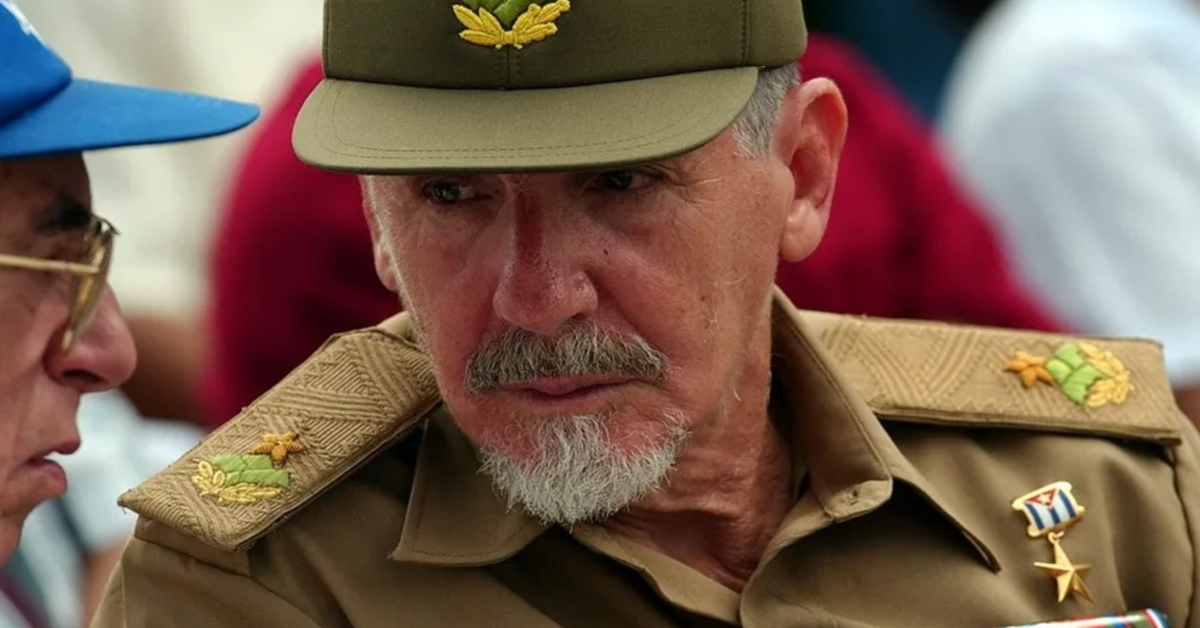
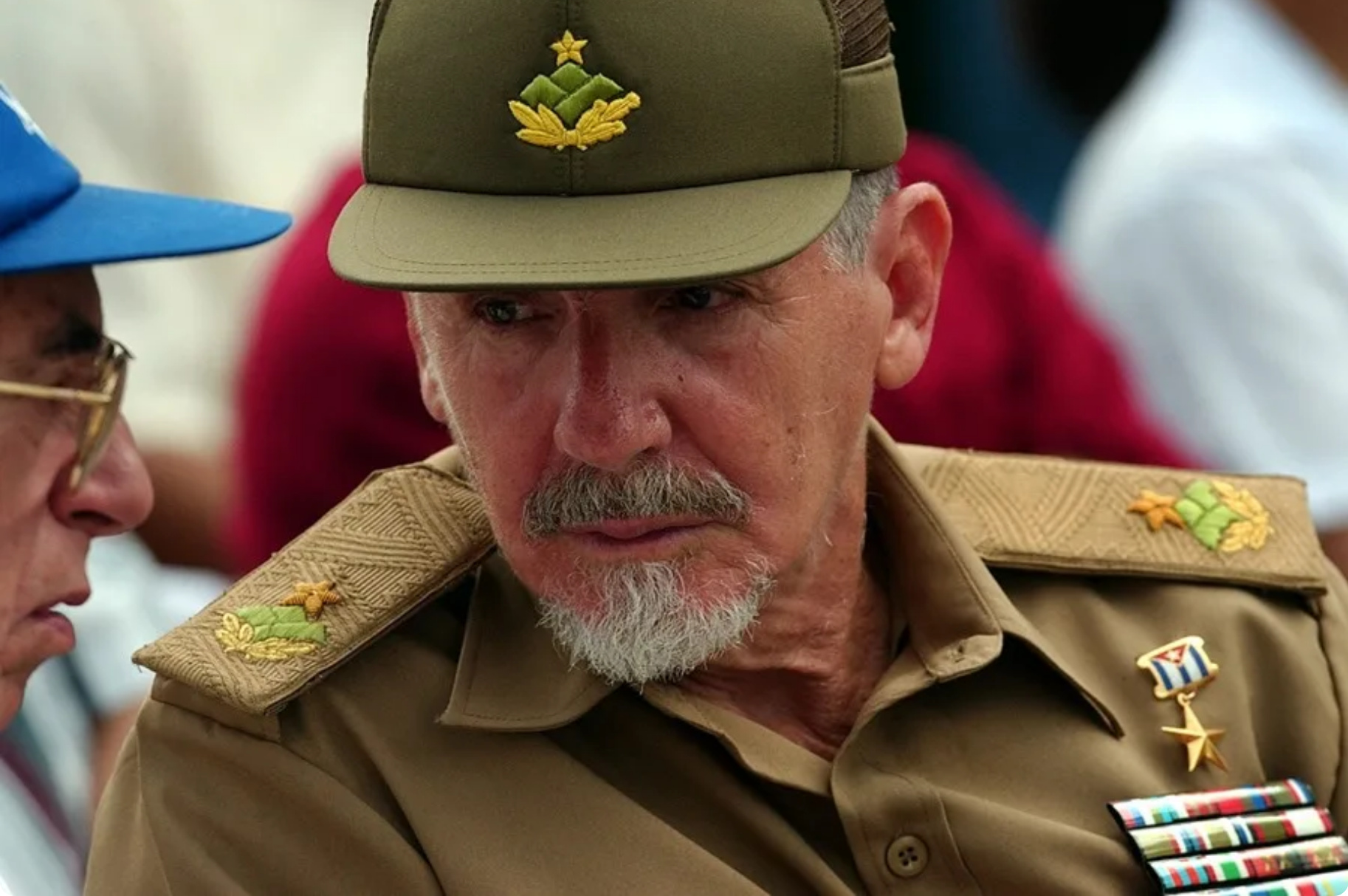
Madrid/Ample space in the official press to say goodbye to Vice Prime Minister Ramiro Valdés Menéndez, a historical member of the Cuban Revolution and one of the main ideologues and executors of the repression, whose death was known on Sunday. The rivers of ink – figurative, in a time of lean times for the printed media – that the commander has caused contrast, however, with the brevity of the official mourning decreed by Miguel Díaz-Canel, barely 18 hours for a mourning that does not involve expenses.
From 6:00 am on Tuesday, June 23 until 12 midnight on the same day, the national flag will be raised at half-mast in public buildings and military institutions throughout the Island. A short time, although less striking, if compared to the extensive nine days of mourning for Fidel Castro, but surprising knowing that 48 hours were decreed for Nelson Mandela and for the Spanish dictator Francisco Franco, three days.
Valdés’ mortal remains will be on display this Tuesday morning at the headquarters of the Ministry of the Revolutionary Armed Forces in Havana, which six months ago hosted an event with similar characteristics: the tribute to the 32 combatants Cubans fallen in Venezuela during the US operation to capture Nicolás Maduro. Precisely at that event, alarms went off for the health of the nonagenarian, who was largely absent from the day, in the presence of an ailing but relatively firm Raúl Castro, a year older than him.
State television announced this Monday that “in compliance with Valdés’ last wish, to rest with his fellow fighters and near the Heroic Guerrilla (Ernesto Che Guevara)”, his remains “will be buried, on the morning of Thursday, June 25, in a ceremony with military honors at the Mausoleum of the Frente de Las Villas, in the city of Santa Clara.” At the same time, tribute ceremonies will be held in all provincial capitals and in the special municipality of Isla de la Juventud.
State television announced this Monday that “in compliance with Valdés’ last wish, to rest with his fellow fighters and near the Heroic Guerrilla
State media have praised the figure of Valdés to the point of exhaustion, as well as the missions he carried out, among them “the search, location, exhumation and transfer to Cuba of the remains of Ernesto ‘Che’ Guevara and his companions in the Bolivian guerrilla.” However, the version that the Santa Clara Mausoleum houses the bones of the Argentine guerrilla has been dismantled on numerous occasions to the point that the doctor Moisés Abraham Baptista – who performed his autopsy – even challenged the Cuban regime to do a DNA test on the bones to prove their authenticity.
There are numerous testimonies in books and newspaper articles that affirm that Guevara was secretly cremated by the Bolivian army and his ashes scattered in the jungle to prevent, precisely, his grave from becoming a place of ideological pilgrimage. The Castro regime managed, however, to create the alternative version and, therefore, the magical place that today is the Mausoleum in which Valdés will rest next to, If anything, the hands of the guerrillathe only thing that could be taken to Cuba according to the story of Cuban-American Félix Rodríguez, the CIA agent who directed the operation in Bolivia.
Valdés’ death further reduces the small group of historical leaders who retain a public or institutional presence, among them Raúl Castro, José Ramón Machado Ventura, Guillermo García Frías and Ramón Pardo Guerra. The rest of the members of the first leadership of the regime have died or disappeared from political life.