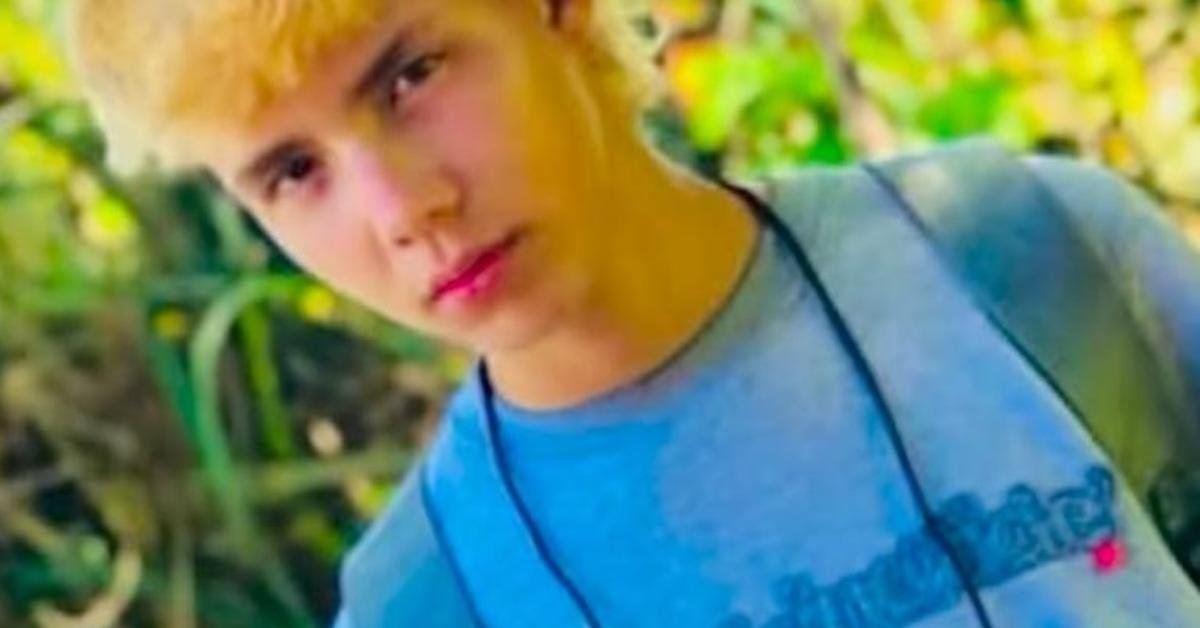

Madrid/“Dad, please take me out of here, I can’t take it anymore.” With these words, Jonathan Muir Burgos called his parents from the Canaleta prison (Ciego de Ávila) on Wednesday, almost at two in the morning. The 16-year-old teenager was arrested for participating in the massive demonstration in the Avilanian town of Morón last March 13is desperate due to the terrible conditions of the prison, where he remains held awaiting trial.
As explained by his father, Pastor Elier Muir, in a video released by the also evangelical religious Mario Felix Lleonarthe and his wife received the call from the boy at that time because the bedbugs were not letting him sleep. “My skin is getting infected and my brain is feeling like it’s not going to hold up,” Muir quoted his son. “I wrap myself in the sheet and even then, neither day nor night, the bites let me sleep.”
The pastor fears for his health not only because of the wounds that the parasites may cause, which he claims proliferate in a new cell where he has been transferred, but also because of the minimal food that the minor receives. “They give him miserable food, which all fits in a six- or eight-ounce disposable cup, at four in the afternoon, and then until five-thirty or six in the morning he doesn’t see anything else,” says the father.
“They give him the food, miserable, that all fits in a disposable cup of six, eight ounces, at four in the afternoon, and then until five thirty or six in the morning he doesn’t see anything else”
The provisions that the family brought him on the last visit, he continues, “have already been exhausted,” because “he shares them with the five prisoners who are there with him, just as the others share with him, but they no longer have anything.”
Accompanying the video that spreads Muir’s message, Lleonart wrote: “A sick minor, subjected to this cruel treatment just for participating in a peaceful protest asking for food, light and freedom. This is state torture,” while demanding his “immediate release” and “urgent medical attention.”
On April 9, the Inter-American Commission on Human Rights (IACHR) sent an official request to the Cuban Government demanding urgent information about the situation of the minor. The petition, addressed to the Minister of Foreign Affairs, Bruno Rodríguez, granted a period of five days for the State to respond to the conditions of Jonathan Muir’s detention, his state of health and the measures adopted to guarantee his integrity.
The IACHR clarified that this requirement did not imply a decision on granting said measures, but stressed the urgency of verifying the adolescent’s situation. The request was made following a request for precautionary measures presented by the organization Cuba Decide.
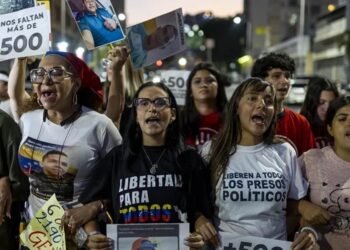
Jonathan Muir, along with Kevin Samuel Echevarría Rodríguez, also a minor, aged 15, were two of the new prisoners counted in March by the organization Prisoners Defenders (P.S). This report from the Madrid-based NGO once again set another record in March: with 44 new prisoners of conscience, the figure rises to 1,250.
The strike seeks, this family member explained, “to demonstrate that there are people imprisoned for political reasons and to demand respect for their condition as political prisoners.”
The number of women and minors detained has grown “significantly,” PD denounced, which shows “a relevant increase in repression also against vulnerable groups and a devastating impact on entire families.”
Faced with this reality, and in the midst of pressure and contacts between the United States and Cuba, the regime has continued to deny in recent weeks the existence of political prisoners, whose release is one of the requirements of the ultimatum given by the Trump Administration to Havana and which expires this weekend.
Precisely against the statements of President Miguel Díaz-Canel to NBC is that political prisoner Lizandra Góngora declared a hunger strike this Wednesday, sentenced to 14 years in prison, the highest sentence imposed on a woman for participating in the demonstrations of July 11, 2021. She is detained in Los Colonos prison, on Isla de la Juventud.
Her husband, Ángel Delgado, explained it to Martí Newswhich also he picked up the words of the opponent’s cousinAriel Góngora, in a broadcast on Facebook. The strike seeks, this family member explained, “to demonstrate that there are people imprisoned for political reasons and to demand respect for their condition as political prisoners.”
Ariel Góngora blames the Cuban regime for any consequences for her cousin’s health and remembers that she is not the only prisoner who protests in this way. In this regard, he gave as an example Jesús Véliz Marcano, also a prisoner of 11J, in his case in Camagüey, who turns this Thursday nine days of hunger strike in a punishment cell.