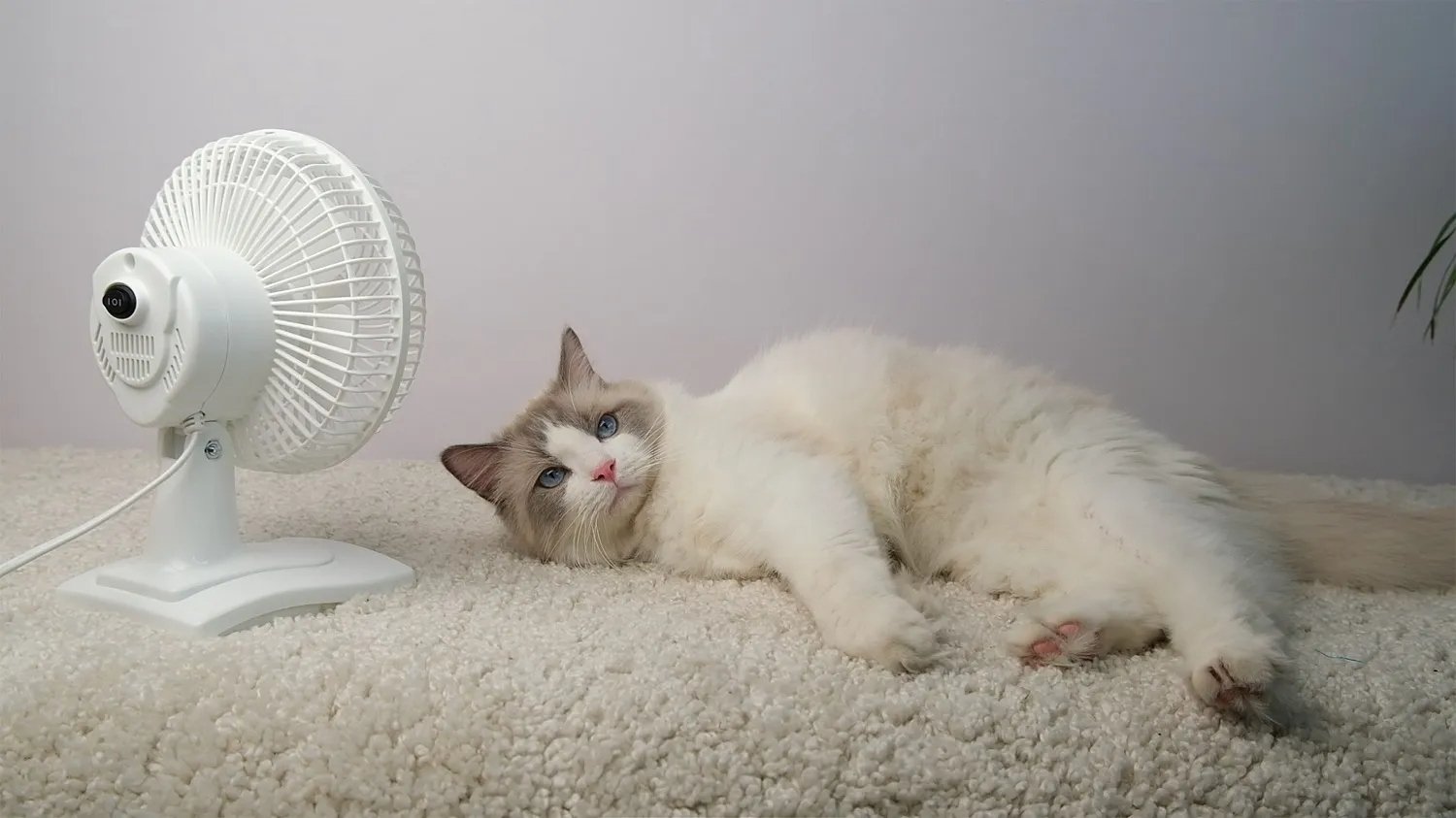
Summer and high temperatures are a serious danger not only for us but also for them cats us. Although these animals seem to enjoy the sun, too much heat can endanger their health, and unlike humans, cats do not sweat through their skin, which greatly limits their ability to regulate their temperature.
What is the normal temperature for our cat?
Cats, like humans, are warm-blooded animals and maintain a relatively constant body temperature. A healthy cat’s normal temperature usually fluctuates between 38 and 39.2 degrees Celsius. Their body has mechanisms that help regulate temperature, but these have their limits.
Unlike humans, cats do not sweat through their skin, but regulate their temperature mainly through them you were stepping their. That’s why they rely on other ways to cool down, such as lying on cold surfaces or, in more extreme cases, panting.
Although cats can adapt to relatively high temperatures, there are limits beyond which the heat becomes dangerous. Generally ambient temperatures exceeding 38 degrees Celsius are considered too hot for cats. Even temperatures between 27 and 37 degrees can cause discomfort, especially in older cats, young kittens, obese animals or cats with health problems.
The temperature range in which the cat’s body does not need to make a special effort to maintain its temperature is between 30 and 37 degrees Celsius. However, this does not mean that cats feel comfortable in such intense heat inside home. Most healthy adult cats are most comfortable indoors with a temperature between 20 and 27 degrees Celsius.
What is the danger if our cat is exposed to extreme heat?
When a cat’s body temperature rises too high, heatstroke can occur, a condition that requires immediate veterinary intervention. If the body temperature exceeds 41 degrees, cellular functions begin to be seriously affected. The body’s proteins can be damaged, which leads to serious complications such as blood clotting disorders, kidney failure and seizures.
Cats cannot survive for long in extreme heat. Even not very hot temperatures can be dangerous when exposure is high and there is insufficient shade and access to fresh water. Of course when the temperature approaches 40 degrees, even a few minutes of exposure to direct sunlight can prove life-threatening.
What symptoms will the cat show and how should we act?
Recognizing the symptoms of overheating is crucial. A cat suffering from heat, may present decreased energy, loss of appetite or difficulty moving comfortably. Increased salivation, vomiting, diarrhea or changes in her behavior may also be observed. In even more severe cases, the animal may pant heavily, breathe with its mouth open, or have very red or even blue gums.
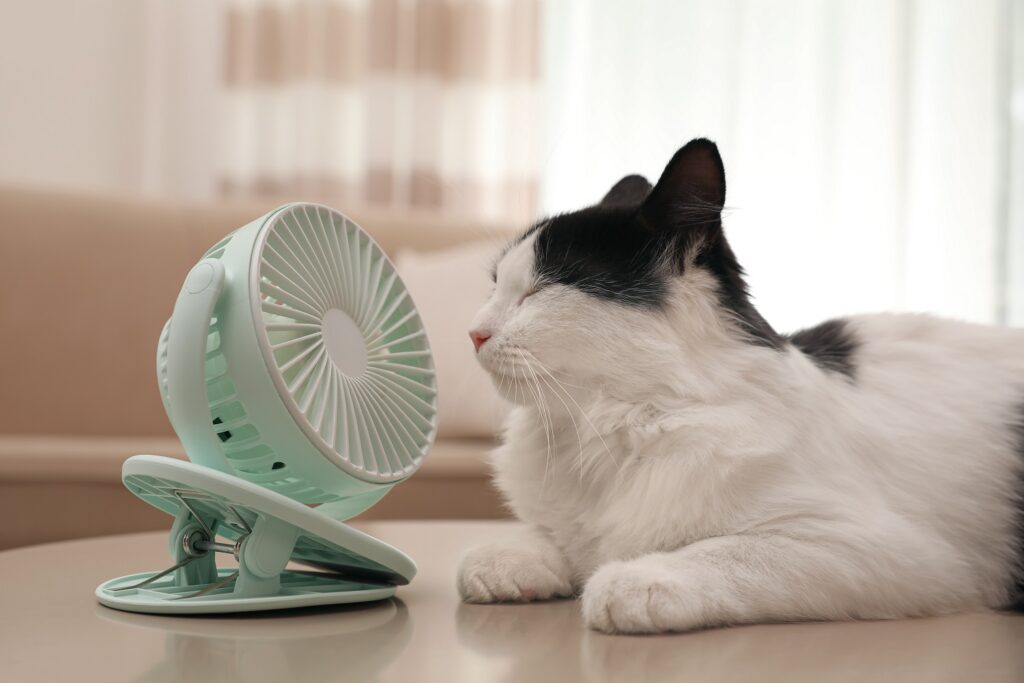
If we notice any of these symptoms, we should act immediately. The cat should be taken immediately to a shady and cool place, away from the sun. Using a fan can help reduce body temperature, and we can gently wipe with a cool, not icy wet cloth. A brief contact with lukewarm to cool water can also help, always avoiding submerging her head. Even if the situation seems to be improving, immediate examination by a veterinarian is essential.
Prevention is always the best solution
During the summer it is important to keep the house cool by using air conditioning or fans where possible. Curtains and shutters can limit excessive heating of indoor spaces by the sun.
The cat must always have access to fresh and clean water. Extra cool layers or frozen treats, they can provide relief during the hottest hours of the day.
Summer can be a pleasant time for both us and our cats, as long as we take the appropriate protective measures. Paying attention to the signs of overheating and ensuring a cool and safe environment can effectively protect the health and well-being of our beloved pet.