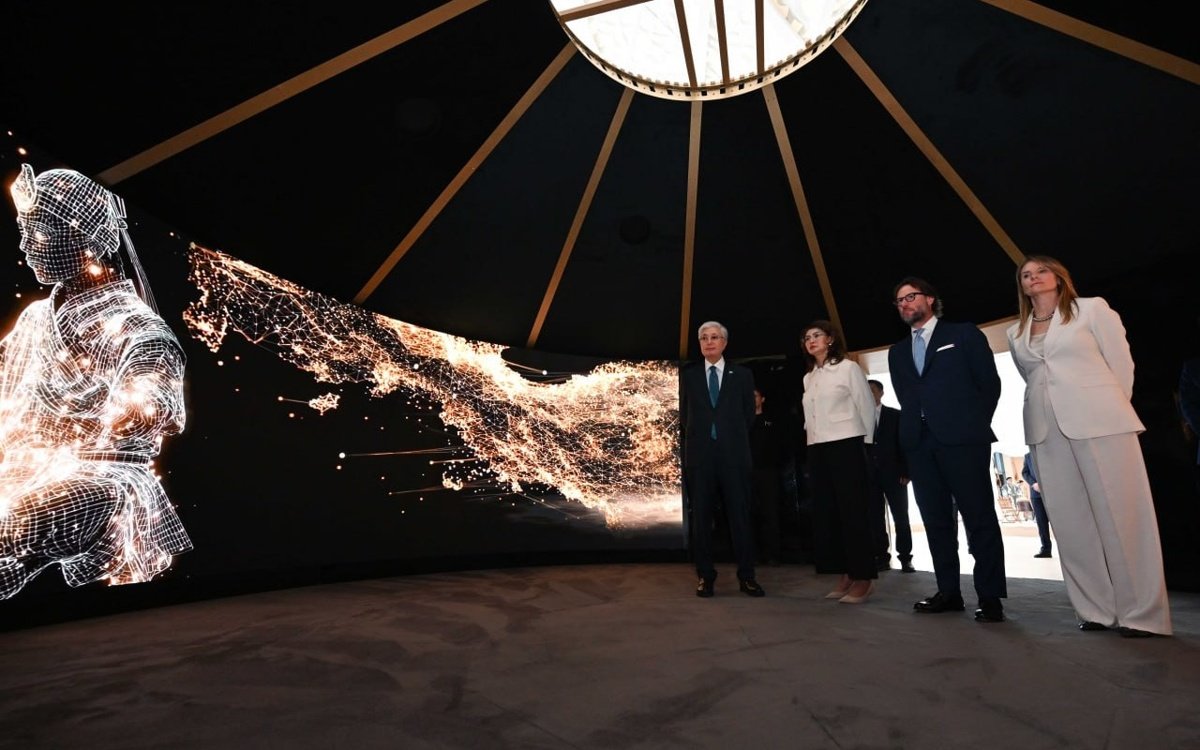
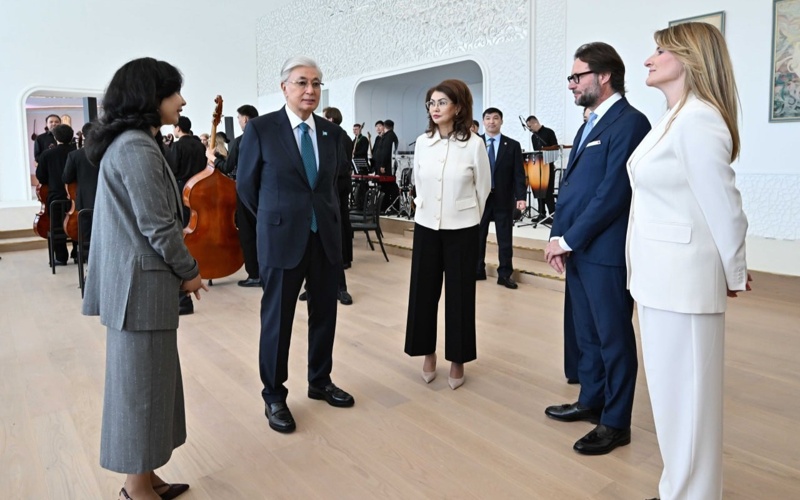
Today, April 25, President Kassym-Jomart Tokayev visited the office of the Creative Industries Development Fund. The fund, created on behalf of the Head of State, will become a key support center for the industry, where talent, infrastructure, investment, promotion and export agenda are combined into a single system.
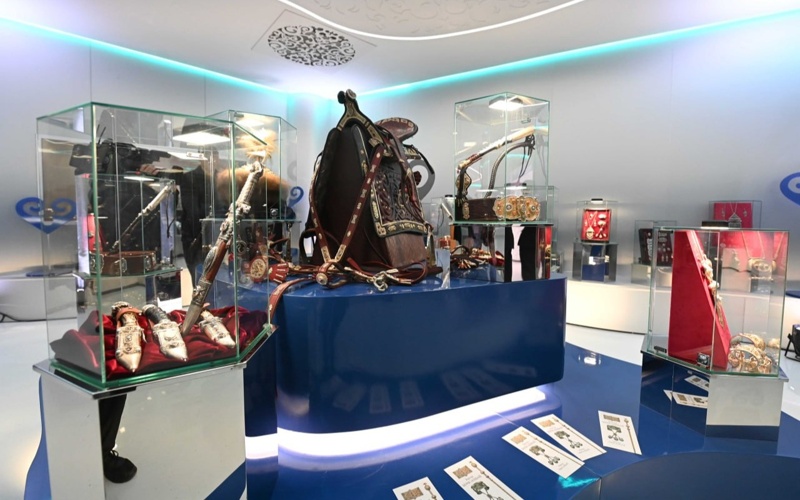
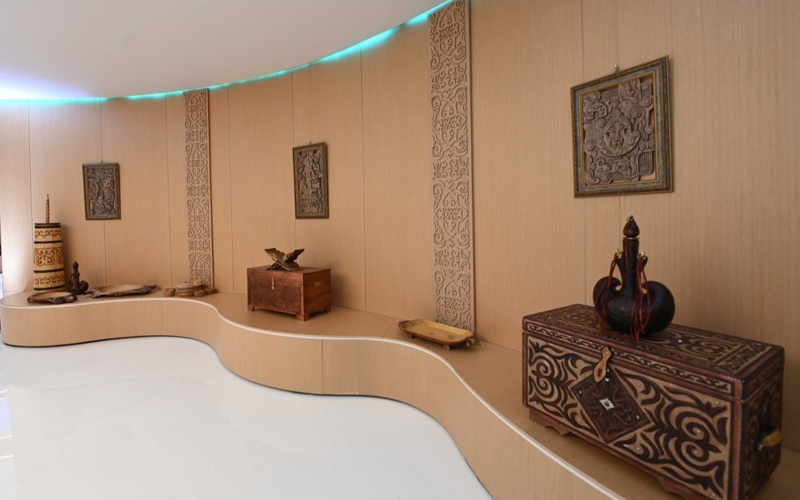
The Foundation’s new space is presented in the format of a full-cycle showroom, from idea and production to implementation and promotion of a creative product. The President had presented thematic halls, including jewelry and carpentry workshops, music spaces, a carpet art hall, an artists’ hall and a fashion zone. Particular attention was drawn to the Yurt Capsule, an immersive location where the traditional form of the yurt receives a modern technological interpretation through digital art, multimedia content and cultural storytelling.
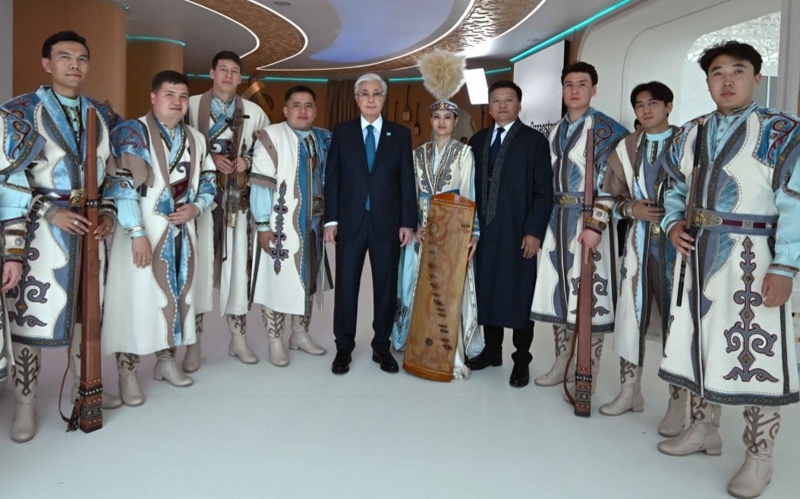
— President Kassym-Jomart Tokayev visited the office of the Creative Industries Development Fund. What does this attention to the industry mean?
— The visit of the Head of State is of fundamental importance, since it shows that creative industries are no longer considered as an auxiliary cultural sphere, but as a full-fledged direction of economic and social development.
President Kassym-Jomart Tokayev consistently focuses on unlocking human capital, supporting proactive youth, developing entrepreneurship and new sources of growth. The creative economy is precisely at the intersection of these tasks. It creates jobs, develops digital content, creates new products, enhances the country’s tourist attractiveness and helps reveal national identity in modern language.
For us, as the department in charge of this area, it is important that the industry has received a clear institutional status. The creation of the Fund on behalf of the Head of State means a transition from targeted measures to systemic work. Now the task is to ensure that the President’s attention is transformed into practical support tools for creators, regions, investors and foreign markets.
— The Fund should become a key institution for supporting the creative economy. What problems should he solve first?
— The main task of the Fund is to overcome the fragmentation of the industry. Today in Kazakhstan there are already strong authors, designers, musicians, artisans, representatives of cinema, animation, fashion, digital art and other areas. However, many of them develop separately from each other, without sustainable access to infrastructure, professional expertise, investment and promotion channels.
The fund should become not an administrative superstructure, but a system operator of the industry. Its role is to connect talent, production, promotion, market and external opportunities. In other words, the creator must understand where he can go with an idea, how to get support, how to design a product, how to find an audience and how to go beyond the local market.
It is important that this work is carried out in accordance with the logic of the instructions of President Kassym-Jomart Tokayev. The head of state focuses on creating new economic opportunities, and the creative sector can become one of these areas. The Foundation must help transform creativity into sustainable economic value.
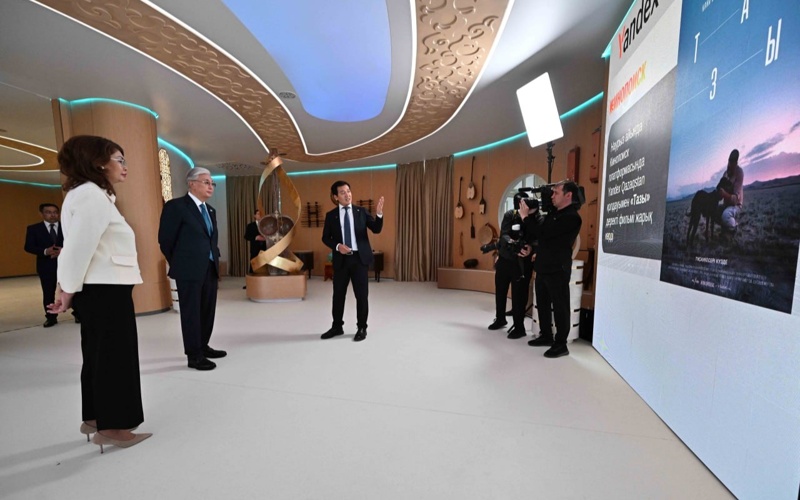
— About 48 thousand business entities and 160 thousand people work in the creative economy of Kazakhstan. What do these numbers say?
— These figures show that the creative economy in Kazakhstan already has a serious social and economic basis. About 48 thousand business entities and 160 thousand employees, these are not individual initiatives, but an entire sector that unites different professions, business models and forms of self-realization.
Behind these indicators are people who create added value through ideas, knowledge, technology and cultural code. These are designers, producers, architects, artists, musicians, digital content developers, representatives of fashion, media, cinema, animation and folk crafts. Their activities are already influencing employment, entrepreneurship, the urban environment, tourism and the country’s international image.
Kazakhstan’s policy in this area is aimed at ensuring that this potential does not remain spontaneous. It is important for us to create conditions for increasing the quality of projects, scaling them and promoting them to foreign markets. Therefore, the Foundation must work not only with established players, but also with those who are just entering the industry.
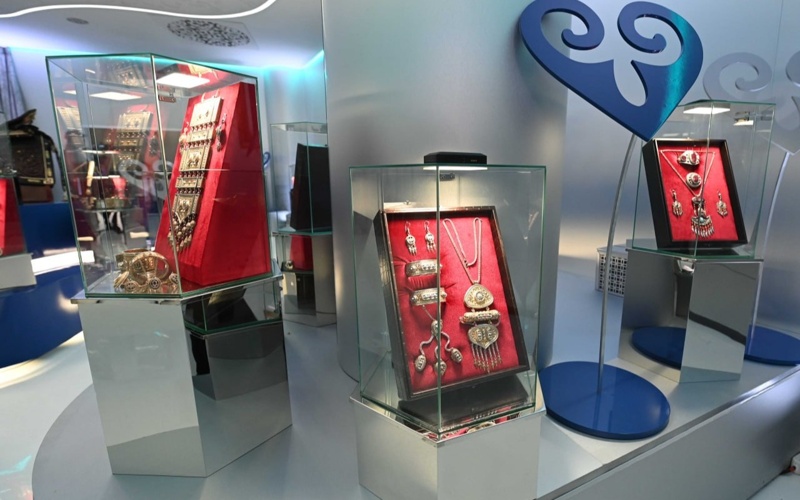
— The Foundation’s new office is presented as a full-service showroom. Why is this model important for the industry?
— The creative economy cannot develop only at the level of inspiration or idea. A strong idea becomes valuable when it goes all the way: development, production, packaging, promotion, sales and access to the consumer. It is at this stage that creativity turns into an economic product.
The Foundation’s new office is important because it visually and practically shows this full-cycle logic. This is not just a presentation space. This is a model of how a modern creative ecosystem should be structured. Jewelry and carpentry workshops, music halls, a carpet art space, an artists’ hall, a fashion zone, all this demonstrates the diversity of the industry and its practical side.
It is important for Kazakhstan to create a new culture of working with a creative product. It is not enough to create a good project; you need to be able to present it, promote it, adapt it to the market and bring it to the consumer. This is where the Fund can close one of the main gaps in the industry, when there is talent, but the system of support, promotion and commercialization is lacking.
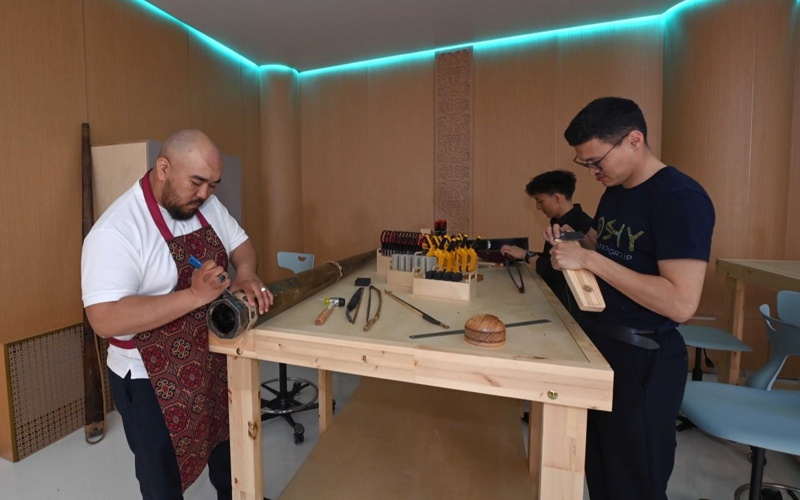
— The Fund will coordinate regional hubs in all regional centers. How will this change opportunities for regions?
— Regional hubs are of strategic importance because the creative potential of Kazakhstan is not limited to Astana and Almaty. Each region has its own cultural codes, craft traditions, young authors, local brands and modern initiatives. The question is that these ideas have access to a professional environment and development opportunities.
Today, one of the objectives of Kazakhstan’s state policy is to ensure more equal access to growth instruments. The regional hub should become not just a platform for events, but a center of competence. There, creators will be able to receive advice, develop projects, find partners, form teams and join the national support system.
The Foundation’s coordinating role is especially important here. If each region develops separately, the effect will be limited. If the hubs are connected by a single methodology, programs, expert support and promotion, the country will receive a distributed network of creative development. This will not only support young people locally, but also create new points of economic activity in the regions.
— Kazakhstan promotes country branding through culture, tourism and creative products. Which areas are the most promising?
— The most promising areas are those where national identity can be presented in a language that is modern and understandable to an international audience. These include cinema, music, animation, design, fashion, digital art, jewelry, carpet art, crafts and cultural tourism.
It is important to understand here that country branding is not limited to a visual image or a tourism slogan. It is shaped by the products, experiences, stories and meanings that a country offers to the world. This is why projects such as Yurt Capsule are of particular importance. They show that the traditional heritage of Kazakhstan may not be a museum image of the past, but a living source of modern technological solutions.
President Kassym-Jomart Tokayev pays great attention to unlocking the tourism potential of Kazakhstan and promoting the country through culture, heritage and modern industries. This is in tune with the state policy of Kazakhstan, where the creative sector is becoming part of national competitiveness.
Our task is to support projects that combine cultural code, quality workmanship, modern form and export potential. It is precisely such products that can increase interest in Kazakhstan, promote domestic authors and form a sustainable international image of the country.