The number of food forests in the Netherlands is increasing rapidly. In five years, the combined surface area has increased tenfold, the Central Bureau of Statistics (CBS) reported. In 2024 the graph shot off CBS almost steeply uphill; the number of hectares of food forest increased from 162 to 367 hectares. Set against it entire agricultural area in the Netherlands (1799 thousand hectares) it doesn’t mean much, but its proponents see it as a hopeful sign.
This exclusively concerns food forests at agricultural companies and not the often smaller food forests of amateurs. Such larger food forests aim to produce a significant production of nuts, fruits, seeds, leaves and other edible parts of permanent plants. They also provide products that are not commonly found in most kitchens, such as sea buckthorn and dogwood olives.
How do you prepare and process these ingredients? The recently published cookbook The Food Forest Kitchen attempts to provide answers. Simon Verboom is one of the four Young Food Forest Farmers who started a food forest near Elst in 2023. Co-author Hanne van Beuningen studied at the University of Gastronomic Sciences in Piedmont. The third author, Wibe Schoenmaker, works as a chef at Merkelbach restaurant in Amsterdam.
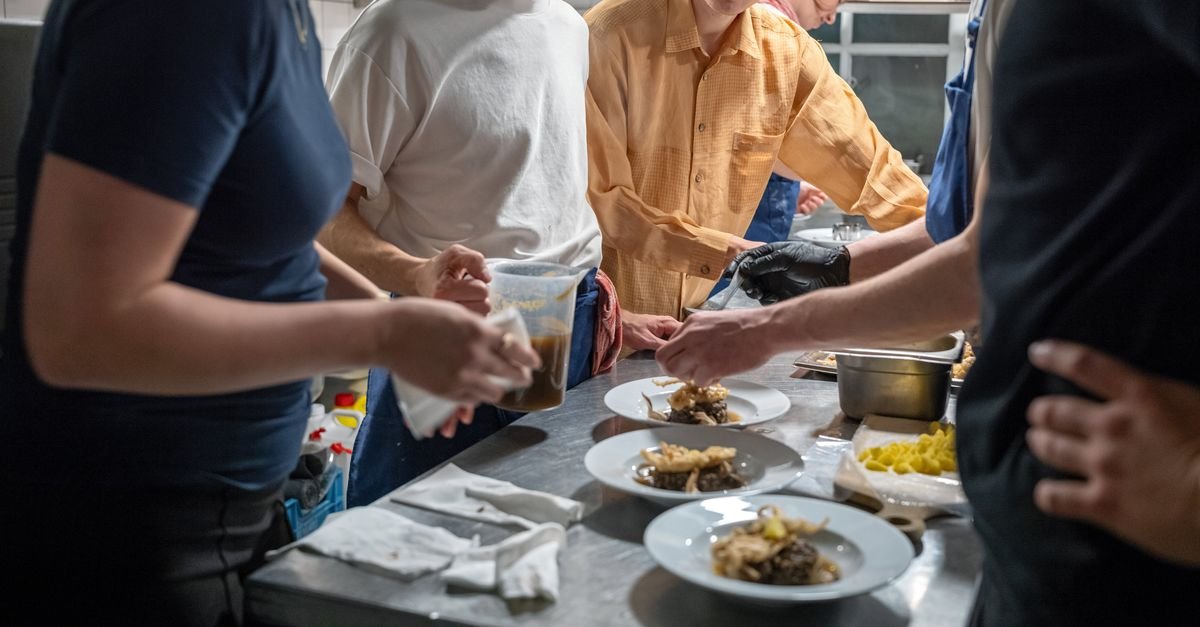
They organized together with others pop-up dinnersincluding in that restaurant, with products from the food forest. They offered guests an adventurous experience, but not all dishes radiated something that a home cook could reproduce on a weekday.
The cookbook promises just that: “dishes that everyone can try at home.” This does not require extremely difficult cooking techniques or special equipment, such as blending ingredients at certain temperatures or preparation times of hours.
Food forest system
Food forests are characterized by the great diversity of the products that emerge from them, Simon Verboom said at the presentation of the book. While other forms of agriculture often focus on one crop, food forests are about the combination of plants that together form a productive system. “To make the food forest system work you need a certain degree of diversity of vegetation.”
A hundred different products can come from food forests, from the good hendrik (a leafy vegetable) to the kiwi berry
Dozens or even more than a hundred different products can come from food forests, from old native species such as brave hendrik (a leafy vegetable) to exotics such as the kiwi berry. “These are all kinds of new flavors and products that we are not yet familiar with and that we have to bring to people’s homes. This book can provide guidance,” says Verboom.
The authors make it easier for home cooks by identifying alternatives for some ingredients from the food forest. The galette with perennial cabbage, oyster mushroom and tofu can also be prepared with white cabbage. The Japanese quince can be replaced by lemon. According to the makers, it has not become a strict cookbook, but rather a source of inspiration. An aid for this are overviews of, for example, fruit. What is bitter, what is sweet, what is creamy, which berries are most similar? This makes it easier for chefs to vary.
‘Do it with common sense’
The cookbook also uses common recipes such as pasta or soup. You don’t have to change the kitchen all at once. Most recipes contain two to four ingredients from the food forest, but often other sources are also possible, such as organic or even the conventional supermarket. Nevertheless, it remains a cookbook for the adventurous cook and eater, Verboom acknowledges. “But that was also Ottolenghi in the beginning. Back then no one knew sumac or za’atar.”
You can also pick some of the ingredients that grow in food forests in the wild. In the spring, wild garlic, a plant with an onion or garlic-like flavor, sprouts from the ground. But what can you harvest safely? The warning that wild garlic resembles the poisonous lily of the valley is an encouragement to be careful. Young leaves of lime, hawthorn and birch, among others, are edible, but when are they young enough? “Do it with common sense,” Verboom advises.
A favorite ingredient of the chefs is the sweet chestnut, from a tree that can also be found in large numbers outside food forests. They are enthusiastic about the nutritional value and versatility of this nut. You can roast, grind, cook, bake the chestnut. The flour can be compared to wheat flour, and sliced cooked chestnuts from the oven seem to taste like bacon. There are even ways to make the chestnut taste like chocolate.
Also read
The twentysomethings who are starting a food forest to inspire others: ‘We are creating a paradise here’
:format(webp)/s3/static.nrc.nl/wp-content/uploads/2024/05/17144041/data115752181-145a70.jpg)